Glass Frogs in Colombia: The Hidden Transparent Jewels of the Tropical Forest
Deep within the tropical rainforest, when the rain seems suspended in the air and the whisper of a stream fills the night, something tiny and extraordinary appears on a leaf, a translucent green silhouette that seems to defy logic. Through its delicate skin, bones, organs, and even the pulse of a beating heart can sometimes be seen. These are glass frogs, one of the planet’s most fascinating groups of amphibians and among Colombia’s most extraordinary hidden treasures.
Seeing a glass frog is more than simply finding an amphibian. It is stepping into another dimension of the forest, one where details matter, light becomes scarce, and every nocturnal step may reveal one of nature’s most improbable spectacles. For photographers, herpetologists, and wildlife lovers, these tiny amphibians represent far more than a living organism; they are an invitation to slow down and truly observe.
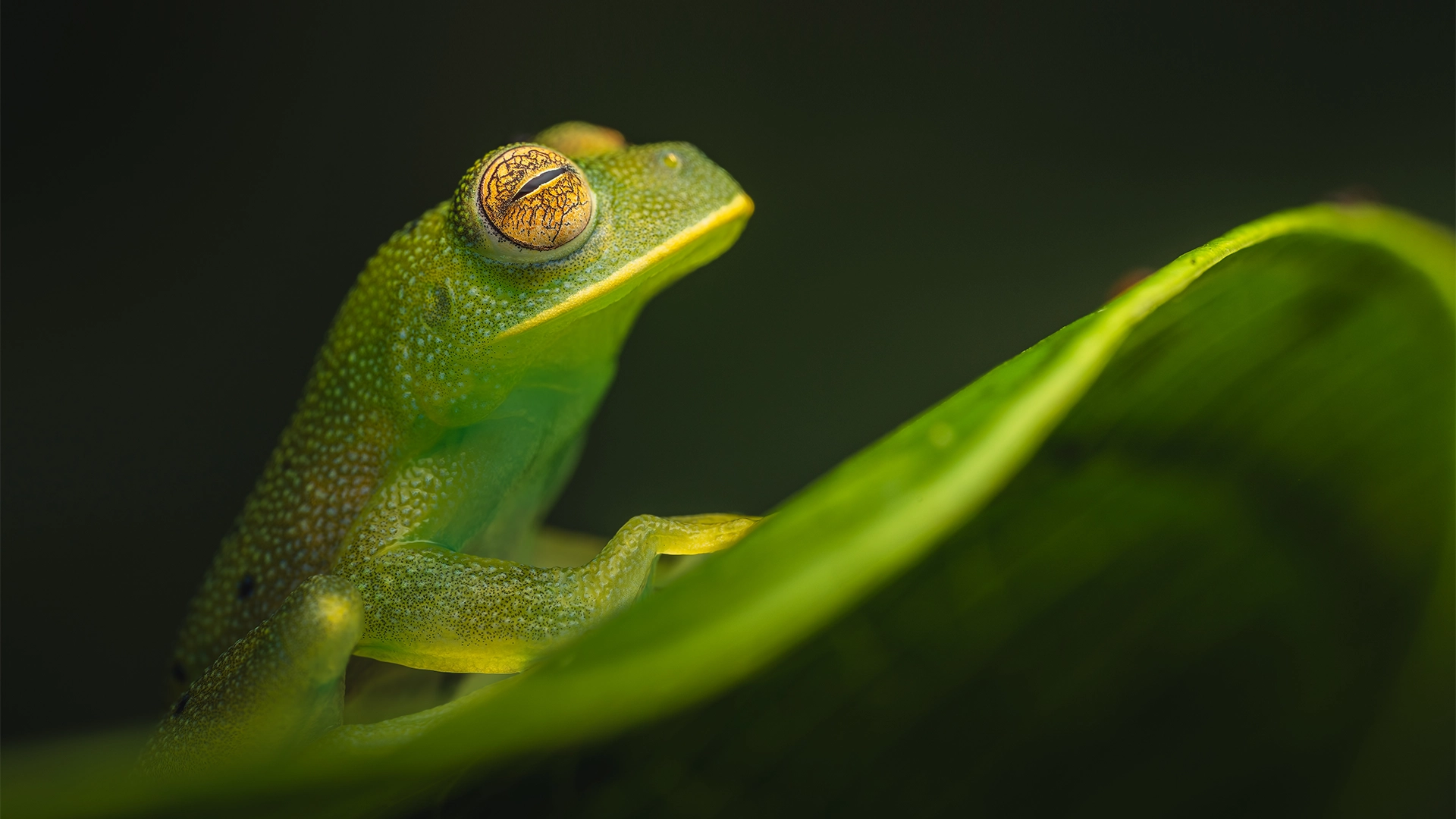
Cochranella granulosa, a delicate glass frog of humid tropical forests, recognized for its granular skin texture and translucent underside, where the subtle architecture of life becomes visible beneath the skin. Photo: Jhonattan Vanegas.
More Than Transparency: The Fascinating World of Glass Frogs
Glass frogs (family Centrolenidae) are a group of small arboreal amphibians that primarily inhabit tropical and montane humid forests throughout the Americas, ranging from tropical Central America through the tropical Andes to the Guiana Shield, the Amazon Basin and the Atlantic Forest of Brazil.
At first glance, they appear to be small, delicate green frogs, but they hide an almost unbelievable characteristic: their translucent underside. In many species, the ventral skin is so transparent that it allows internal structures to be seen, including a beating heart, the liver, the digestive tract, and even parts of the bones. This singular trait is the reason they are known worldwide as glass frogs.
Glass frogs are primarily nocturnal, arboreal, and highly dependent on well-preserved ecosystems. During the day, they often remain motionless on the underside of leaves, perfectly camouflaged; but as night falls, one of the forest’s most fascinating scenes begins: males vocalize from branches and leaves near streams to attract females and defend small territories.
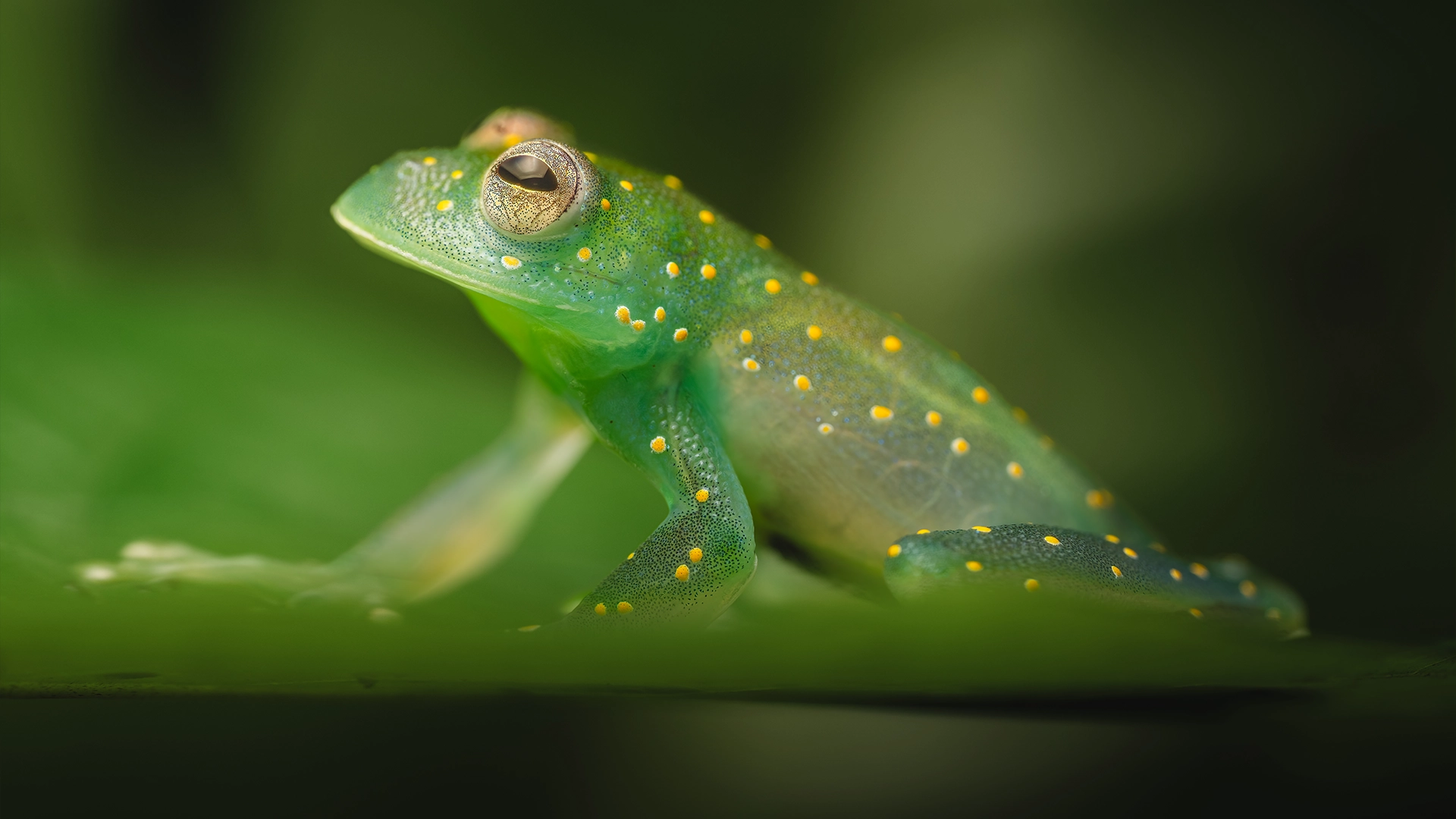
Cochranella euknemos, a delicate glass frog recognized by the bright yellow spots scattered across its emerald-green body, revealing the subtle beauty and extraordinary camouflage strategies of tropical rainforest amphibians. Photo: Jhonattan Vanegas.
Their reproductive strategy is one of the reasons glass frogs are so remarkable. Instead of laying eggs directly in water, many species deposit gelatinous egg masses on leaves, branches, or vegetation suspended above fast-flowing streams. There, the eggs remain protected while the embryos develop, and once the tadpoles hatch, they simply fall or are washed into the water, where their growth continues.
In some species, males perform an extraordinary role within the amphibian world: they remain near the eggs for days, protecting them from predators, fungi, and dehydration. This form of parental care, relatively rare among frogs, makes glass frogs especially fascinating to herpetologists, nature photographers, and anyone interested in animal behavior.
Perhaps that is what makes them so extraordinary: they seem unreal, yet at the same time they tell a profound story of evolution, adaptation, and ecological fragility. They are tiny guardians of humid forests, species highly sensitive to environmental change and excellent indicators of ecosystem health.
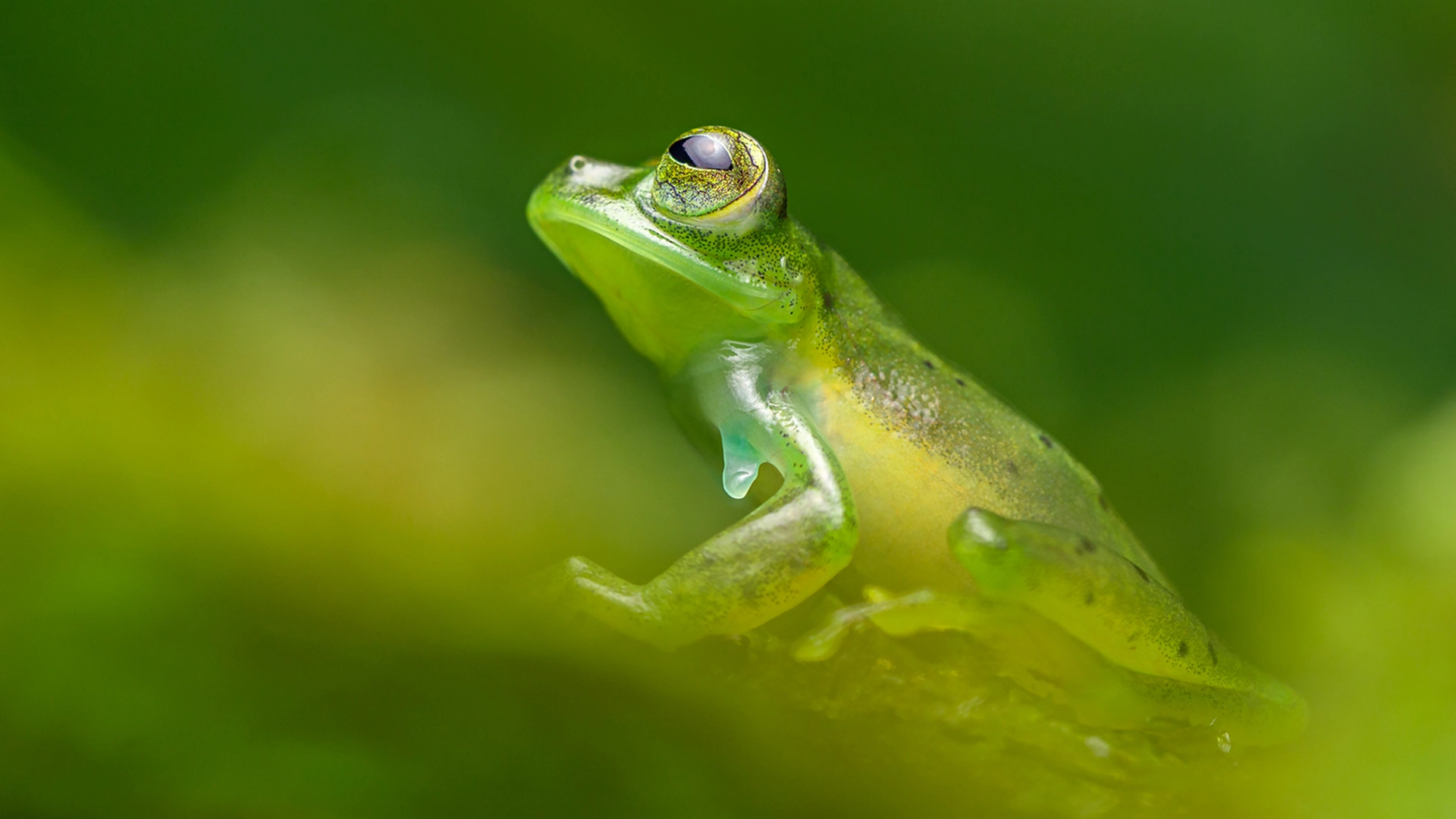
Espadarana prosoblepon, a delicate glass frog of tropical streams, resting quietly among humid vegetation. Its translucent underside and arboreal life reveal the extraordinary adaptations that allow these amphibians to disappear into the forest. Photo: Jhonattan Vanegas.
Why Are Glass Frogs Transparent?
One of the most common questions when someone sees a glass frog for the first time is almost inevitable: how can a frog exist whose heart is literally visible?
The answer lies in a fascinating combination of anatomy, pigments, and evolution. Glass frogs exhibit partial transparency, especially on the ventral side of the body. The skin of the belly is so translucent that, depending on the species, it is possible to observe internal organs and even parts of the skeleton. This remarkable trait is made possible by reduced pigmentation and by the way their tissues interact with light.
Many species possess a reflective white tissue called the peritoneum (a membrane that covers internal organs), which functions like a biological “screen.” The translucent green color we see does not come solely from traditional pigments. In some genera, such as Hyalinobatrachium, researchers have found an important role for biliverdin, a pigment derived from the breakdown of hemoglobin that is also present in bile and internal tissues. Combined with microscopic reflective structures in the skin (iridophores), this compound helps produce greenish tones and creates the ethereal, almost ghostlike appearance that makes these frogs seem suspended between leaf and air.
More recently, scientists discovered that while resting on leaves during the day, glass frogs hide a large proportion of their red blood cells inside the liver, dramatically reducing the amount of blood circulating through the body. By minimizing visible red coloration in tissues and blood vessels, their bodies become even more translucent and blend more effectively with surrounding vegetation. In other words, glass frogs are not simply transparent: they actively regulate their transparency as a camouflage strategy.
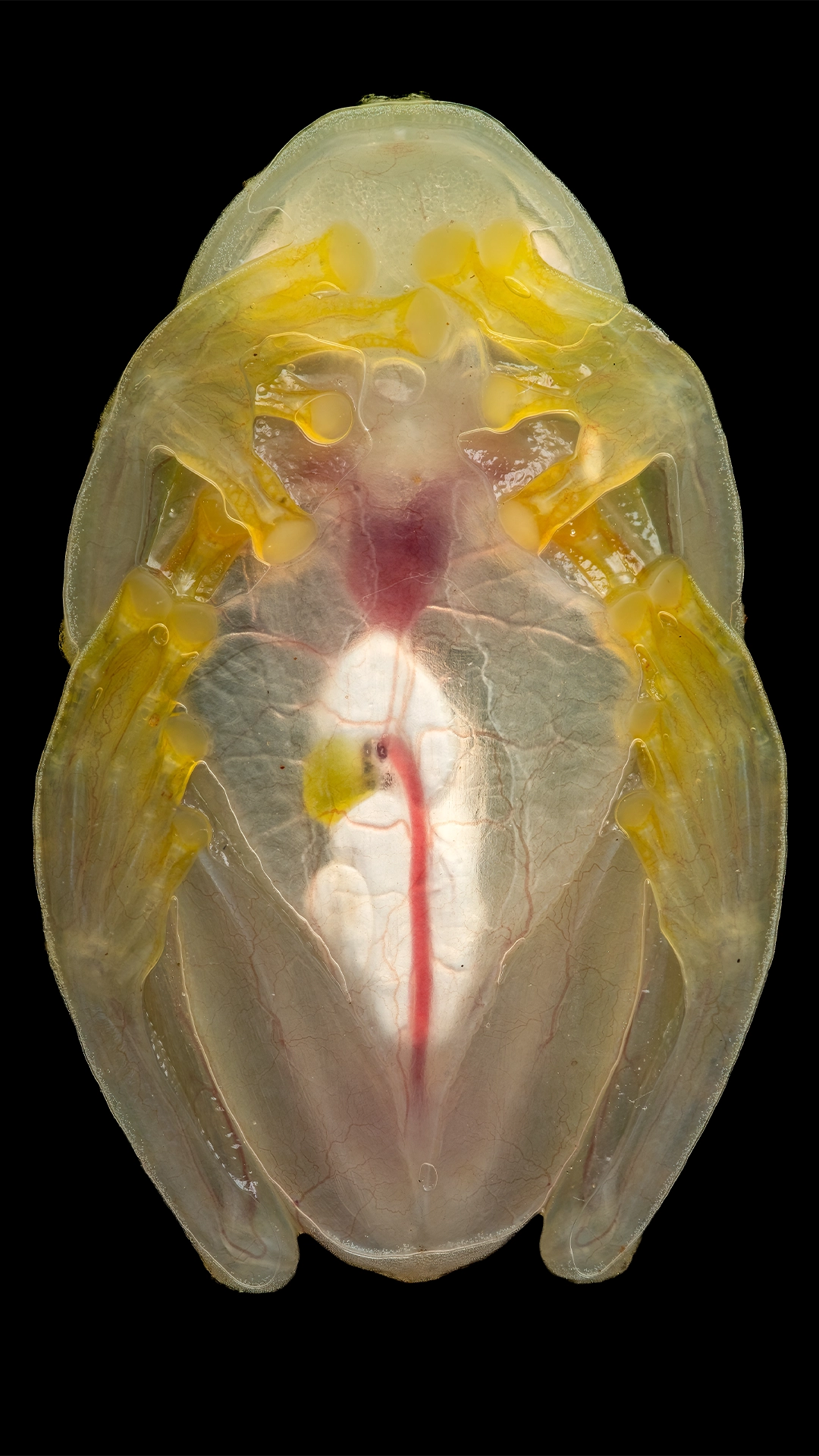
Ventral view of Hyalinobatrachium aureoguttatum, revealing the remarkable transparency of its underside, where internal structures become subtly visible beneath the skin. Photo: Jhonattan Vanegas.
Diversity of Glass Frogs in Colombia
Currently, about 170 species of glass frogs (family Centrolenidae) are recognized worldwide. Colombia is home to 81 species, meaning that nearly half of all known glass frogs on Earth can be found within Colombian territory. This extraordinary diversity makes the country one of the world’s leading hotspots for the study, observation, and photography of glass frogs.
Colombia brings together an almost unmatched combination of Andean mountains, tropical rainforests, inter-Andean valleys, extreme elevational gradients, and some of the wettest places on Earth.
Each mountain range, watershed, and cloud forest functions as an “evolutionary island,” where populations have remained isolated for thousands or even millions of years, driving processes of diversification and endemism. Many species are restricted to incredibly small areas where the sound of flowing water and constant humidity create ideal conditions for reproduction.
Within this remarkable diversity, Colombia hosts representatives of multiple glass frog genera, including some of the most emblematic such as Centrolene, Nymphargus, Hyalinobatrachium, Cochranella, Espadarana, Sachatamia, Rulyrana, and Vitreorana, each displaying slightly different forms, behaviors, and levels of transparency.
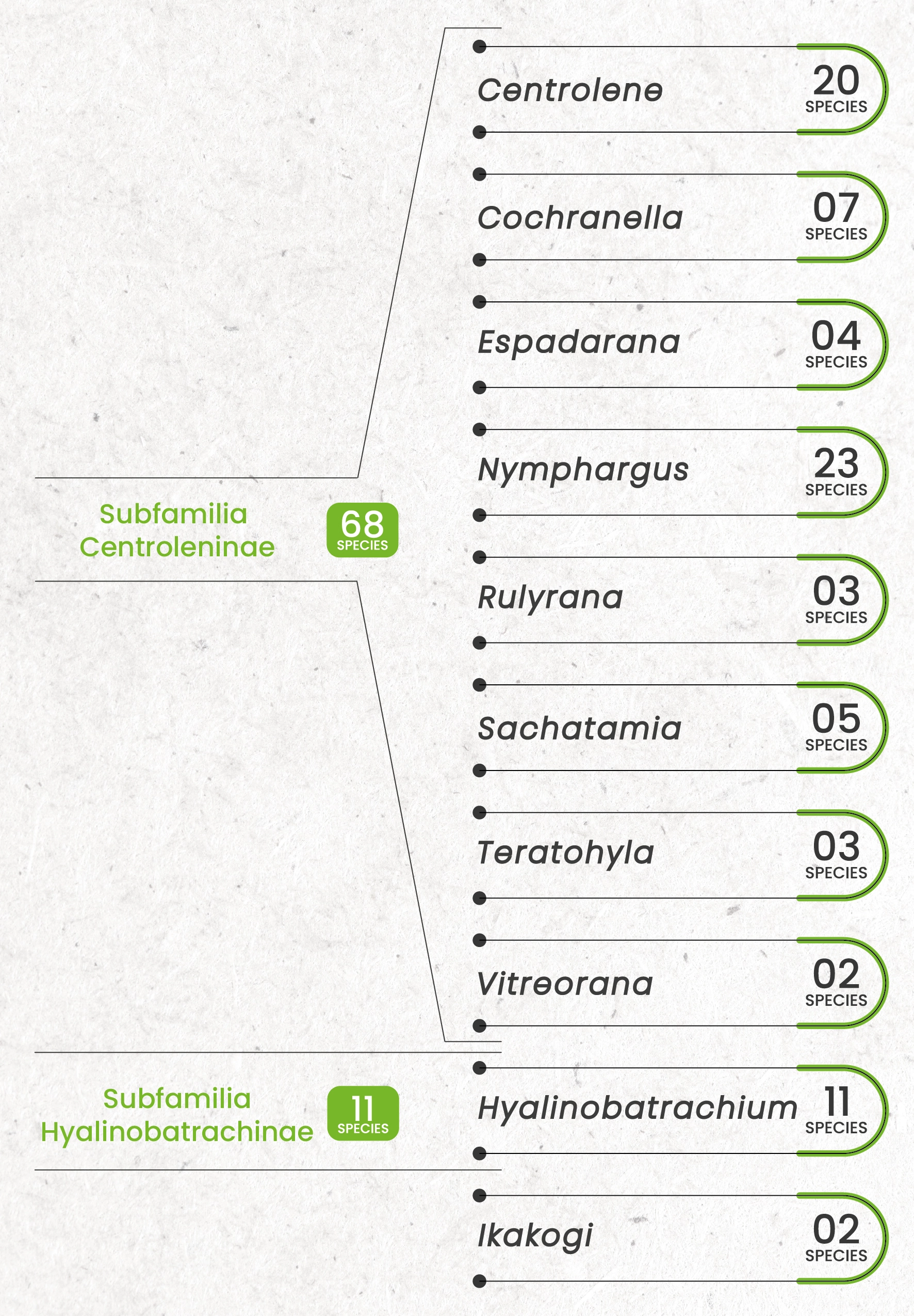
Distribution of the main glass frog genera recorded in Colombia. Infographic: Keeping Nature Tours.
For photographers, herpetologists, and biodiversity enthusiasts, this means something extraordinary: Colombia is not just a place where glass frogs can be seen; it is probably one of the best countries on Earth to discover their diversity.
Endemism: Glass Frogs Found Only in Colombia
The diversity of glass frogs in Colombia is remarkable, but there is something even more extraordinary: many of them exist nowhere else on Earth.
Of the approximately 81 glass frog species recorded in Colombia, around 36 are endemic, meaning they evolved here and can only be found within Colombian territory. In other words, nearly half of the country’s glass frogs are exclusive to Colombian forests.
This makes Colombia not only an exceptionally diverse country, but also a true evolutionary laboratory for the family Centrolenidae.
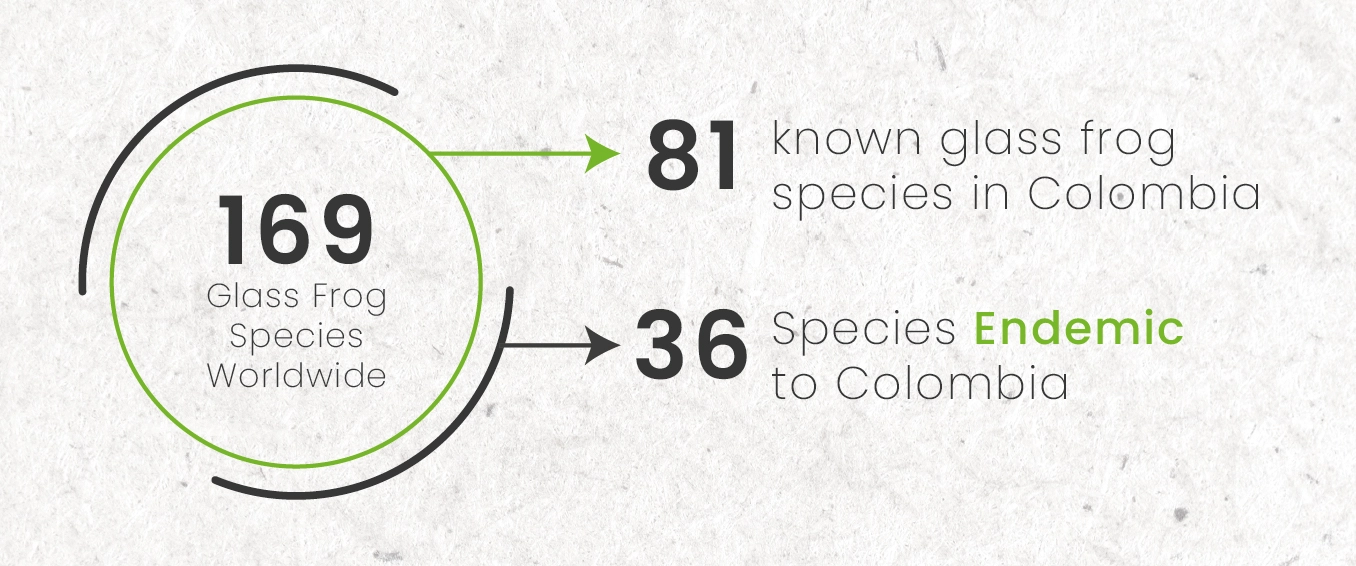
Colombia is home to 36 endemic glass frog species, making the country one of the world’s epicenters of diversity for the family Centrolenidae. Infographic: Keeping Nature Tours.
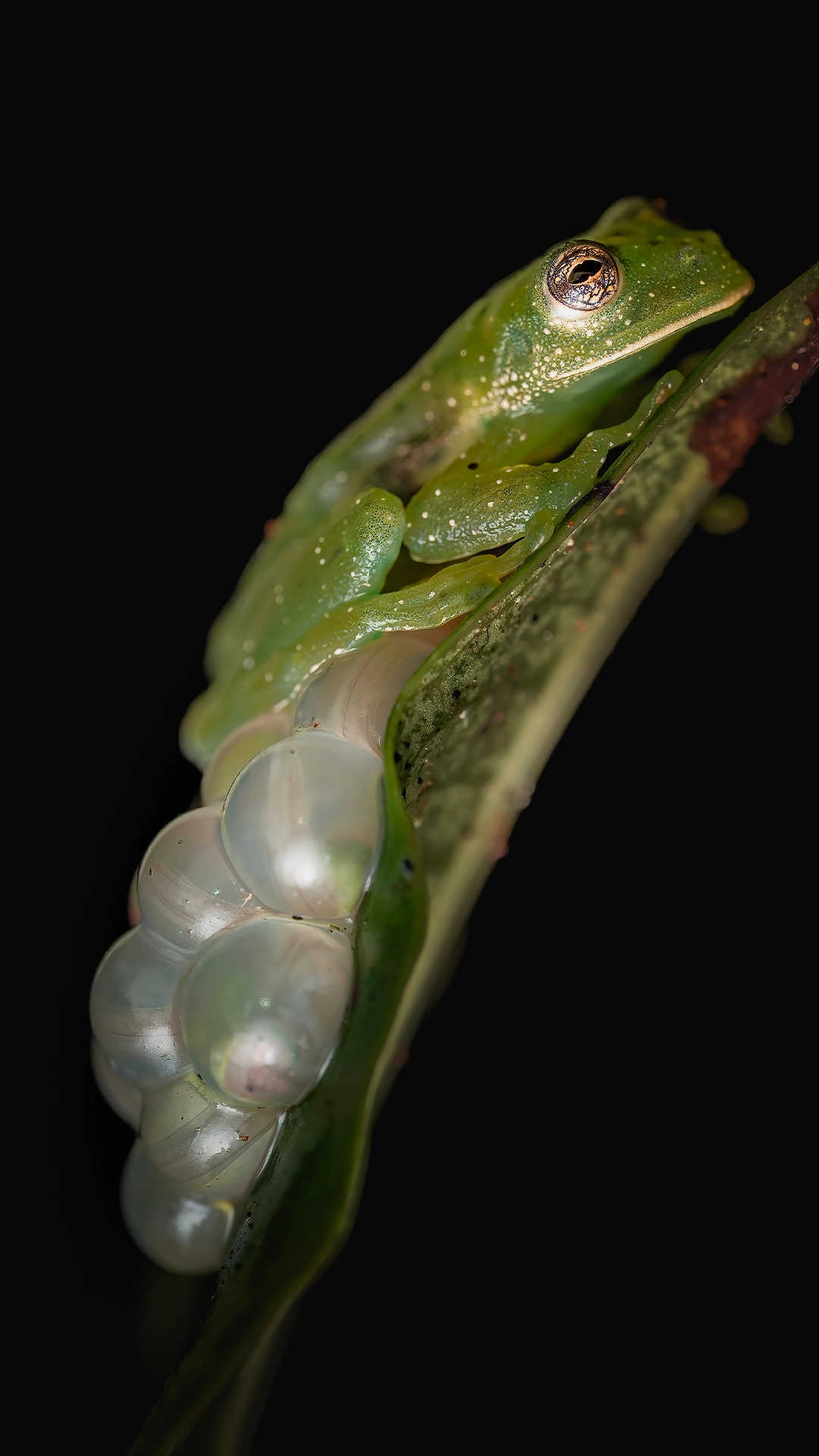
Centrolene savagei, an endemic species protecting its eggs. Photo: Jhonattan Vanegas.
The reason behind this phenomenon is deeply tied to Colombia’s geography. The three Andean mountain ranges, deep canyons, isolated valleys, humid Pacific slopes, and montane forests have acted for millions of years as natural barriers, isolating amphibian populations and favoring the emergence of new species.
As a result, many glass frogs have incredibly restricted distributions: some survive only within a single mountain range, watershed, or even highly specific stream systems. In some cases, a species may be limited to a narrow elevational range within a single cloud forest.
Among these exclusive species are genera such as Nymphargus, Centrolene, Cochranella, Sachatamia, Rulyrana, Hyalinobatrachium, and even Ikakogi, several of which include species found only in Colombia.
This has profound implications for conservation: if the forest where an endemic species lives disappears, that frog disappears from the planet.
For herpetologists, wildlife photographers, and biodiversity enthusiasts, this gives every encounter a deeper meaning. Observing an endemic glass frog in Colombia is not simply seeing a rare species, it is witnessing a form of life that evolution chose to safeguard only here.
A Fragile Treasure: The Conservation Status of Glass Frogs in Colombia
The extraordinary diversity of glass frogs in Colombia comes with a concerning reality: many of these species face serious threats that put their survival at risk.
Of the approximately 81 glass frog species recorded in the country, at least 31 are considered threatened according to the International Union for Conservation of Nature (IUCN). This means that nearly 38% of Colombian glass frog species could face a high risk of disappearance if pressures on their habitats continue.
Currently, 4 species (Centrolene buckleyi, Centrolene geckoidea, Nymphargus armatus, and Nymphargus megacheirus) are classified as Critically Endangered (CR), the category closest to extinction in the wild. Another 16 species are listed as Endangered (EN) and 11 as Vulnerable (VU), reflecting different levels of population risk.
An additional important fact: 7 species are considered Near Threatened (NT), meaning they could soon move into higher-risk categories, while other species remain classified as Data Deficient (DD) or have not yet been evaluated, a reminder of how much we still do not know about the amphibians inhabiting our forests.
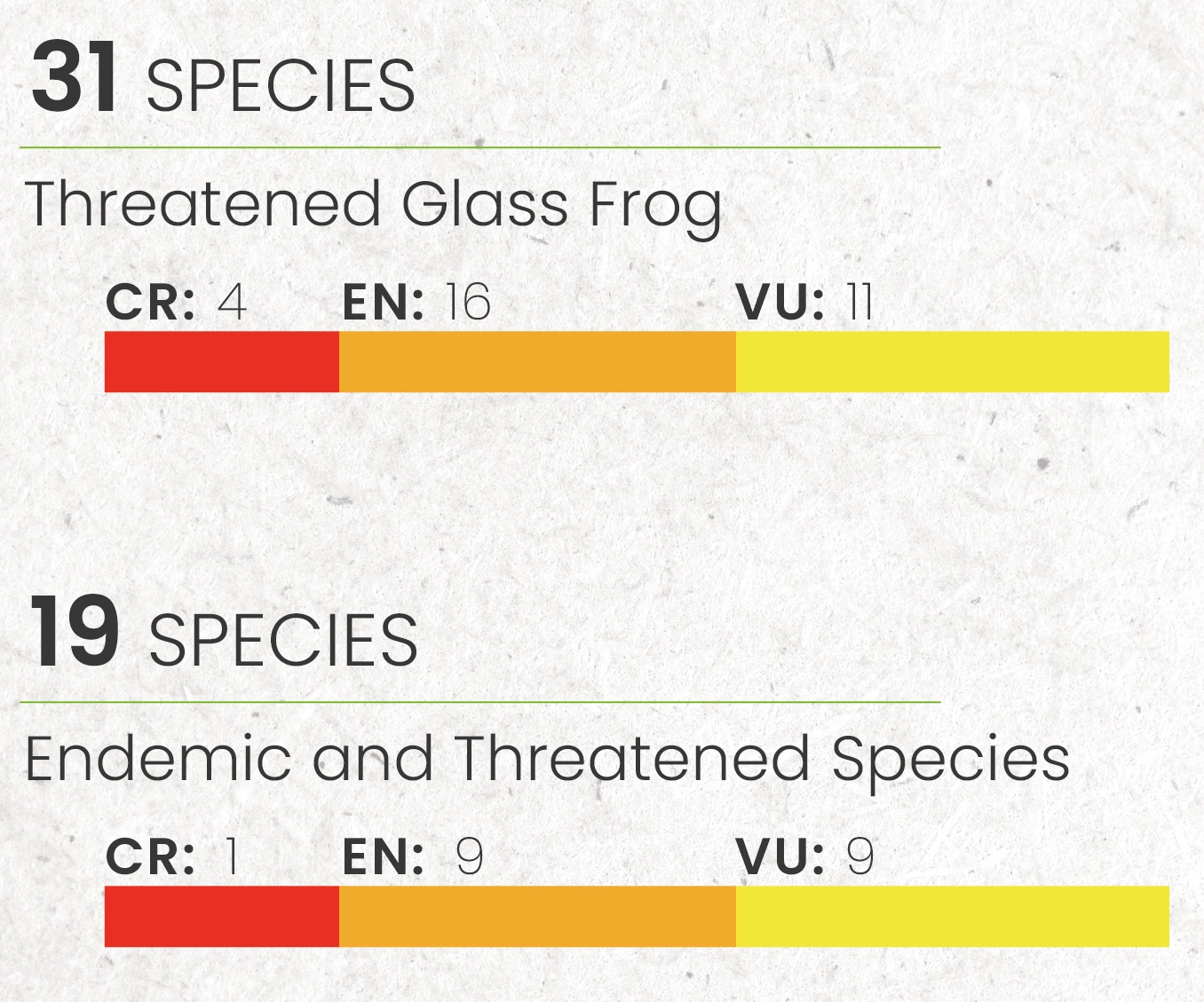
Threatened glass frog species. Infographic: Keeping Nature Tours.
Threats are multiple: habitat loss and fragmentation, stream contamination, agricultural expansion, mining, climate change, and emerging diseases such as chytridiomycosis, caused by the fungus Batrachochytrium dendrobatidis, which has been responsible for the collapse of amphibian populations around the world.
When we look at it more closely, many glass frogs have survived for millions of years thanks to an extraordinary ecological specialization, yet that same specialization now makes them vulnerable. Many depend on extremely specific microhabitats: leaves suspended above clean streams, constant humidity, stable temperatures, and intact forests.
Therefore, conserving glass frogs means conserving something much larger: the streams, the forests, the water, and the intricate web of life upon which they depend.
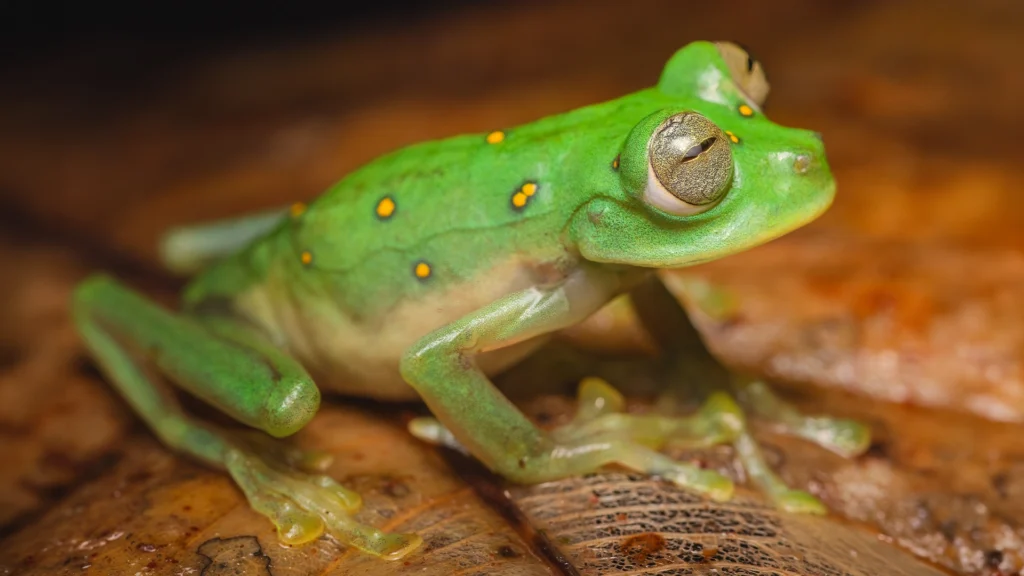
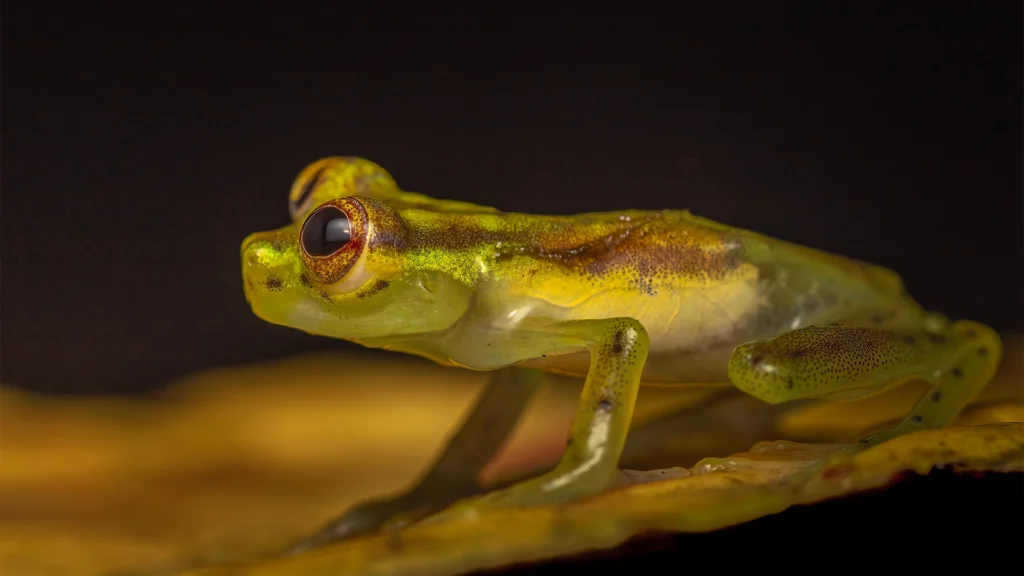
Nymphargus luteopunctatus and Nymphargus balionota, two glass frog species associated with humid montane forests and clean-water streams, ecosystems whose conservation is essential for their survival. Photos: Jhonattan Vanegas.
Seeing the Forest Differently
Seeing a glass frog in the wild is one of those encounters that transforms the way we understand the forest. Perhaps because they seem unreal. Perhaps because they allow us to witness a beating heart through a tiny body. Or perhaps because they force us to slow down and pay attention to something that would normally go unnoticed among wet leaves, flowing water, and darkness. But finding a glass frog is not really the goal.
The real privilege lies in learning how to see it.
To understand why it exists, how it survives, what the forest needs to sustain it, and why such a small animal can tell such a profound story about evolution, fragility, and balance. Because after observing a glass frog suspended on a leaf, something changes: the forest stops feeling like a landscape and begins to feel like a living, delicate, and extraordinarily complex system.
It is not simply about searching for species.
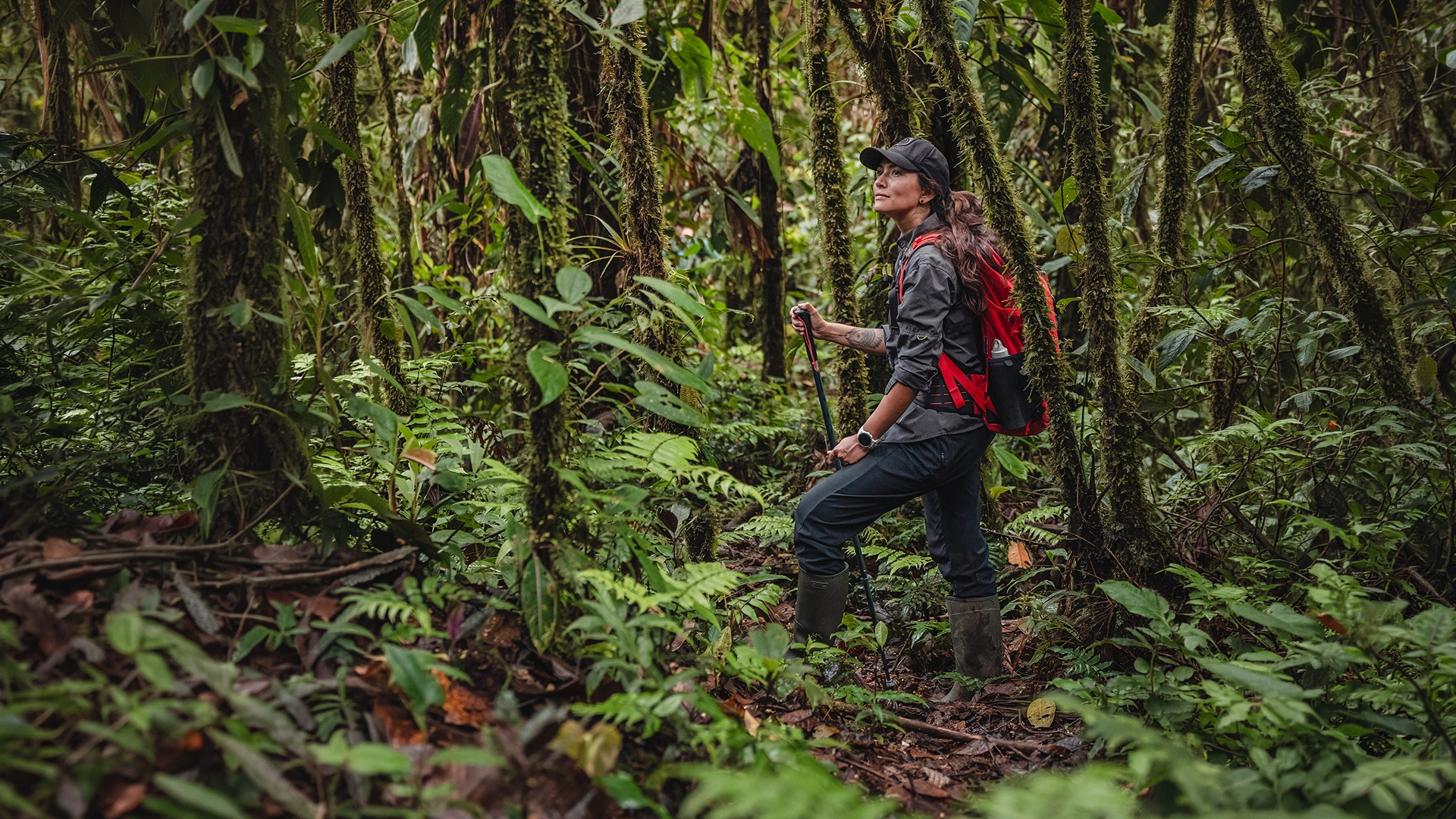
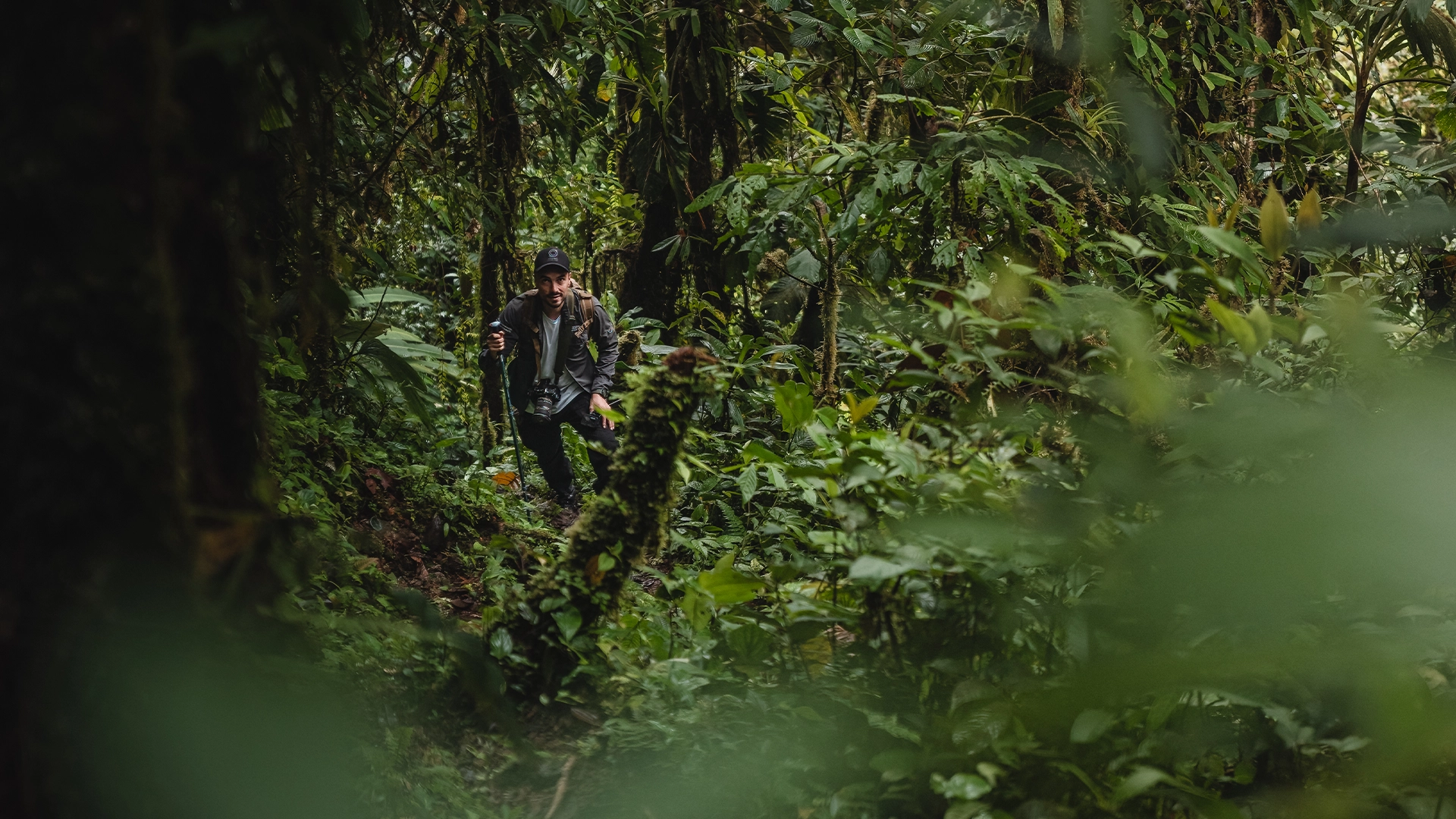
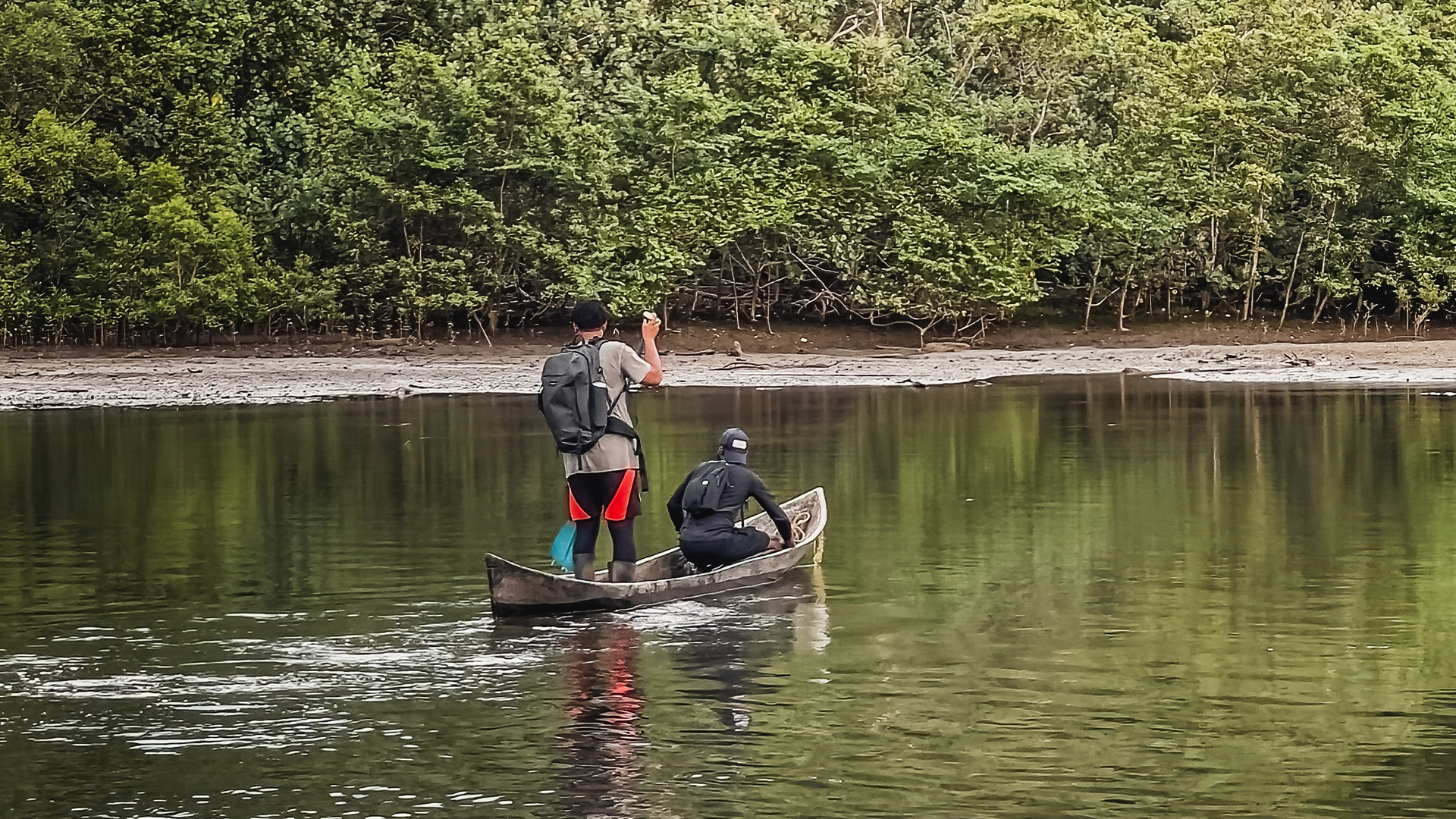
Walking slowly through Colombia’s rainforests, learning to observe, listen, and understand the hidden life of the forest. At Keeping Nature Tours, every expedition becomes an invitation to experience biodiversity more deeply. Photos: Jhonattan Vanegas.
It is about walking slowly, listening, observing, and learning how to read the forest. At Keeping Nature Tours, we develop guided nature photography and herping experiences in some of Colombia’s most biodiverse ecosystems, promoting responsible wildlife observation, environmental education, conservation, and collaboration with local communities. Here, it is not only about finding glass frogs. It is about understanding the world that makes them possible. Because some things only reveal themselves when we learn to look with patience.
Species counts and conservation status were checked against the sources below on 21 October 2026.
Sources
- Amphibian Species of the World, family Centrolenidae. amphibiansoftheworld.amnh.org.