My Photographic Journey in Search of Colombia's Seven Oophaga Species
“Photographing all seven species was never about completing a checklist. It was about traveling across Colombia in search of irreplaceable natural treasures found nowhere else on Earth.”
When I first started photographing wildlife, I never imagined that one day I would document every species within a single genus. At that time, my focus was much simpler: exploring Colombia, discovering new species, and finally seeing the animals I had only known through scientific papers and herpetology books. At the same time, I was learning how light shapes an image, and my greatest challenge was returning home with a photograph that could capture even a fraction of what I had felt during each encounter.
As the years passed, poison frogs gradually became far more important to me than I had ever expected. Every species led me into a different rainforest, across new mountain ranges, and into communities whose connection to these forests long predates the arrival of photographers carrying cameras and muddy boots. Following their trails became another way of discovering Colombia, not through highways or well-known destinations, but through hidden streams, cloud forests, and remote fragments of rainforest where nature still follows its own rhythm.
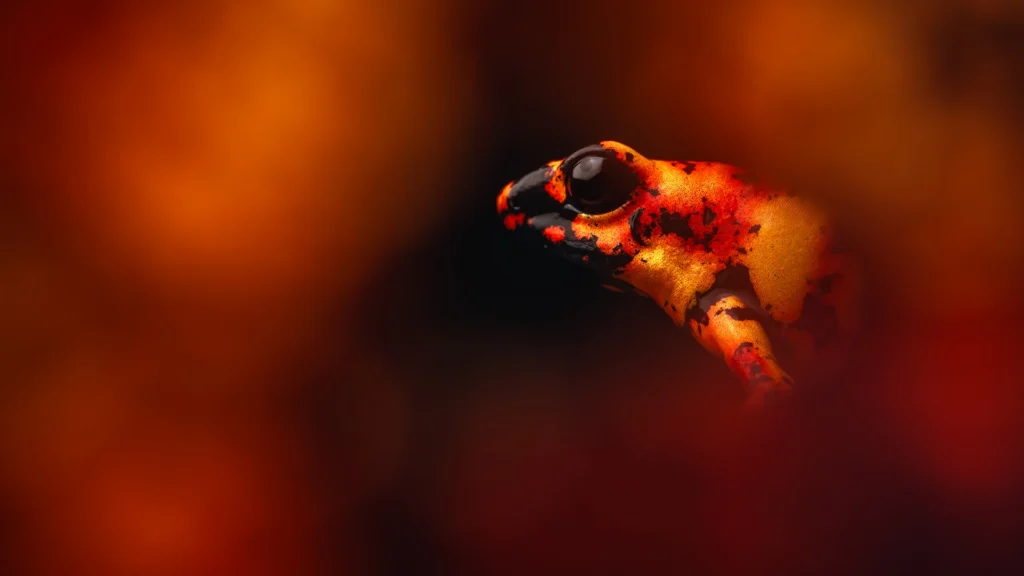
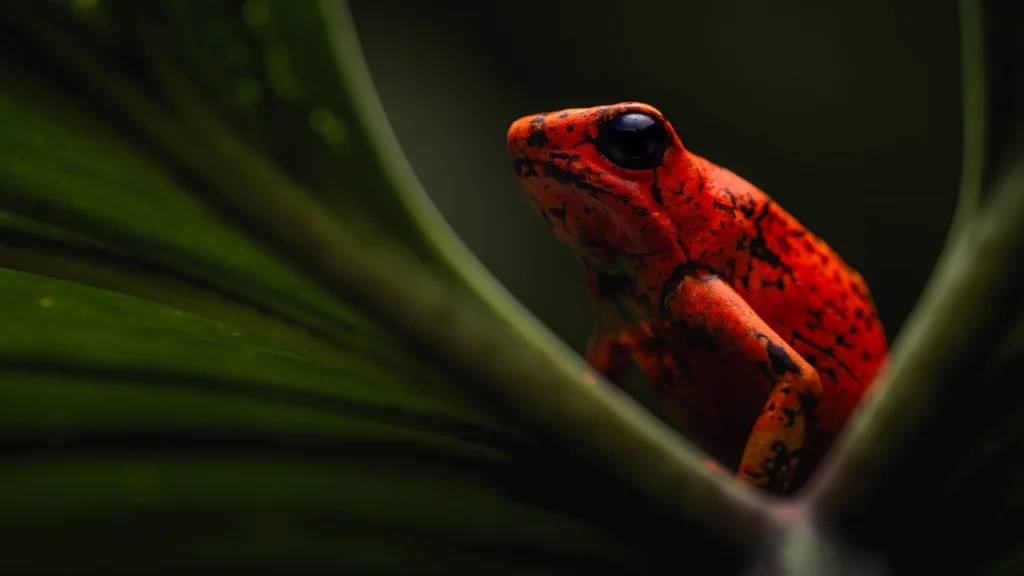
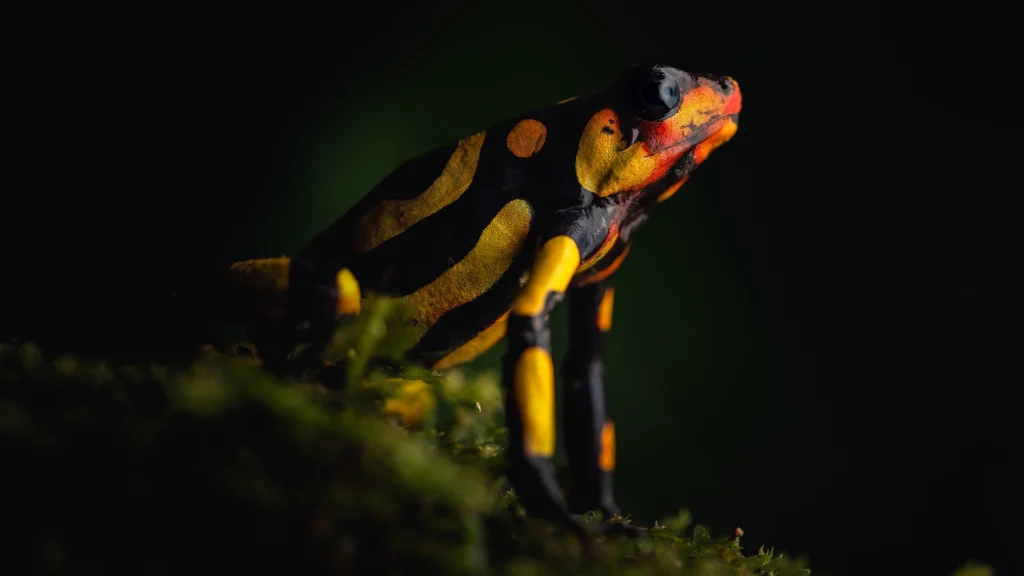
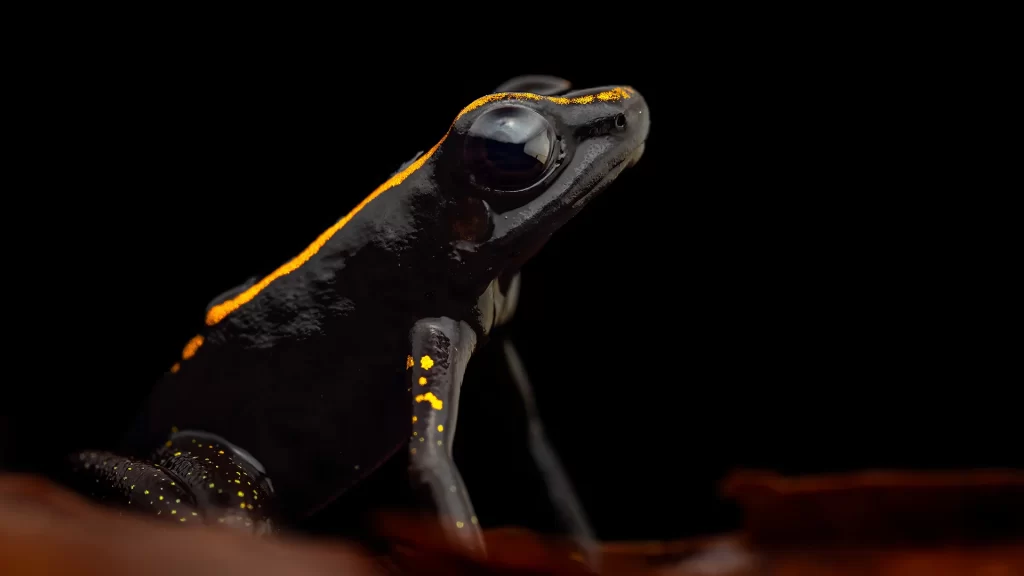
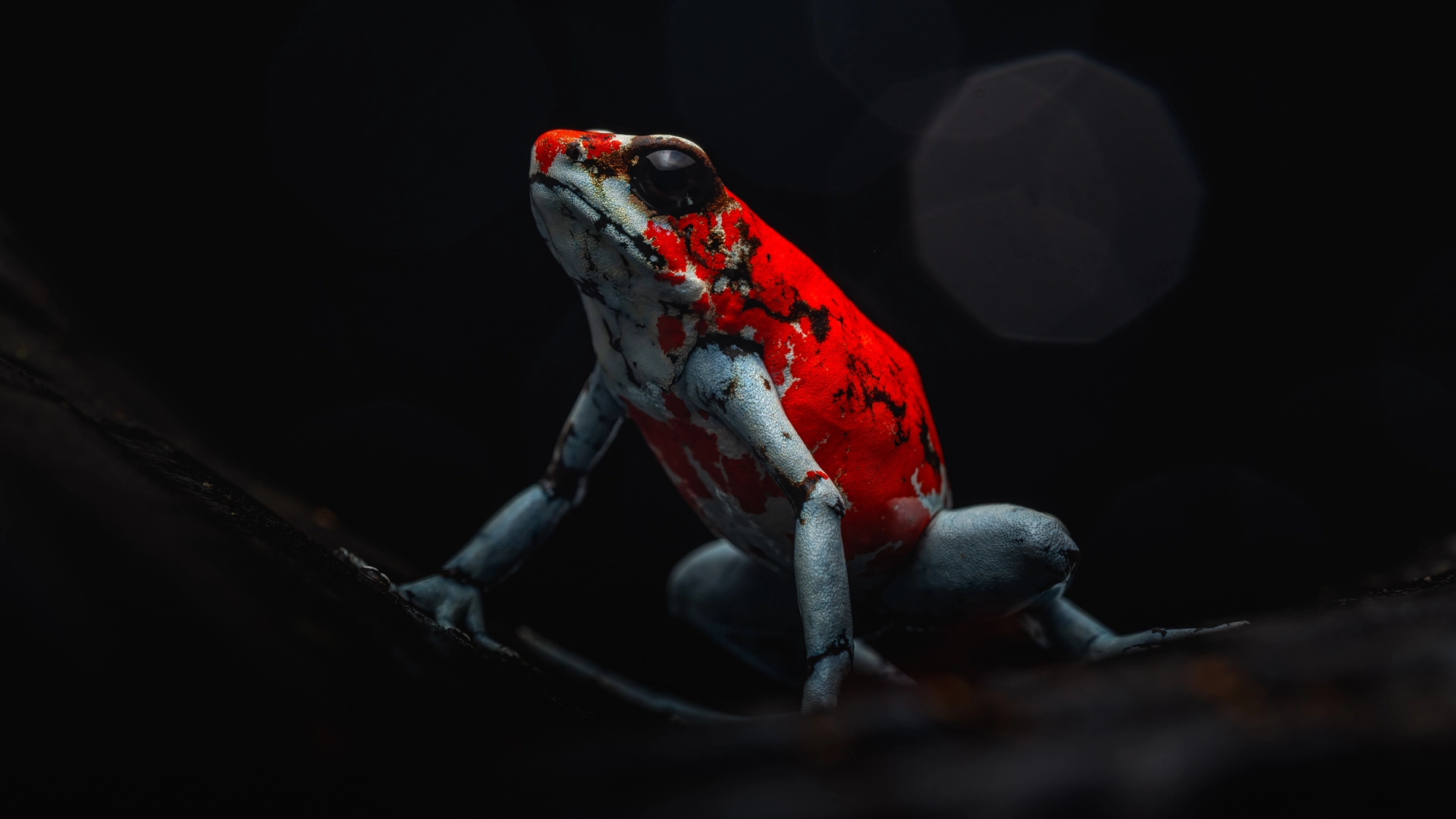
The extraordinary diversity of colors and patterns found across the genus Oophaga. Each species and population reflects a unique evolutionary history shaped by Colombia’s tropical forests. Photo: Jhonattan Vanegas.
One day I realized I was no longer chasing beautiful photographs alone. I was building a photographic record of an entire group of species. This article is the result of that journey and brings together the seven Oophaga species found in Colombia.
When I finally saw all seven species together, I realized that every photograph told a story far greater than the frog itself. Each image spoke about the forest that sustains it, the people who have protected those landscapes for generations, and the responsibility that comes with documenting such localized and fragile forms of life.
This article was born from that experience. Its purpose is not to turn these frogs into another checklist or a collection of trophies. Instead, I want to introduce each species through the perspective of fieldwork, sharing what makes each one unique and why photographing them with patience and respect is also a way of contributing to their conservation.
Beyond Their Colors
Oophaga are small, diurnal poison frogs that are closely associated with the humid forests of the Chocó Biogeographic Region. Their vibrant colors are striking, but what truly defines this genus is its remarkable natural history.
Females feed their tadpoles with unfertilized eggs, a behavior known as parental oophagy, which is also the origin of the name Oophaga, meaning “egg eater.” The tadpoles develop in tiny water-filled plant structures known as phytotelmata, such as bromeliads, tree cavities, and other small forest microhabitats.
This extraordinary level of specialization explains both their beauty and their vulnerability. The survival of an Oophaga species depends on far more than the presence of adult frogs. The forest itself must remain intact, along with its humidity, vegetation, and the countless tiny water reservoirs that make their entire life cycle possible.
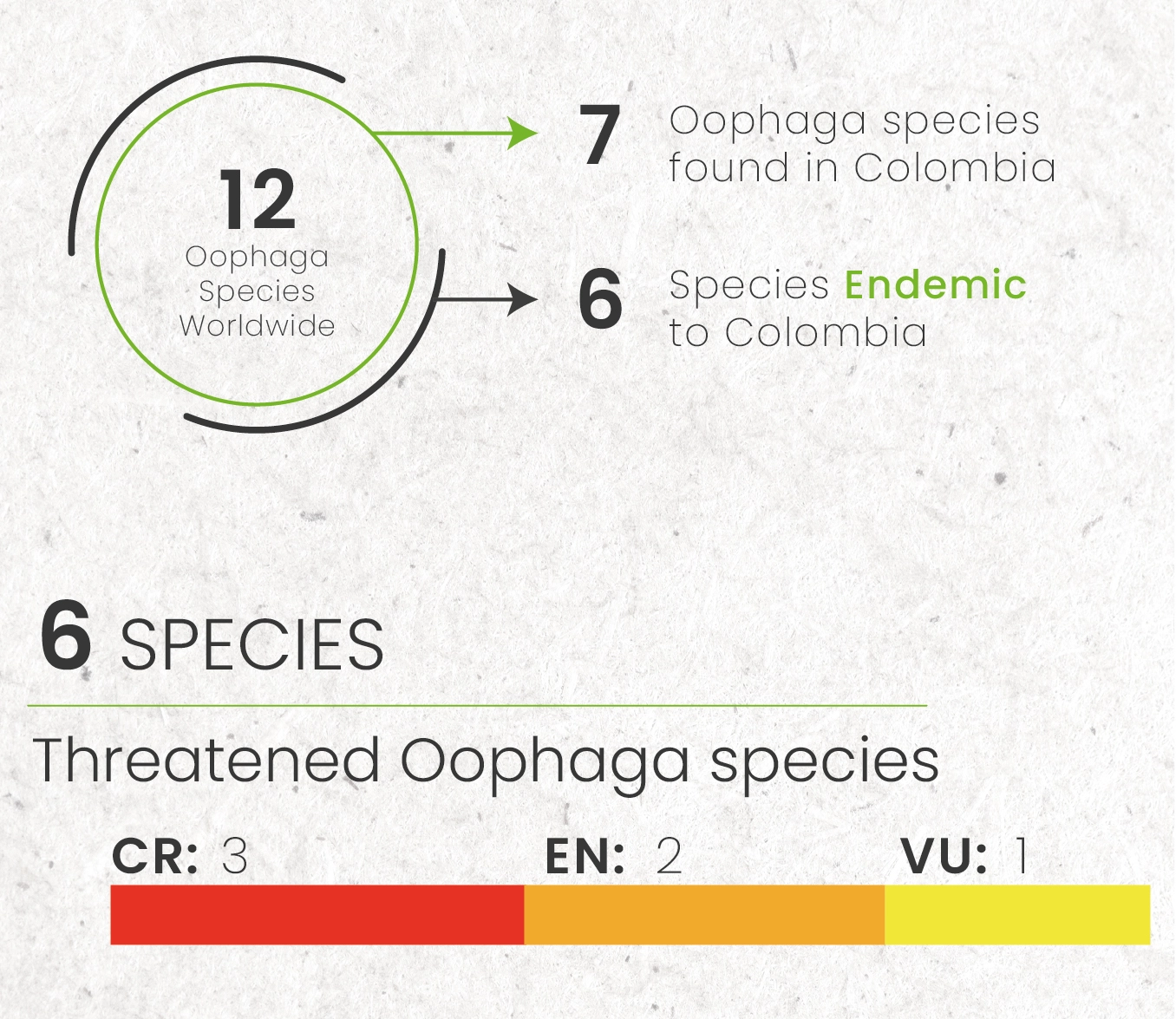
Infographic summarizing the diversity and conservation status of the genus Oophaga in Colombia.
Colombia: The Global Stronghold of the Oophaga Genus
Currently, 12 species of the genus Oophaga are recognized worldwide, and 7 of them occur in Colombia. This means that our country harbors more than half of the genus’ known diversity. The story becomes even more remarkable when endemism is considered. Six of Colombia’s seven Oophaga species are found nowhere else on Earth, while only Oophaga sylvatica extends its range into Ecuador. In other words, half of all Oophaga species can only be found in Colombia, primarily within the humid forests of the Chocó Biogeographic Region and the western slopes of the Andes. This extraordinary concentration makes Colombia the world’s most important center of diversity, evolution, and conservation for the genus.
Yet this exceptional richness comes with an urgent conservation challenge. Of the seven species found in Colombia, three are classified as Critically Endangered (O. histrionica, O. lehmanni, and O. occultator), two as Endangered (O. anchicayensis and O. andresi), one as Vulnerable (O. solanensis), and Oophaga sylvatica is listed as Near Threatened (IUCN Red List). In other words, six of Colombia’s seven Oophaga species are officially considered threatened, while the remaining species is already approaching a threatened category. Because many occupy extremely small geographic ranges, the loss of a single forest, the contamination of one stream, or the degradation of a single locality could mean the disappearance of an irreplaceable part of the genus. Protecting Colombia’s Oophaga frogs is therefore about far more than conserving remarkable amphibians. It means safeguarding half of an evolutionary lineage that exists nowhere else on Earth.
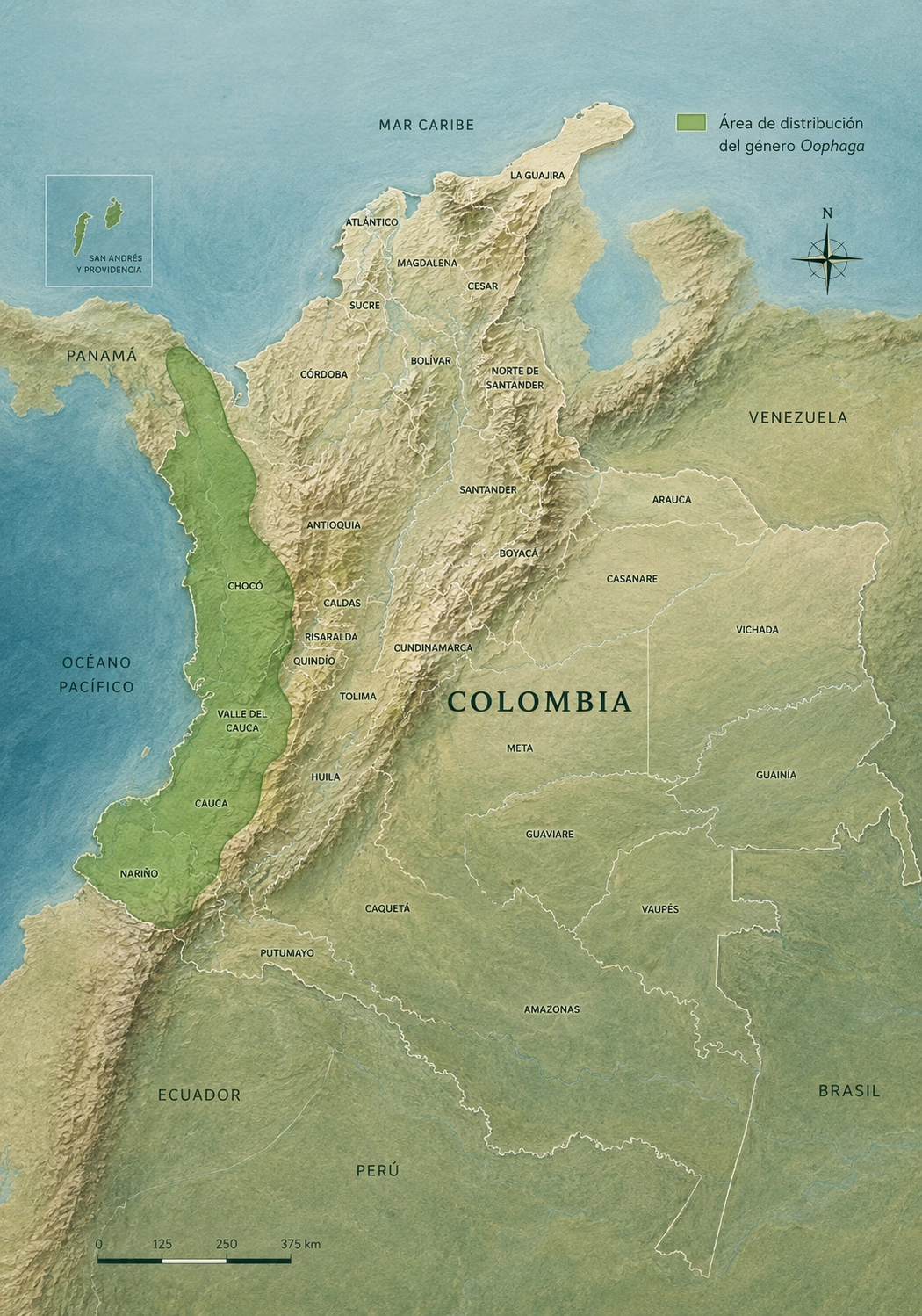
Geographic distribution of the genus Oophaga in Colombia.
Oophaga anchicayensis
The Anchicayá River Valley is one of those places where water, mountains, and rainforest come together to concentrate the extraordinary biodiversity of Colombia’s Pacific region. It is here that Oophaga anchicayensis is found, a species that was formally described by science only in 2018. For many years, however, this population was considered part of the Oophaga histrionica species complex.
Quick Facts: Endemic to Colombia, Oophaga anchicayensis is restricted to the Anchicayá River Valley on the Pacific slope of the Western Andes in Valle del Cauca. It is currently classified as Endangered (EN) on the IUCN Red List.
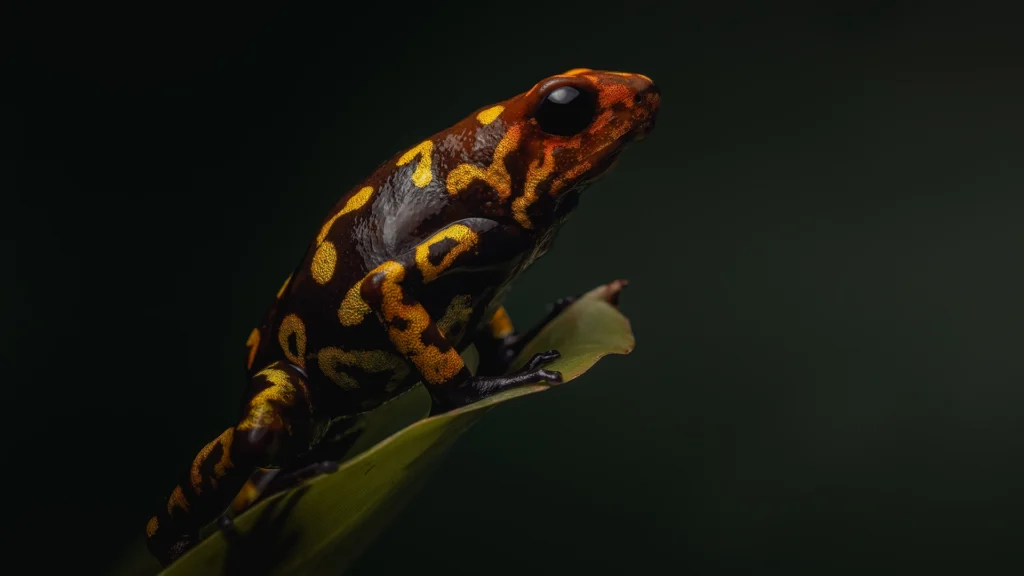

Oophaga anchicayensis displays remarkable variation in color and pattern across its populations in the Anchicayá River Valley, making each encounter a unique expression of the species. Photo: Jhonattan Vanegas.
Oophaga andresi
In a genus shaped by taxonomic revisions, species complexes, and ongoing scientific discoveries, Oophaga andresi has maintained a relatively stable taxonomic history since it was formally described in 2018.
It belongs to the Oophaga histrionica species complex and is found along Colombia’s Pacific slope. Like all Oophaga frogs, it relies on phytotelmata for tadpole development, while females nourish their offspring with unfertilized eggs through the parental oophagy that defines the genus.
Quick Facts: Endemic to Colombia, Oophaga andresi is known from lowland rainforest in Chocó, east of the Atrato and San Juan rivers, at 55 to 450 m. It is currently classified as Endangered (EN) on the IUCN Red List.
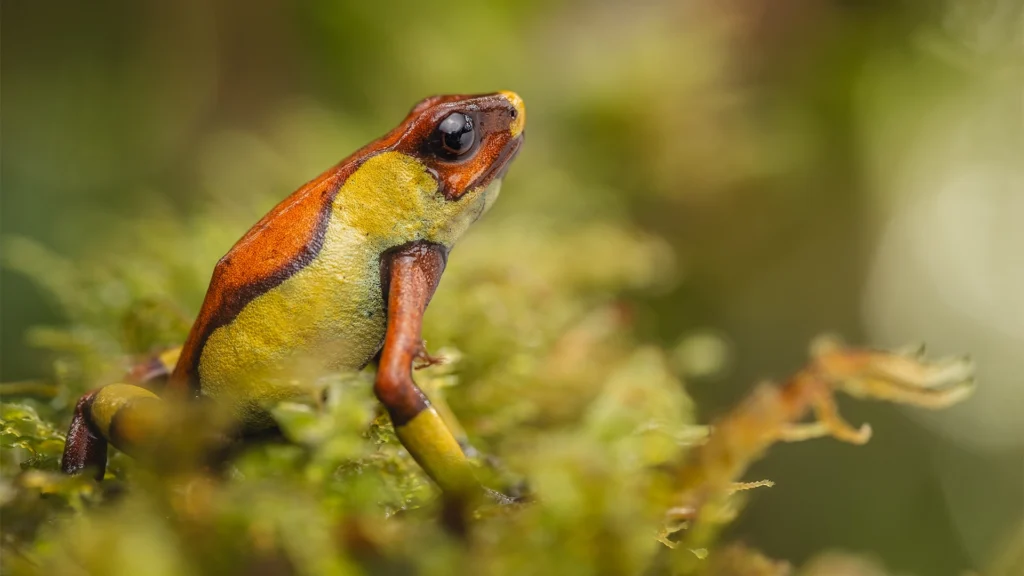
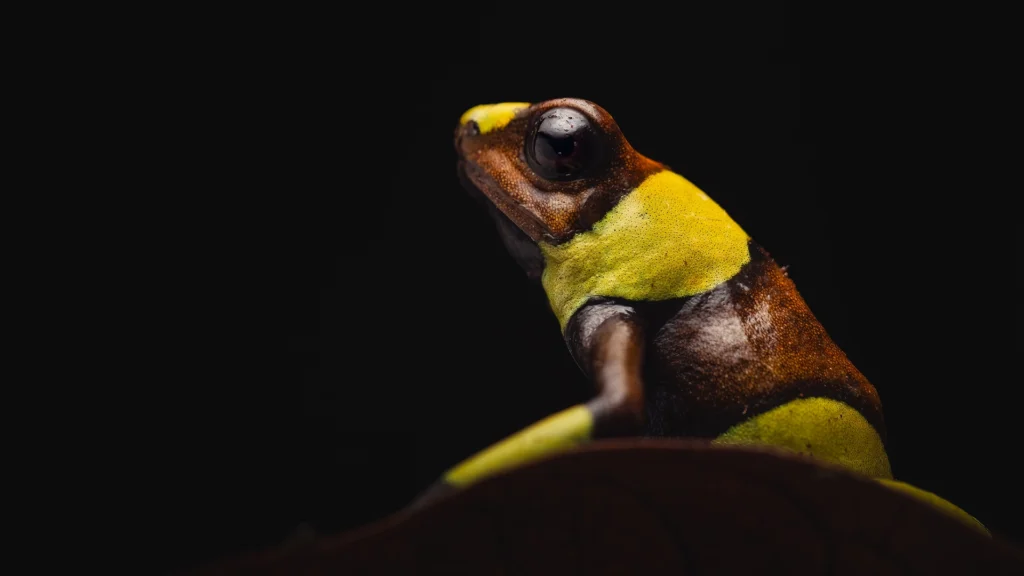
Oophaga andresi photographed in its natural habitat in the Pacific lowland rainforest of Chocó. Photo: Jhonattan Vanegas.
Oophaga histrionica | Harlequin poison frog
The first time someone hears the name Harlequin Poison Frog, they might expect a single, well defined color pattern. With Oophaga histrionica, the opposite is true. Its appearance varies remarkably among populations separated by relatively short distances.
This extraordinary variation is one of the reasons why, for decades, several populations that are now recognized as distinct species were all grouped under the name Oophaga histrionica. Careful fieldwork, morphological studies, and genetic analyses gradually revealed that what was once considered a single species actually represented multiple independent evolutionary lineages.
In the field, Oophaga histrionica is active during the day and is typically found among the leaf litter and low vegetation of the humid forests of the Chocó Biogeographic Region. Its dark background is often decorated with striking red, orange, or yellow bands and blotches, making every encounter feel like discovering a completely different expression of the species.
Quick Facts: Endemic to Colombia, Oophaga histrionica is restricted to the lowland and premontane forests on the western slope of the Western Andes. It is currently classified as Critically Endangered (CR) on the IUCN Red List.
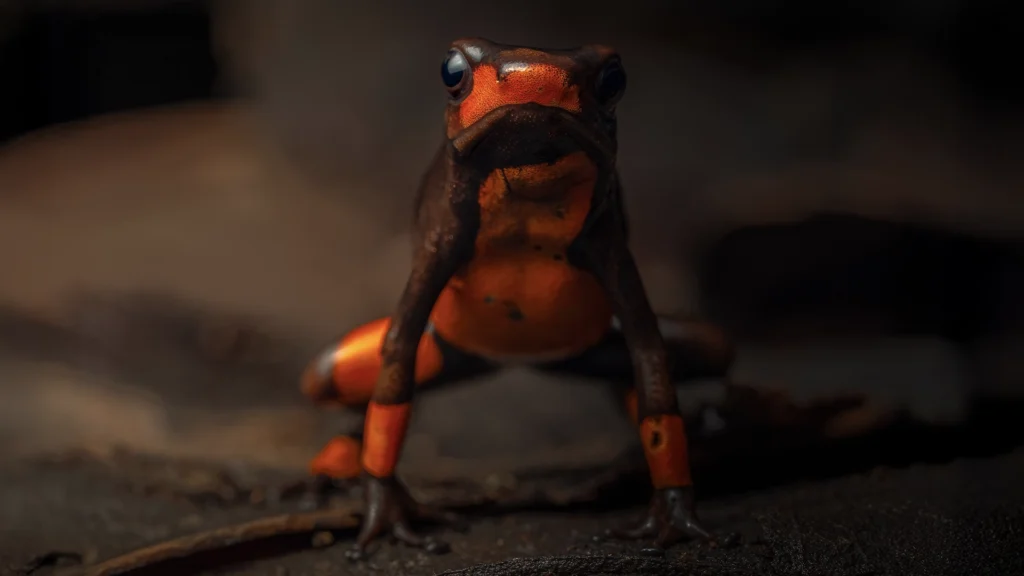
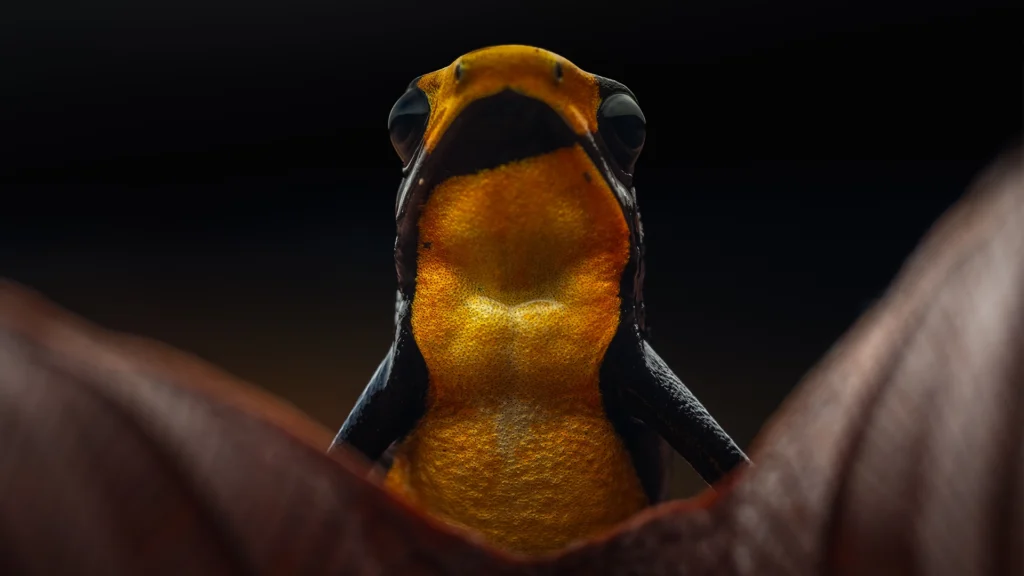
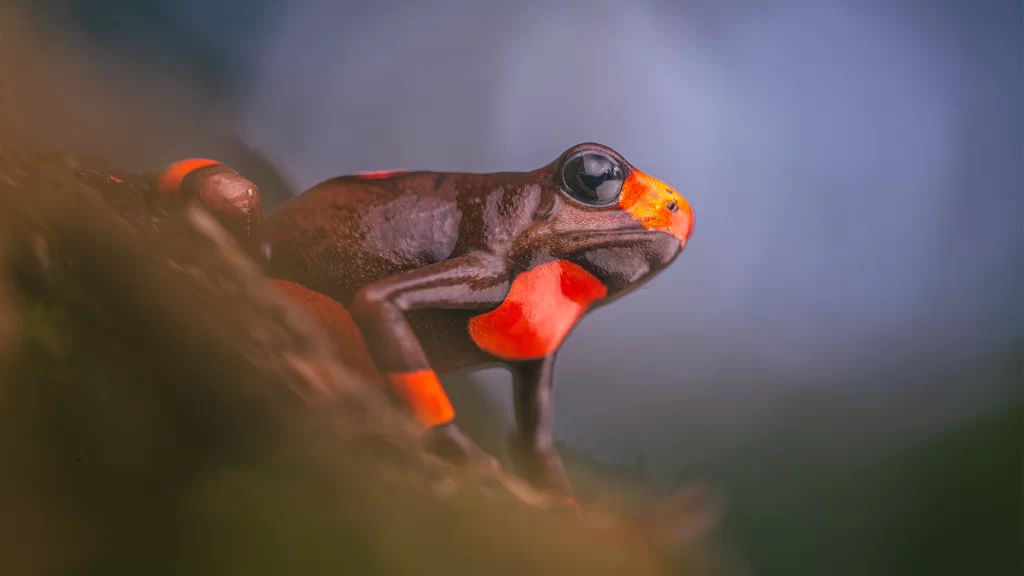
Individuals of Oophaga histrionica displaying the remarkable color variation that once led scientists to believe they belonged to a single, highly variable species. Photo: Jhonattan Vanegas.
Oophaga lehmanni | Lehmann's poison frog
Its story is one of extraordinary beauty, endemism, and the intense human pressures that threaten its survival. Beyond habitat loss, Oophaga lehmanni has long been targeted by the illegal wildlife trade, driven by the very colors that have made it one of the world’s most admired poison frogs.
Its distribution is extremely restricted to the western slope of the Western Andes in Valle del Cauca, Colombia, and it is currently classified as Critically Endangered. It is one of those species that many people recognize from photographs, yet very few have ever had the privilege of seeing in its natural habitat.
Quick Facts: Endemic to Colombia, Oophaga lehmanni has an extremely restricted range on the western slope of the Western Andes in Valle del Cauca. It is currently classified as Critically Endangered (CR) on the IUCN Red List.
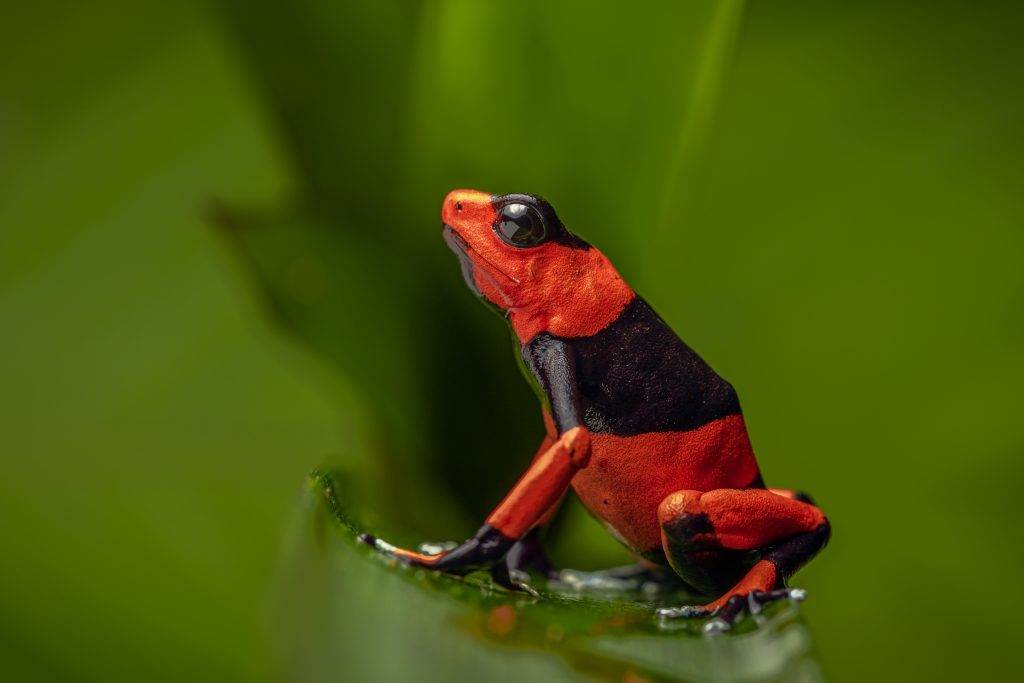
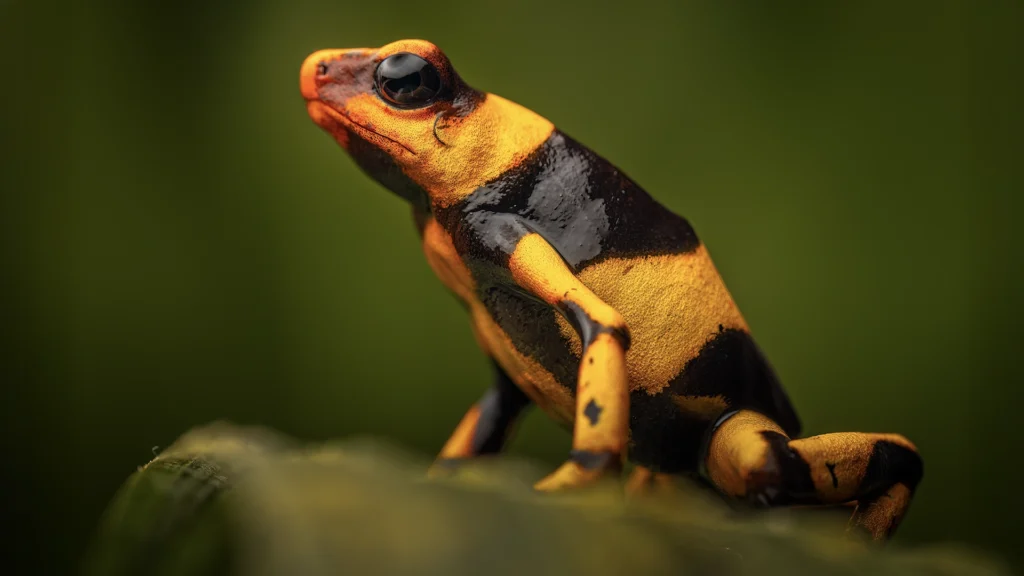
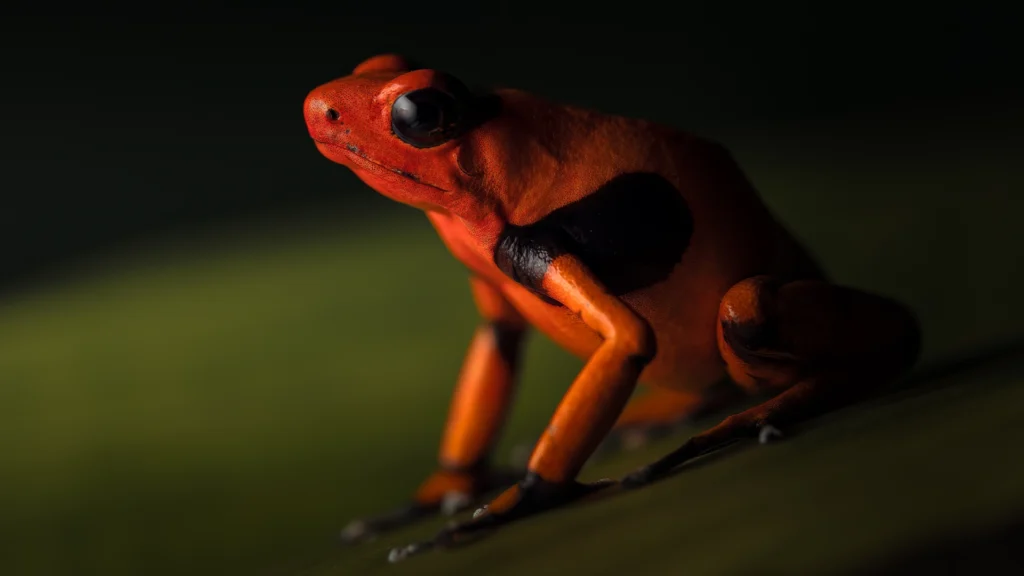
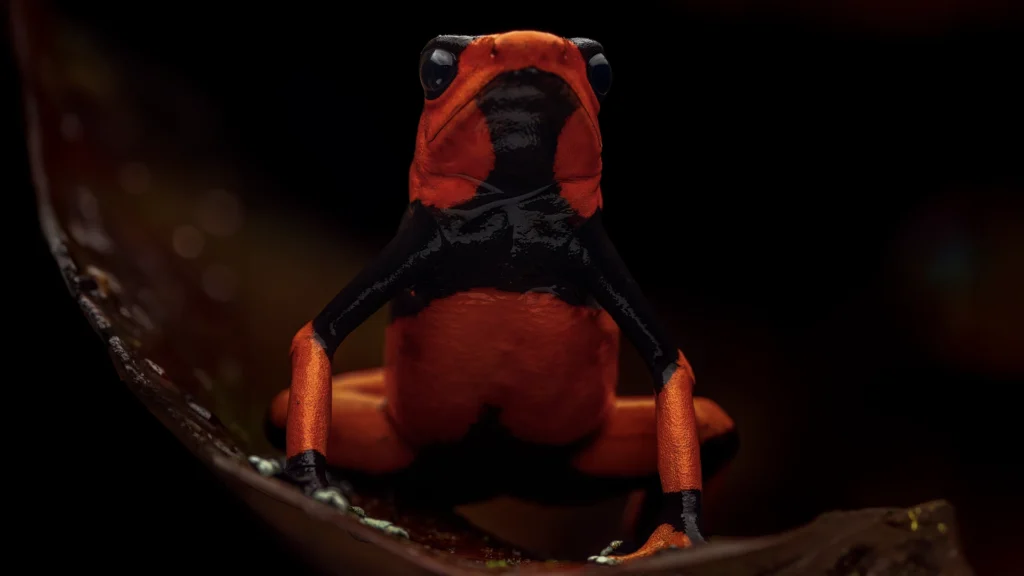
Oophaga lehmanni, one of Colombia’s most iconic poison frogs, photographed in its natural habitat. Photo: Jhonattan Vanegas.
Oophaga occultator | La Brea poison frog
Some species are confined to a single region. The entire range of Oophaga occultator fits within just a handful of forests. With an estimated extent of occurrence of 50 km², it is one of the most geographically restricted endemics in the genus (IUCN Red List).
It is known only from a small area of the Pacific lowlands of Cauca and is currently classified as Critically Endangered. For a species like this, conservation is far from an abstract concept. Every remaining forest fragment and every disturbance to its watershed can have a disproportionate impact on the species’ entire global population.
Encountering Oophaga occultator in the wild changes the way you think about rarity. It is not simply difficult to find. It is the realization that the entire natural history of this species unfolds within an incredibly small corner of the planet. That is also why its exact location should never become public content or be shared indiscriminately.
Quick Facts: Endemic to Colombia. It is known only from a small area of the Pacific lowlands of Cauca, with an estimated extent of occurrence of 50 km². It is currently classified as Critically Endangered (CR) on the IUCN Red List.
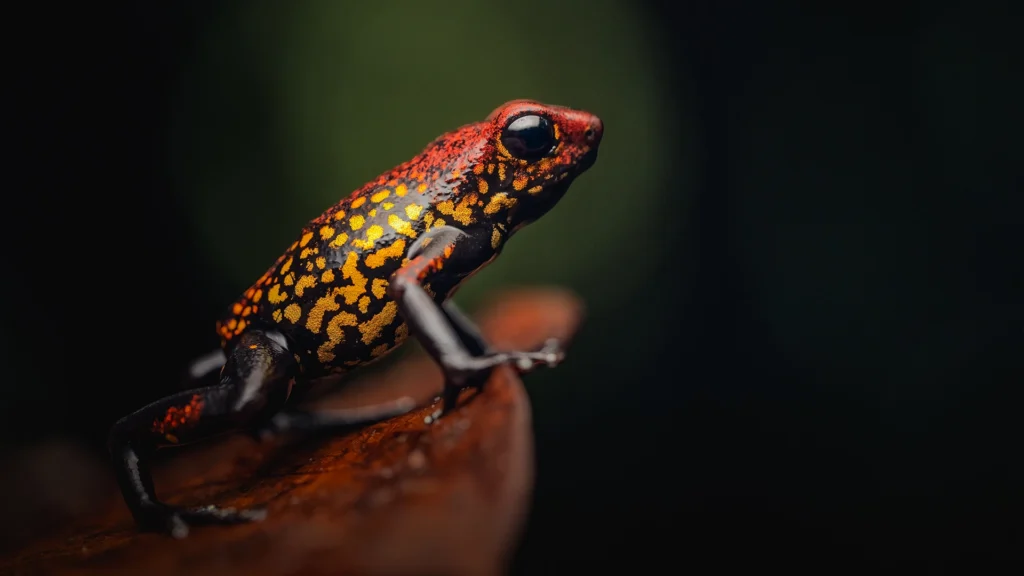
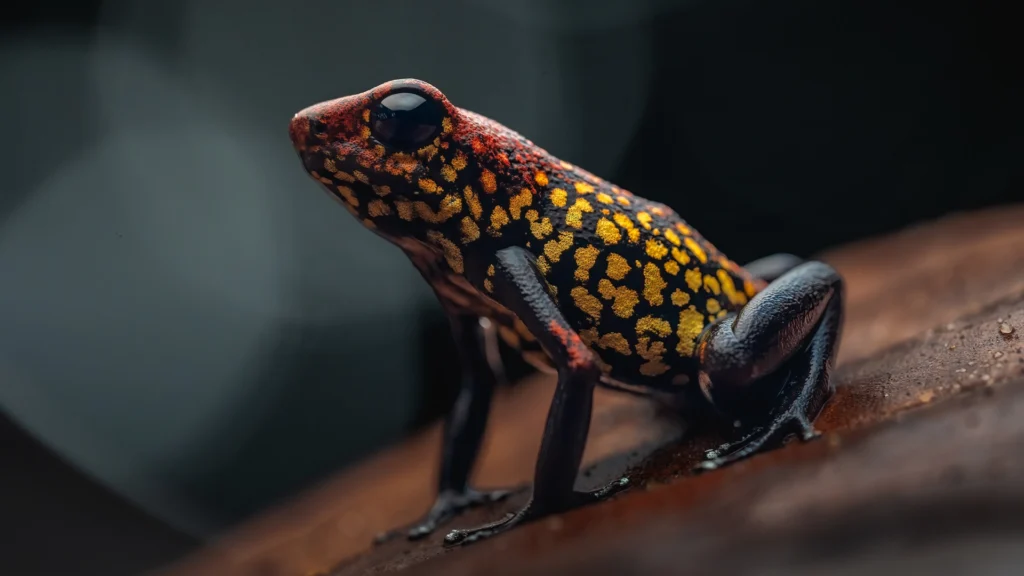
Oophaga occultator, one of the most range-restricted poison frogs in the genus, photographed in its natural habitat. Photo: Jhonattan Vanegas.
Oophaga solanensis
Oophaga solanensis was formally described in the same 2018 taxonomic revision that helped untangle the Oophaga histrionica species complex. It is a range-restricted species of the Pacific lowland rainforests of Chocó, from sea level to about 420 m. Much of its natural history, behavior, and microhabitat use remains poorly documented in the scientific literature, making it important to distinguish between what is currently known and what still awaits discovery.
Quick Facts: Endemic to Colombia, found in the Pacific lowlands of Chocó, west of the Atrato and San Juan rivers (0 to 420 m). It is currently classified as Vulnerable (VU) on the IUCN Red List.
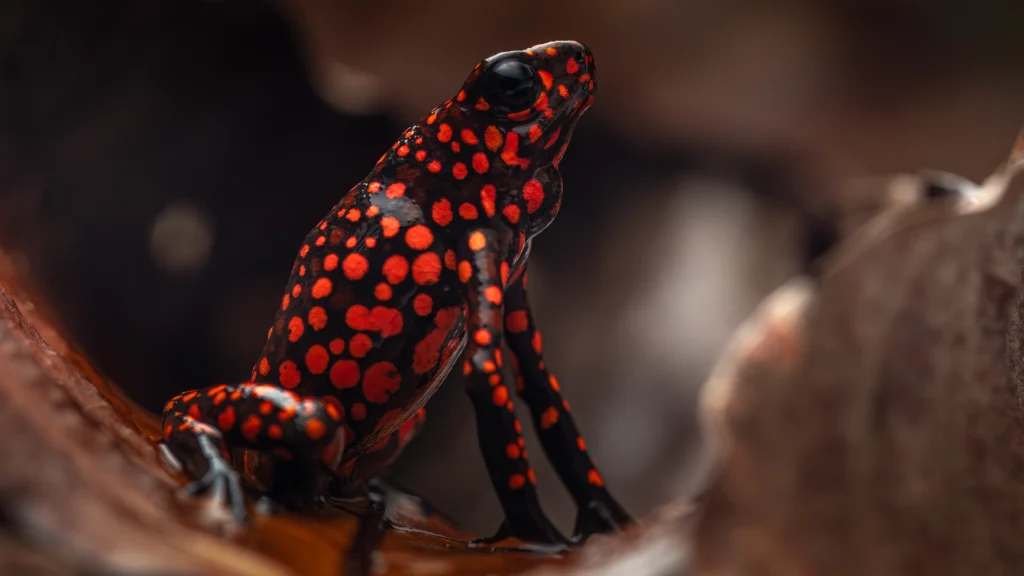
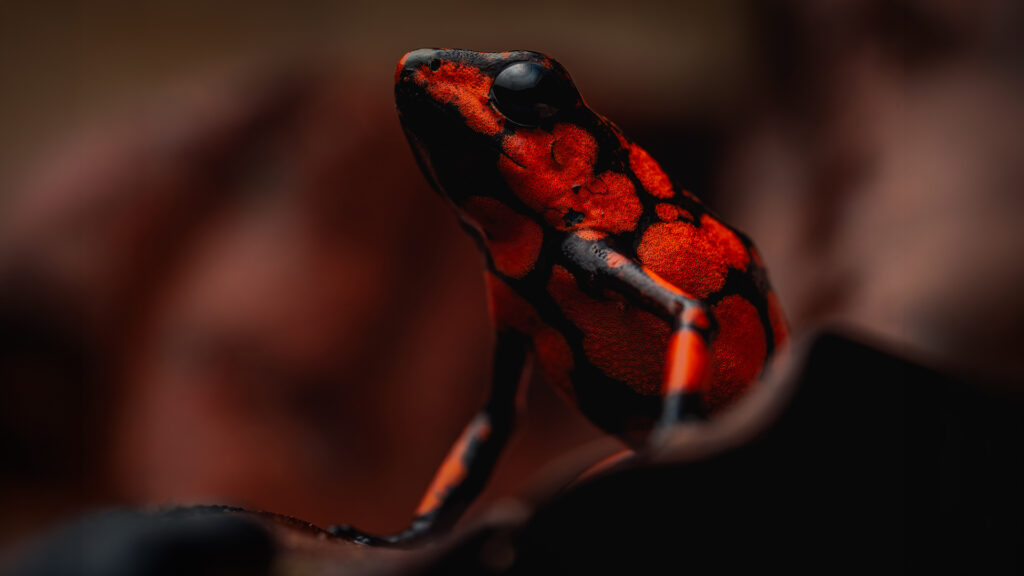
Oophaga solanensis, a range-restricted frog of the Pacific lowland rainforests of Chocó, photographed in its natural habitat. Photo: Jhonattan Vanegas.
Oophaga sylvatica | Diablito
Oophaga sylvatica breaks the pattern of Colombian endemism. Its distribution extends across northwestern Ecuador and southwestern Colombia, where an extraordinary diversity of color morphs has been documented.
This variation can be so striking that individuals from different populations may appear to belong to entirely different species. Yet beneath those colors lies the same reproductive strategy that defines the genus and the same dependence on a healthy, functioning humid forest.
Quick Facts: Oophaga sylvatica occurs in northwestern Ecuador and southwestern Colombia, including the departments of Cauca and Nariño. It is currently classified as Near Threatened (NT) on the IUCN Red List.
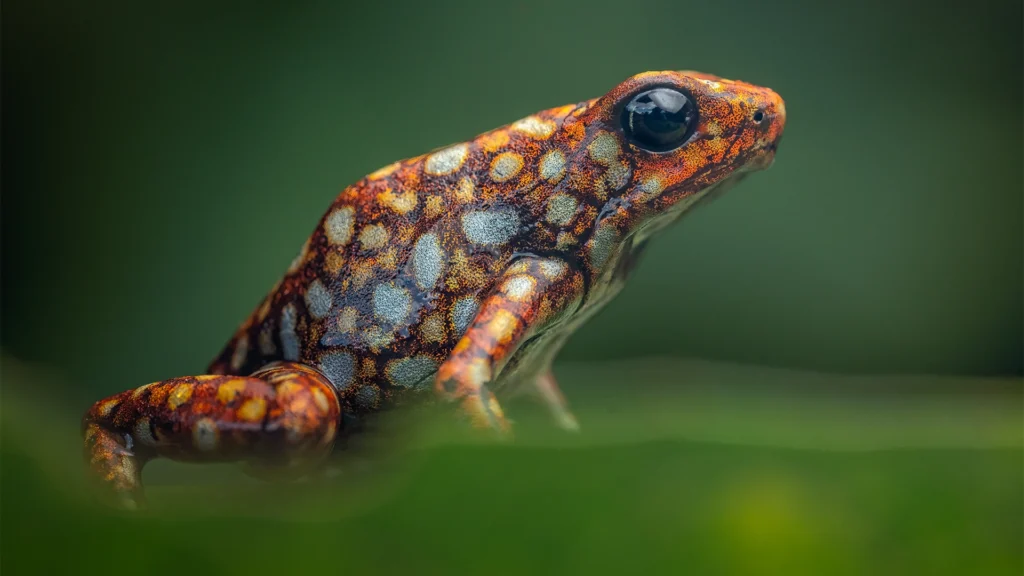
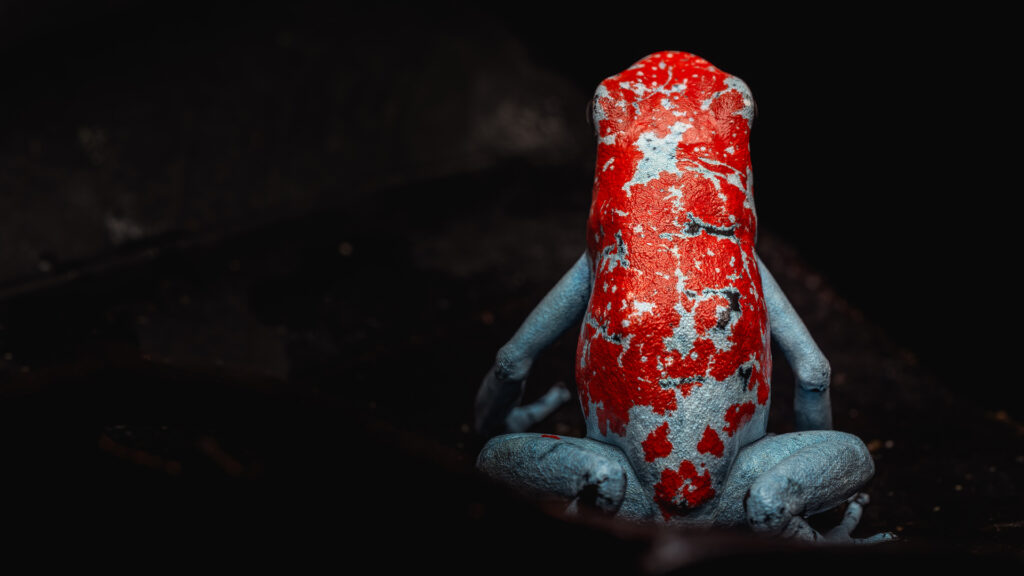
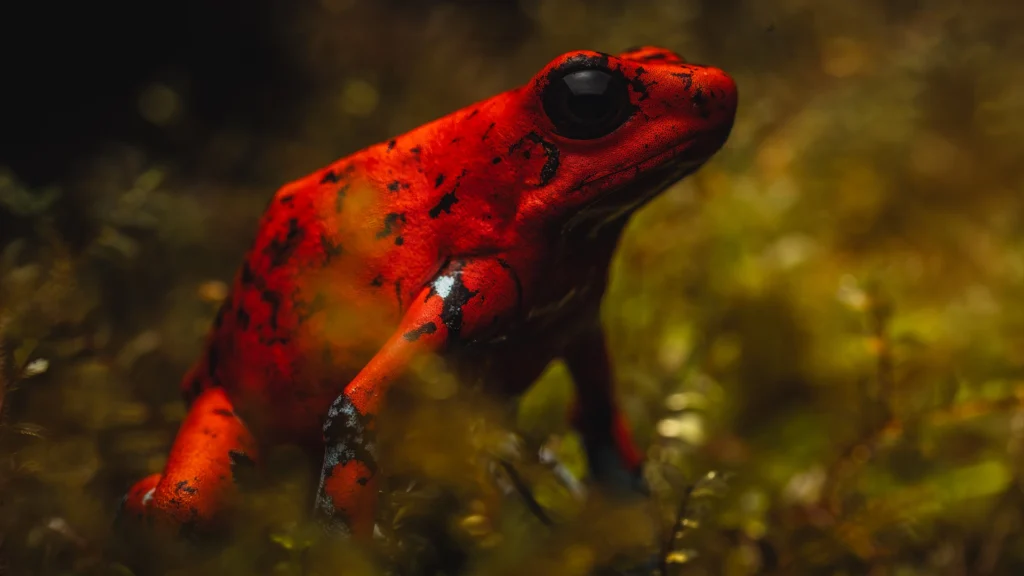
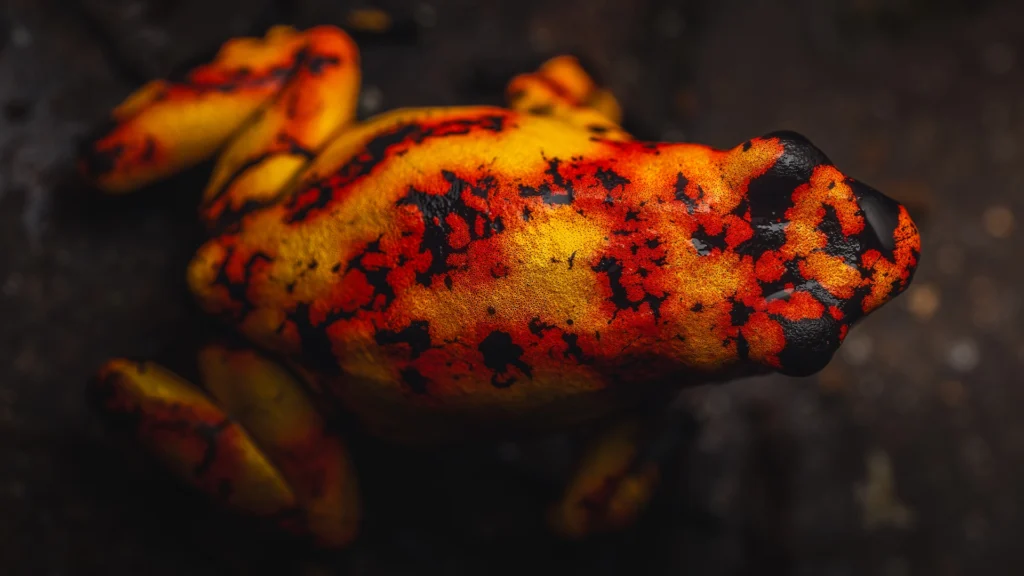
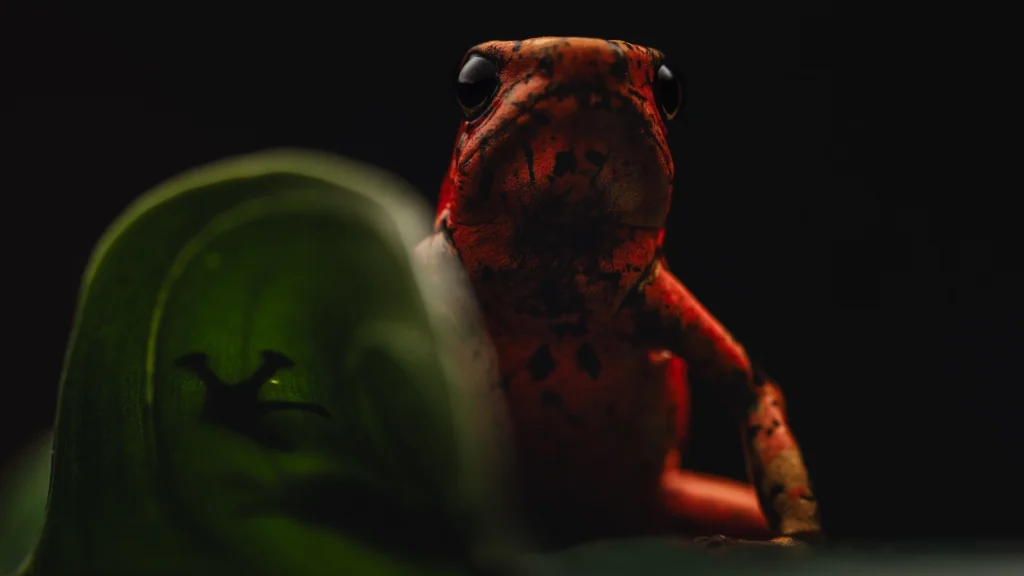
Different male Oophaga sylvatica illustrating the extraordinary variation in color patterns that characterizes this species. Photo: Jhonattan Vanegas.
What These Seven Species Taught Me About Colombia
Seen together, these seven species are far more than an identification guide. They tell the story of Colombia’s Pacific forests, of rivers that separate populations, mountains that drive evolution through isolation, forests that sustain highly specialized reproductive cycles, and local communities whose knowledge of these landscapes long predates the scientific description of many of these frogs.
The greatest lesson from this journey is that Colombia’s extraordinary biodiversity does not always live in its most famous places. More often, it survives in small patches of forest that rarely appear on postcards or tourist itineraries, yet whose preservation determines the future of an entire species.
Photographing all seven Oophaga species found in Colombia was never a goal I imagined when I first picked up a camera. Looking back, however, the true achievement was never about completing a list. It was found in every hike through the rainforest, in every person who helped me along the way, in the days when no frogs appeared at all, and in the realization that truly knowing a species also means accepting a responsibility to help protect it.
Species counts and conservation status were checked against the sources below on 21 October 2026.
Sources
- IUCN SSC Amphibian Specialist Group. Oophaga histrionica e.T144231367A144443857 (2019); O. lehmanni e.T55190A85891808 (2019); O. occultator e.T55194A85891333 (2017); O. sylvatica e.T55203A85887077; O. anchicayensis e.T144232997A144232999 (2019); O. andresi e.T144233018A144233061 (2019); O. solanensis e.T144232525A144232914 (2019). The IUCN Red List of Threatened Species.
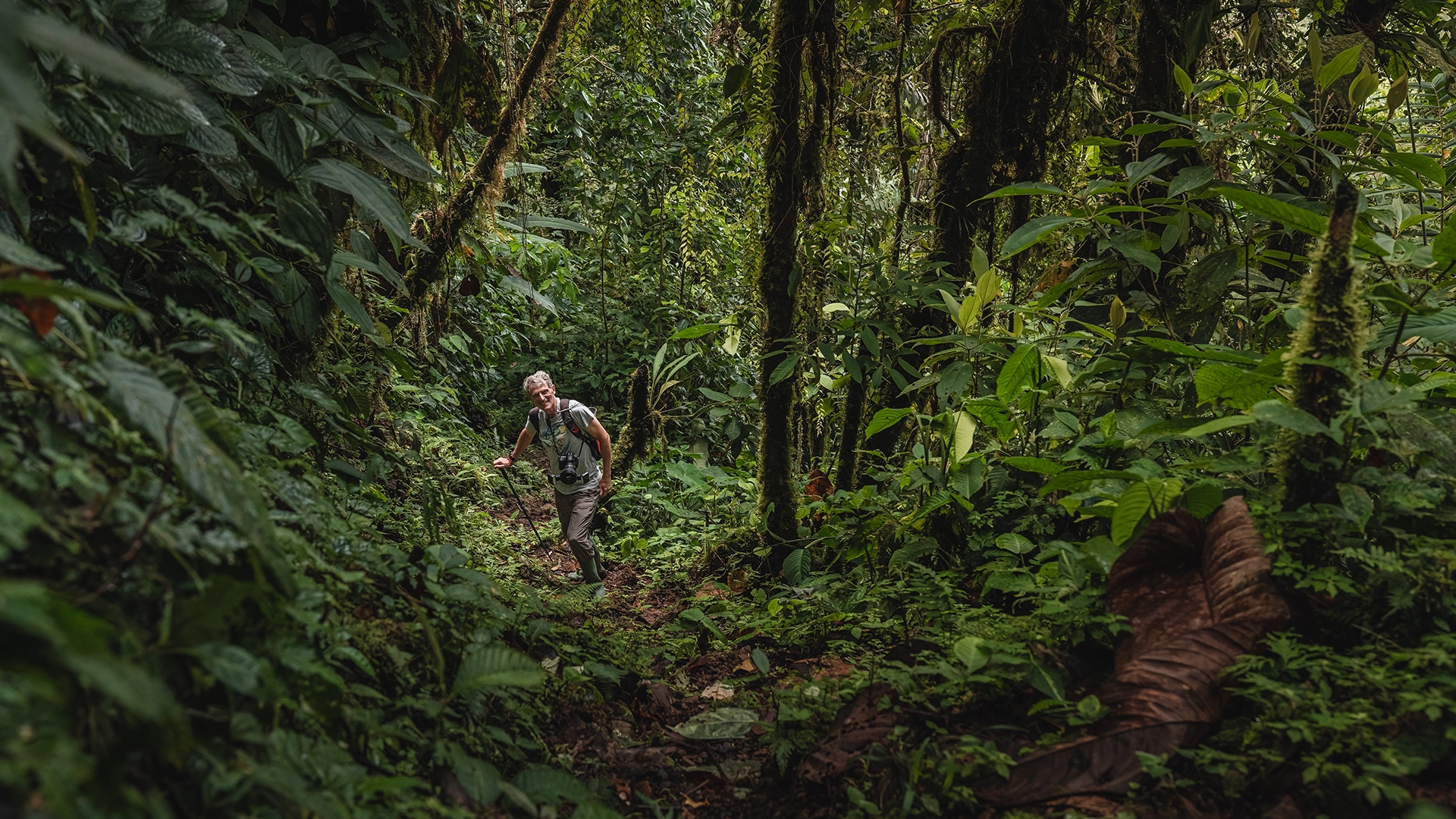
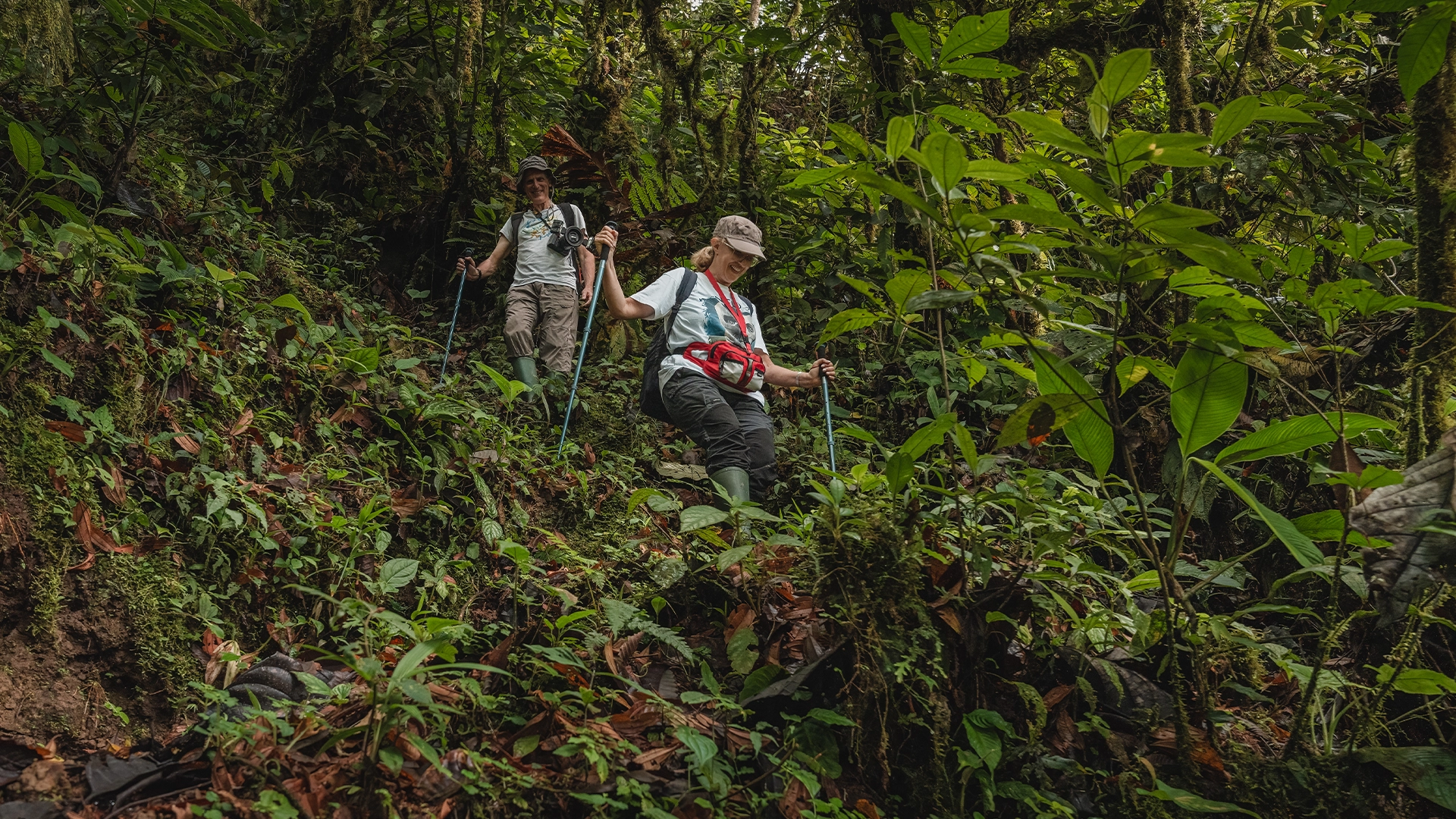
Lucio and Maria Teresa have explored Colombia’s rainforests with Keeping Nature Tours in search of poison frogs and the extraordinary biodiversity that surrounds them. Their journey is a reminder that the greatest discoveries often begin with curiosity, patience, and a deep love for nature. Photos: Jhonattan Vanegas.
At Keeping Nature Tours, we design macro photography and herping expeditions that invite you to experience Colombia’s biodiversity with patience, curiosity, and respect. We believe the best wildlife photographs are not the result of chasing species, but of understanding the ecosystems that sustain them. Every expedition is an opportunity to slow down, connect with nature, and tell authentic stories through photography.