
Antpittas of Colombia: Seven Ghosts of the Andean Cloud Forest
There is a bird that birders often speak about in a quieter voice. You hear it long before you see it: a clear whistle rising from the dark understory of an Andean cloud forest, followed by silence. That elusive bird is the antpitta.
Colombia is one of the best places in the world to encounter these remarkable birds. With around thirty species recorded in the country, Colombia holds an extraordinary diversity of antpittas, including species found nowhere else on Earth.
In this article, we explore seven antpittas of the Colombian Andes, from the relatively familiar to the tiny, the endemic, and the exceptionally elusive. Along the way, we will discover the forests they depend on, the communities that help protect them, and some of the photographic challenges involved in capturing these secretive birds.
What is an antpitta
Antpittas are small to medium-sized forest birds adapted to life close to the ground. They have rounded bodies, long legs, short tails, and large eyes that help them navigate the dim understory of humid forests.
They spend much of their time walking through leaf litter and moss, searching for earthworms and other small invertebrates. Their preference for dense vegetation and their secretive behavior make them notoriously difficult to see.
For many birders, hearing an antpitta is easy. Seeing one is the real challenge.
Colombia, a country of antpittas
Colombia is home to around thirty species of antpittas, making the country one of the world’s most important places for this remarkable group of birds. Several species are endemic to Colombia, meaning they occur nowhere else on Earth.
Many antpittas depend on mature, humid Andean forests, ecosystems that are increasingly fragmented by human activity. Their survival is therefore closely connected to the protection of the forests they inhabit.
For bird photographers, antpittas represent more than a difficult subject to photograph. They are a reminder that some of the most extraordinary biodiversity can be found in the quietest and most hidden corners of the forest.
Seven faces from the Colombian Andes
These seven species reveal just how much diversity can be found within the antpitta family. Some are relatively widespread and can be encountered with patience, while others are restricted to specific mountain ranges or habitats. Some are large and boldly patterned, while others are tiny birds whose presence is often announced only by their distinctive calls.
Together, they tell a broader story about Colombia’s Andean forests, their elevation, isolation, biodiversity, and the people working to keep them standing.
Chestnut-crowned Antpitta | Grallaria ruficapilla
Perhaps one of the most recognizable antpittas of the Colombian Andes, the Chestnut-crowned Antpitta is named for the warm chestnut crown that contrasts with its boldly marked breast.
It inhabits humid montane forests and spends much of its time moving quietly through the understory and leaf litter. Its distinctive song is often the first clue that one is nearby.
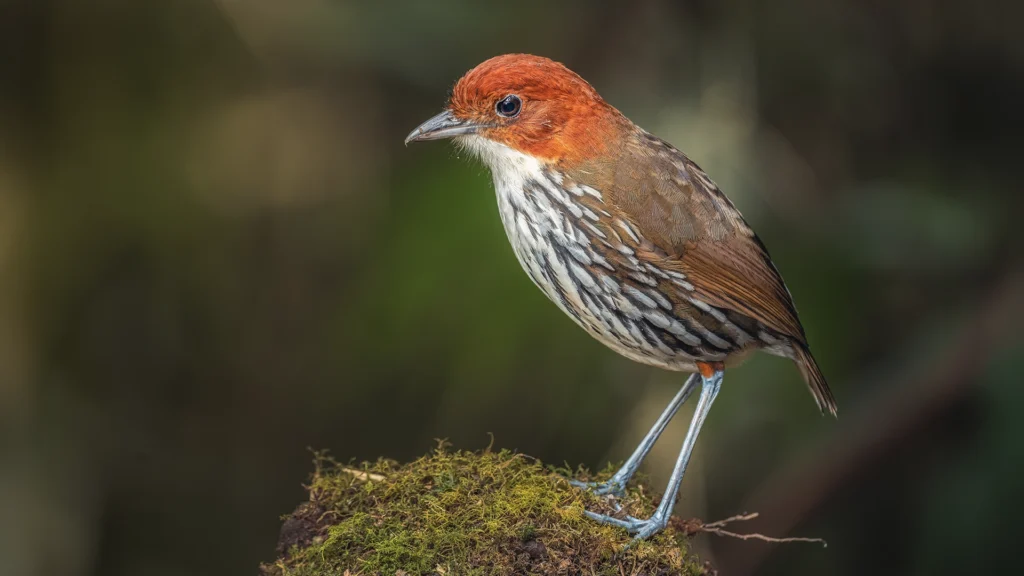
Chestnut-crowned Antpitta (Grallaria ruficapilla). A familiar voice of the Andean understory, captured in the quiet world where these birds spend most of their lives. Photographed by Jhonattan Vanegas.
Bicolored Antpitta | Grallaria rufocinerea
The Bicolored Antpitta is a striking bird of the Colombian Andes, characterized by its rufous upperparts and contrasting grey underparts. Its secretive nature and preference for dense montane vegetation make an encounter particularly rewarding. For photographers, patience is often the most important piece of equipment.
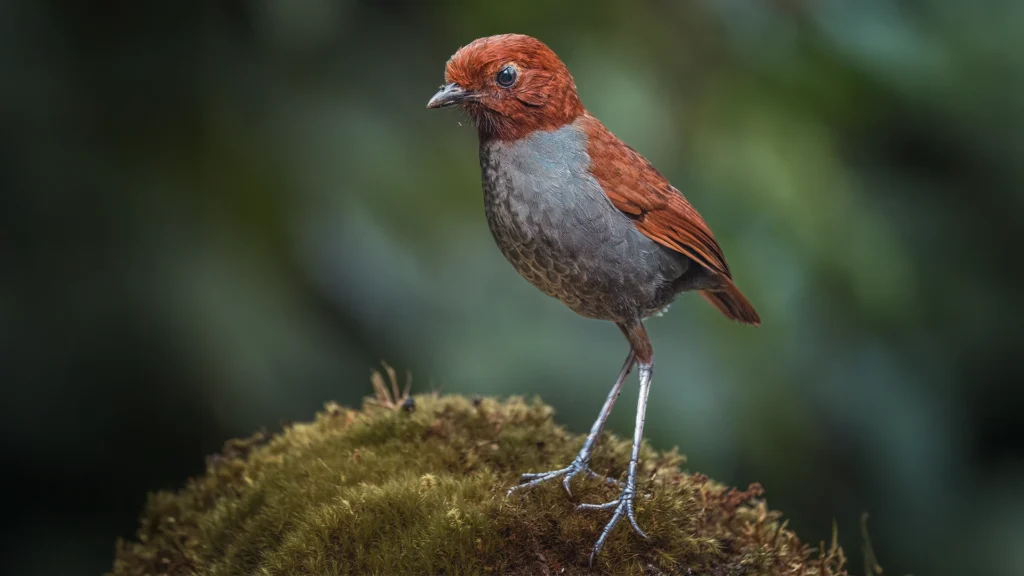
Bicolored Antpitta (Grallaria rufocinerea). Rufous above and grey below, a quiet presence of the Andean forest floor. Photographed by Jhonattan Vanegas.
Brown-banded Antpitta | Grallaria milleri
The Brown-banded Antpitta is one of Colombia’s endemic antpittas. Its entire known range is restricted to the Central Andes of Colombia, making every encounter with this species particularly significant.
Its subtle brown plumage may not be as immediately striking as that of some of its relatives, but its restricted distribution gives it an extraordinary conservation value. Protecting the forests where this species survives means protecting a bird that exists nowhere else on Earth.
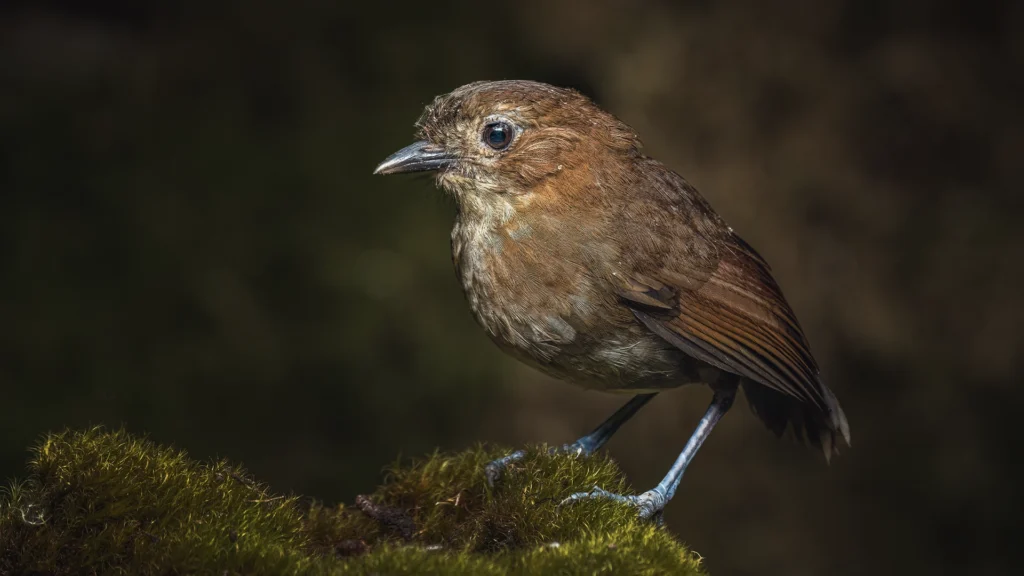
Brown-banded Antpitta (Grallaria milleri). Endemic to Colombia. A quiet reminder that some species depend on a single landscape, and nowhere else. Photographed by Jhonattan Vanegas.
Slate-crowned Antpitta | Grallaricula nana
The Slate-crowned Antpitta belongs to the group commonly known as pygmy antpittas. Smaller than many of its relatives, it can be surprisingly difficult to locate even when its voice reveals that it is nearby. Its small size, muted colors, and preference for dense vegetation make an encounter feel more like discovering a secret than simply finding a bird.
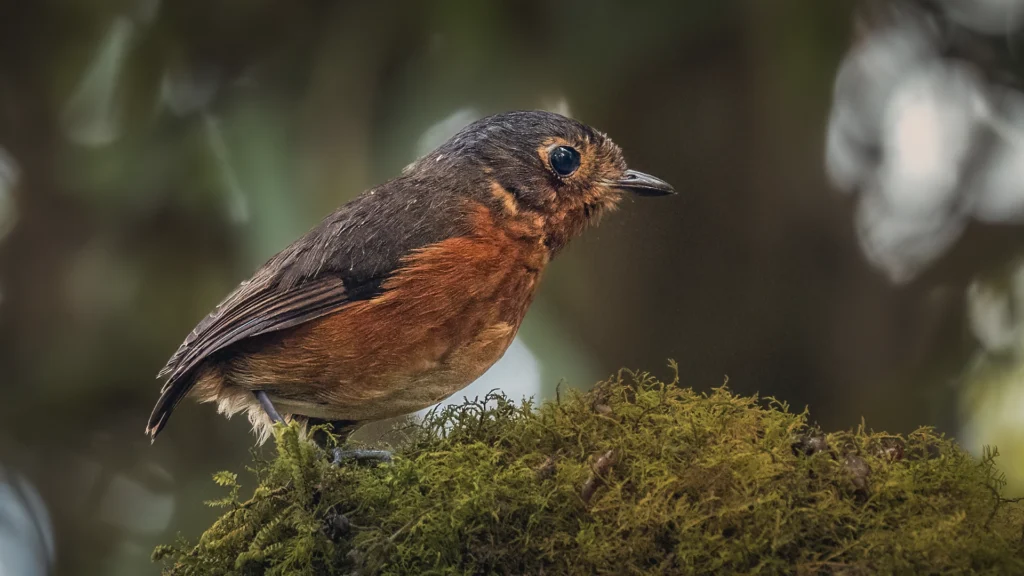
Slate-crowned Antpitta (Grallaricula nana). Small, elusive, and often heard before it is seen. Photographed by Jhonattan Vanegas.
Crescent-faced Antpitta | Grallaricula lineifrons
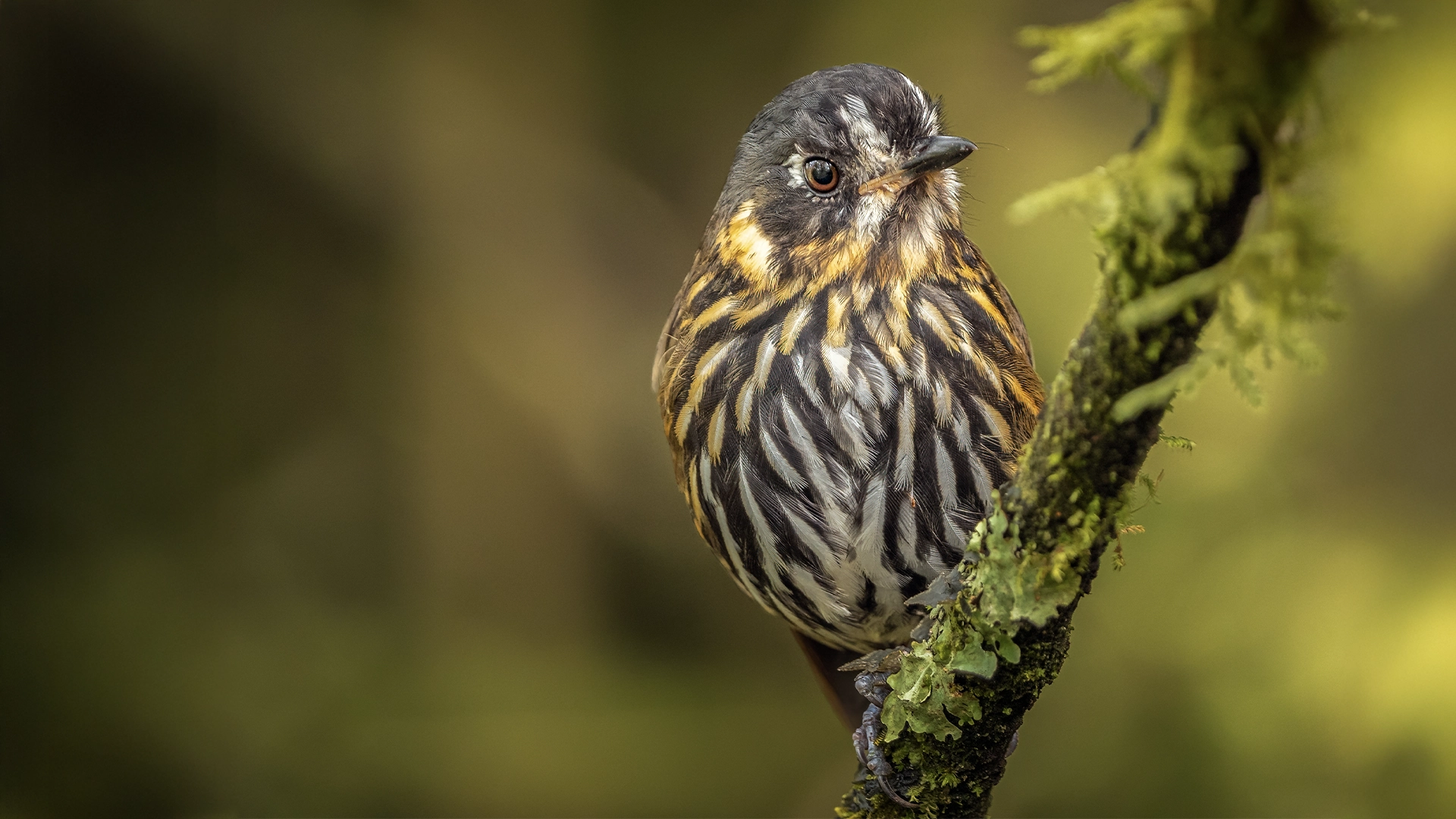
The Crescent-faced Antpitta is a highly distinctive inhabitant of high-elevation Andean forests. Its boldly marked face and compact body make it one of the most visually striking members of this group.
Finding one requires patience, careful listening, and an understanding of the forest. When the bird finally appears, even for a few seconds, the encounter can become the highlight of an entire morning.
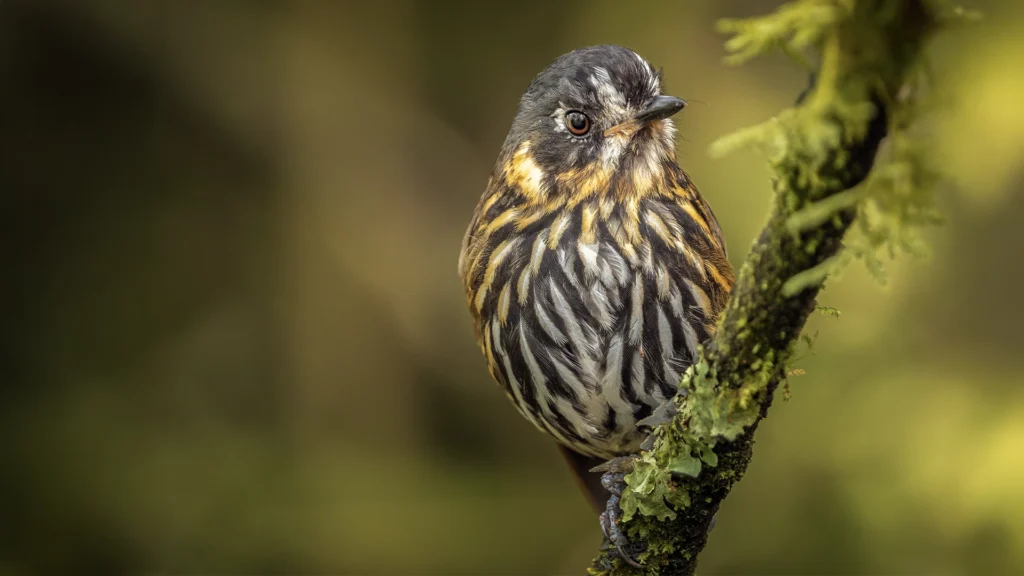
Crescent-faced Antpitta (Grallaricula lineifrons). A high-Andean jewel that rewards patience with one of the forest’s most memorable encounters. Photographed by Jhonattan Vanegas.
Plain-backed Antpitta | Grallaria haplonota
The Plain-backed Antpitta has understated brown plumage and a subtle pale eye-ring that gives it a distinctive, almost contemplative expression. It inhabits humid montane forests, where it spends much of its time searching the forest floor for food. Like many antpittas, it is far easier to hear than to see.
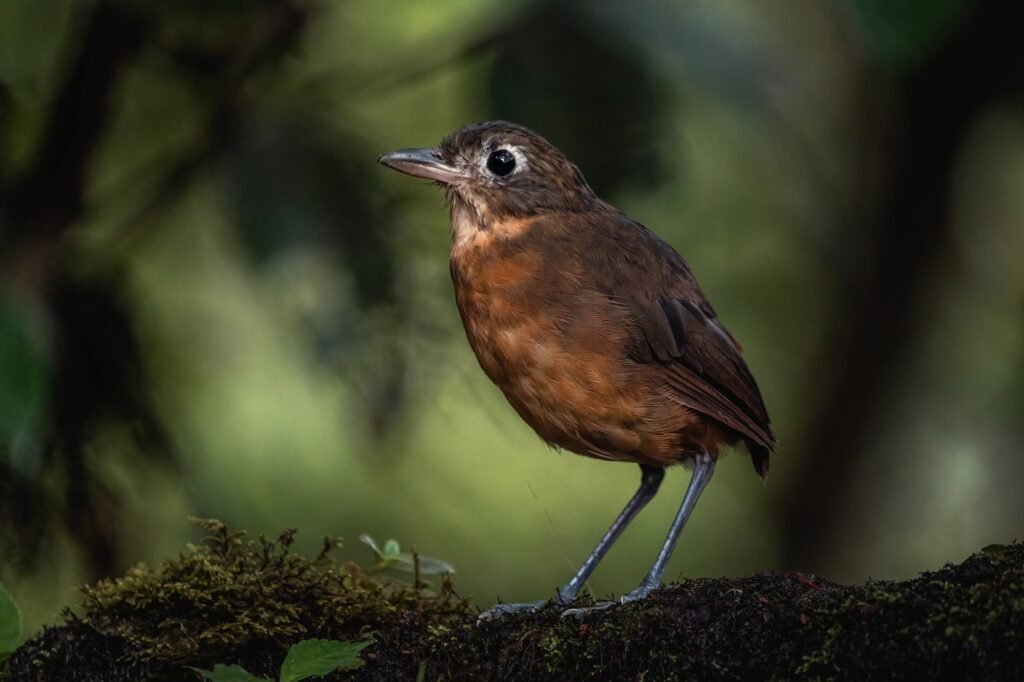
Plain-backed Antpitta (Grallaria haplonota). Quietly moving through the leaf litter, a reminder that the forest is full of life beyond what we can easily see. Photographed by Jhonattan Vanegas.
Undulated Antpitta | Grallaria squamigera
The Undulated Antpitta is the largest of the seven species featured in this article. Its slate-grey upperparts contrast with finely patterned, scalloped underparts, giving the bird a distinctive appearance.
It occurs in high-elevation Andean habitats, including forests near the treeline and the transition toward páramo. Its size and presence make it an unexpected and memorable sight on the forest floor.
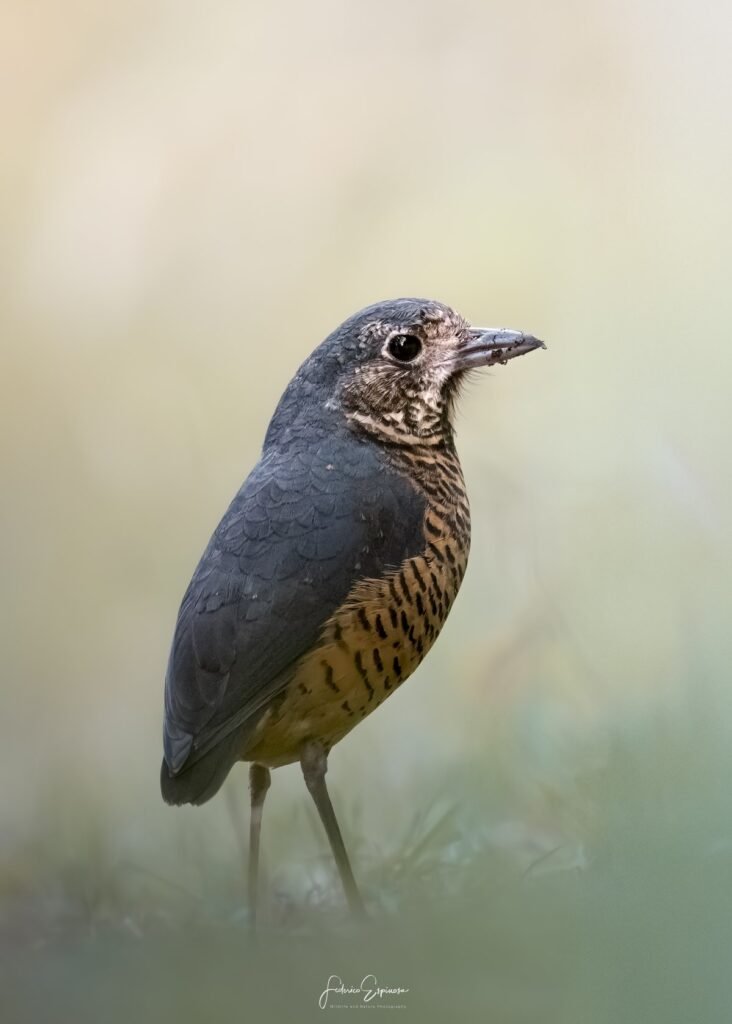
Undulated Antpitta (Grallaria squamigera). The giant among these seven ghosts, moving through the high-Andean forest near the edge of the páramo. Photographed by Federico Espinosa.
The Feeding Stations That Changed Antpitta Photography
For generations, seeing an antpitta well meant an extraordinary combination of patience, luck, and an intimate knowledge of the forest.
That began to change when local guides discovered that some species could be attracted to carefully managed feeding stations using earthworms. In places such as Río Blanco near Manizales, birds that were once almost impossible to observe can now be seen at close range, creating remarkable opportunities for both birders and photographers.
When managed responsibly, these experiences can do more than create photographs. They can generate economic value for local communities and provide an additional reason to protect the forests that support these birds.
The challenge is to make sure that photography remains secondary to the wellbeing of the species, with feeding practices, visitor behavior, and habitat protection carefully managed.
Why they matter
Antpittas are deeply connected to the health of Andean forests. Their dependence on humid, mature forest means that their presence can tell us much about the ecosystems around them.
Protecting an antpitta’s habitat also protects countless other organisms that share the same forest, from frogs and insects to orchids and the watersheds that supply communities downstream.
For endemic species such as the Brown-banded Antpitta, habitat loss has an even greater consequence. When a forest disappears, we are not simply losing part of a landscape. We may be losing a species that exists nowhere else on Earth.
Photographing an antpitta
Photographing an antpitta is an exercise in patience, observation, and restraint. These birds often appear in low light, surrounded by vegetation and deep shadows. Instead of trying to eliminate those conditions, work with them. Use the available light to create atmosphere and allow the forest to remain part of the story.
A still bird gives you more flexibility with shutter speed and ISO, so take the time to find the right balance between sharpness, exposure, and image quality. Pay attention to the background, the direction of the light, and the space around the bird.
Most importantly, give the bird time. Avoid sudden movements, unnecessary approaches, or repeated attempts to force a photograph. The best encounter is not always the one that produces the closest image. Sometimes it is the one that leaves the bird undisturbed.
What These Seven Birds Tell Us About Colombia
Seen together, these seven antpittas tell a much larger story than their individual appearances suggest. They tell us about the foggy forests of the Andes, about mountains separated by valleys, about species that have evolved in isolation, and about communities whose knowledge and work make encounters like these possible.
They also remind us that Colombia’s biodiversity does not always exist in the places that receive the most attention. Sometimes it survives in small, humid fragments of forest that may never appear on a postcard, but whose protection can determine the future of an entire species.
At Keeping Nature Tours, we believe wildlife photography is most meaningful when it begins with understanding. Understanding the species, the ecosystem, the people who protect it, and the responsibility that comes with entering their world. The photograph is only part of the story. The forest is the story.
At Keeping Nature Tours, we design birding and photography expeditions that invite you to experience Colombia’s biodiversity with patience, curiosity, and respect. We believe the best wildlife photographs are not the result of chasing species, but of understanding the forests that sustain them.