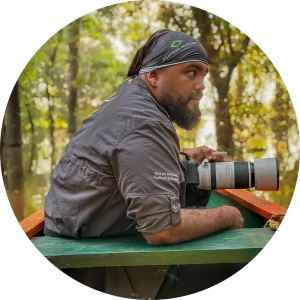
Herpetologist with a degree in Biology from the Universidad del Quindío. He is a full-time nature photographer, specializes in macro photography and leads workshops and photographic tours in Colombia. He is author or co-author of 11 articles in scientific journals on Colombian amphibians and reptiles.
His photographic work has taken him to explore every corner of the country. His photos have been featured in magazines such as Enfoque Visual, RowZine, and the Catalog of Amphibians and Reptiles of Colombia, among others. He won the environmental advocacy category in the Agenda del Mar photography competition (2022). He uses photography and biology as tools to promote conservation through various initiatives, contributing to a deeper understanding of species’ behaviors and their interactions with ecosystems. These two passions have allowed him to offer a unique perspective on the hidden and unknown world beneath the mysterious landscapes of Colombia’s mountains and plains, aiming to create a bridge between memory and nature.
Day 1 | Cali – San Cipriano | Phyllobates samperi
Our adventure begins early in the morning with a meeting in Cali, from where we’ll travel toward the lush San Cipriano Forest Reserve. On the way, we’ll enjoy breakfast before arriving in Zaragoza, where we’ll hop aboard a “brujita,” a wooden platform on train tracks powered by a motorcycle, for the ride into the forest.
Upon arrival, we’ll settle into our accommodation and enjoy a local lunch before heading into the forest for our first photographic session. This will be our introduction to in-situ photography, focusing on amphibians and reptiles that thrive in this tropical environment. As evening falls, we’ll prepare for our first night tour, capturing species that only emerge after dark. We’ll then return to the lodge for a well-deserved rest.
Day 2 | San Cipriano | Boana picturata
We’ll begin the day with breakfast before heading into the field for a daytime herping session, taking advantage of the morning light to capture vibrant macro images. After a short rest and lunch (which may be in the field depending on conditions), we’ll continue exploring in the afternoon, seeking more photographic opportunities in this biodiversity hotspot.
In the evening, we’ll have dinner outdoors before setting out for a continuation of our night tour, venturing deeper into the forest in search of elusive species. By the end of the day, we’ll return to the lodge with memory cards full of rich photographic material and experiences to reflect on.
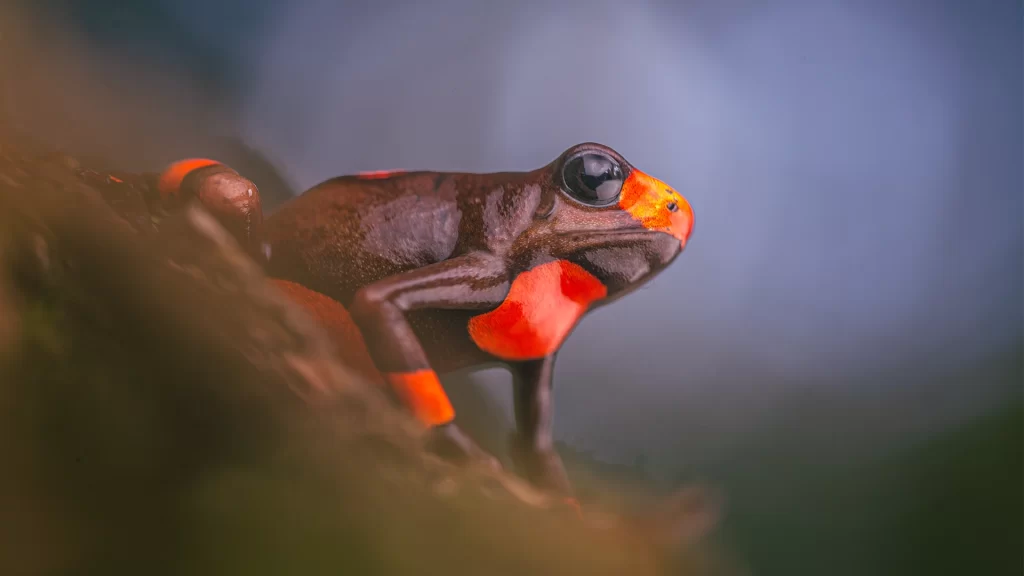
Day 3 | Pacific slope of Valle del Cauca | Threatened poison frogs
We’ll begin with an early morning departure from San Cipriano, making our way to the Pacific slope of Valle del Cauca. After breakfast on the road and a short stop at a local birdwatching spot, we’ll continue to our next herping area. Our day will be dedicated to looking for threatened poison frogs of the genus Oophaga, quietly and from a distance. With professional guidance, we’ll work on composition, lighting, and behavioral observation to photograph these amphibians in their natural context. The forest decides what we see. We’ll end the day with a relaxed dinner and rest at our accommodation.
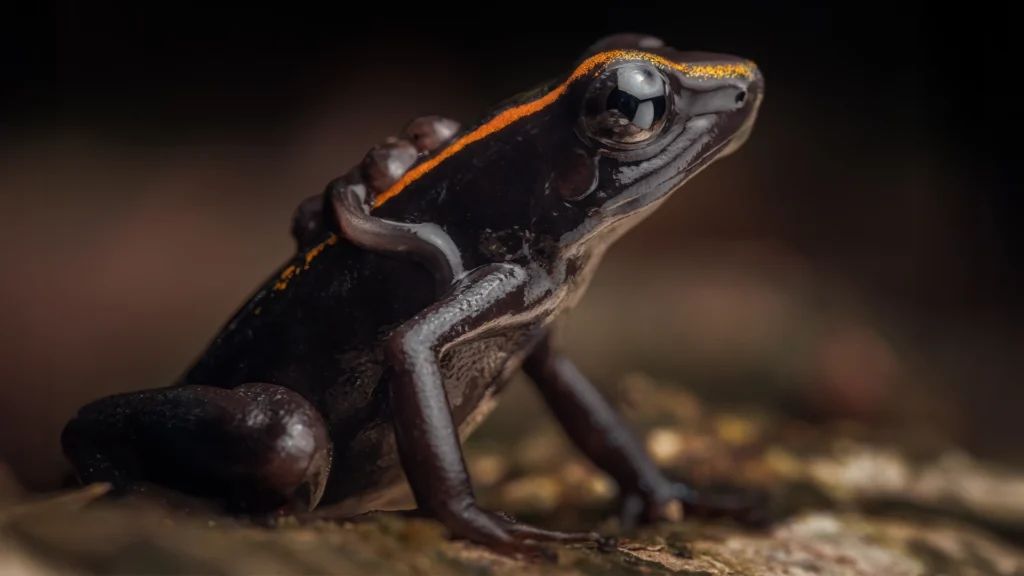
Day 4 | Kiraikai (Quindío) | Andinobates bombetes
We’ll journey to the lush Andean foothills of Quindío, where the landscape begins to shift into montane forest. After breakfast along the route, we’ll arrive at the peaceful Kiraikai Ecolodge, nestled in a vibrant green corridor ideal for photography.
Once settled, we’ll enjoy lunch and then begin exploring the surroundings in search of one of the tour’s target species: Andinobates bombetes, a Colombian endemic listed as Vulnerable by the IUCN, with striking coloration and elusive behavior. Our afternoon and evening fieldwork will focus on capturing this species in its natural habitat, using macro and lighting techniques to highlight its vivid textures and natural patterns.
This day lets you refine your skills photographing small subjects in complex environments, with personalized assistance from your field guide and photography mentor. After the night session, we’ll return to the lodge to rest and review the highlights of the day.
Day 5 | Santa Cecilia | Phyllobates bicolor
We’ll head to Santa Cecilia in Risaralda, a transition zone between the Andes and the Chocó biogeographic region. This area offers rich cloud forest ecosystems teeming with photographic potential. After breakfast and check-in at our accommodation, we’ll begin our exploration with a focus on frogs, lizards, and snakes found at these elevations.
During the day and into the night, we’ll hike forest trails in search of subjects like Phyllobates bicolor (Endangered), taking advantage of varied altitudes and changing light to produce impactful images. As always, our guides and photographic mentor will provide continuous support in the field.
Day 6 | Return to Pereira | Tour Closing
Our final day begins with a morning photo session in the area before we return to the lodge for breakfast. After packing and a brief time to relax, we’ll have lunch and begin our transfer to Pereira.
Once in Pereira, we’ll conclude our journey with a short farewell gathering. We’ll part ways with new images and a deeper photographic and naturalist understanding of Colombia’s herpetofauna.
OUR TOUR INCLUDES:
All ground transportation, from Cali Airport on day one to the final destination in Pereira on day six.
Accommodation for five nights in the locations described in the itinerary.
All meals: 6 breakfasts, 6 lunches, and 6 dinners.
Snacks and hydration throughout the tour.
Day and night excursions across diverse trails for in-situ photography of amphibians and reptiles.
Photographic documentation of activities.
Guidance and personalized photographic advice from the Keeping Nature Tours team.
Local guides specialized in herpetofauna.
Medical assistance card for all participants.
OUR TOUR DOES NOT INCLUDE:
Transportation from your city or country of origin to Cali (Valle del Cauca), and return from Pereira.
Any expenses not explicitly mentioned above.
Alcoholic beverages consumed during the tour.
Tips for local guides or staff during your stay.
We will begin an immersive photographic adventure in nature where you will discover and tell your version of your story through your photographs. We have some recommendations that will be very useful when choosing your equipment depending on the approach you want to explore. We want to travel comfortably and protect our equipment. We’ll give you some tips on what to keep in mind.

Luggage Carrying

Accommodation

Complete Feeding

Photographic Assistance

Local Guides

Hydration

Day and Night Tours

Snacks

Souvenir

Health Insurance

Ground Transport