The Most Poisonous Frogs in the World: A Journey into the Heart of the Chocó
I clearly remember those days in university, between research papers, field trips, and endless conversations about amphibians and reptiles, there was one dream that kept coming back again and again: to see the most poisonous frogs in the world in their natural habitat.
They weren’t just animals. They were symbols of the impossible. Small, brilliant, deadly… hidden deep within one of the most biodiverse regions on Earth: the Colombian Pacific.
Today, that dream is no longer out of reach. It has become a transformative experience for those seeking to connect with nature in a truly authentic and meaningful way.
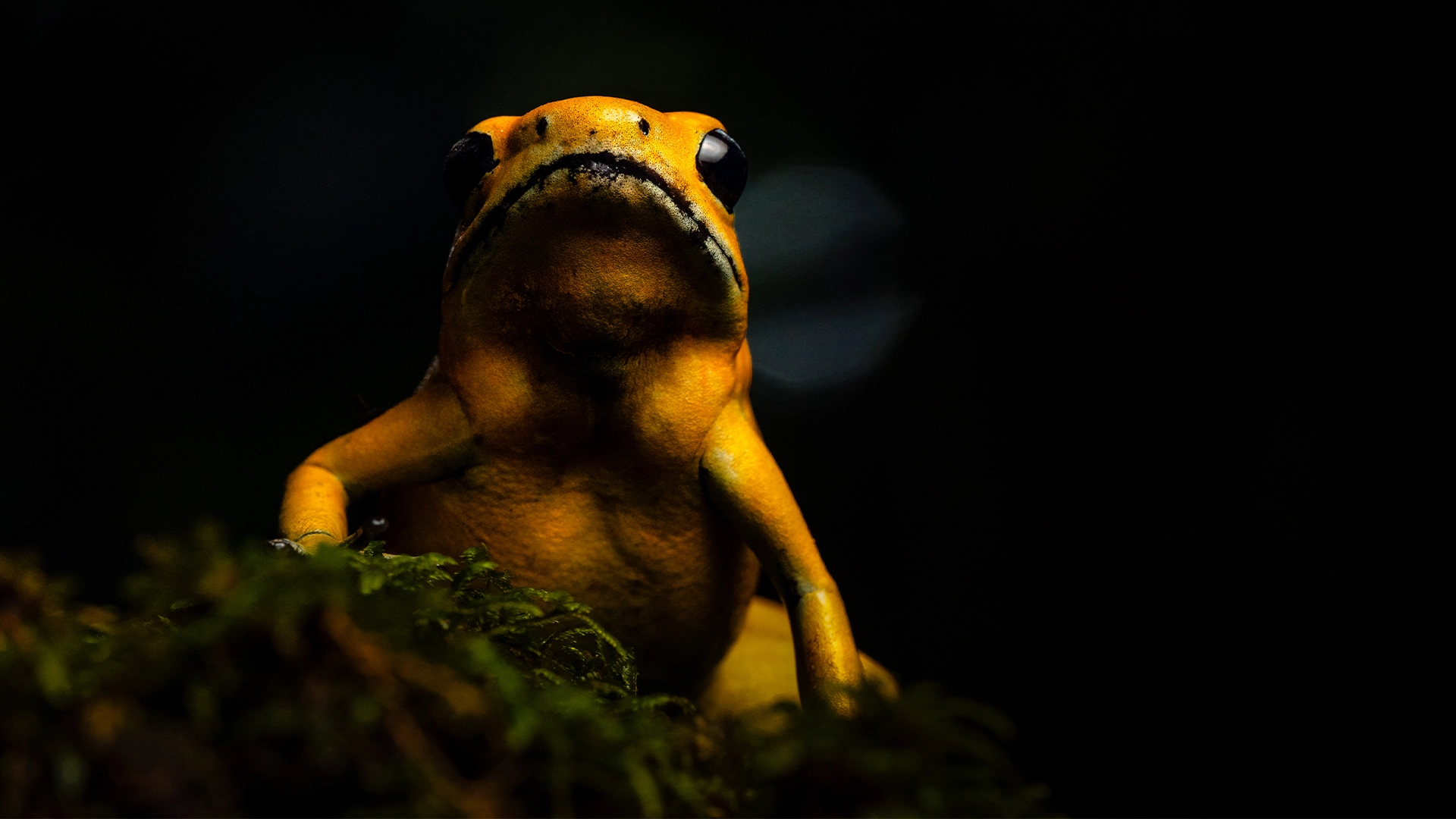
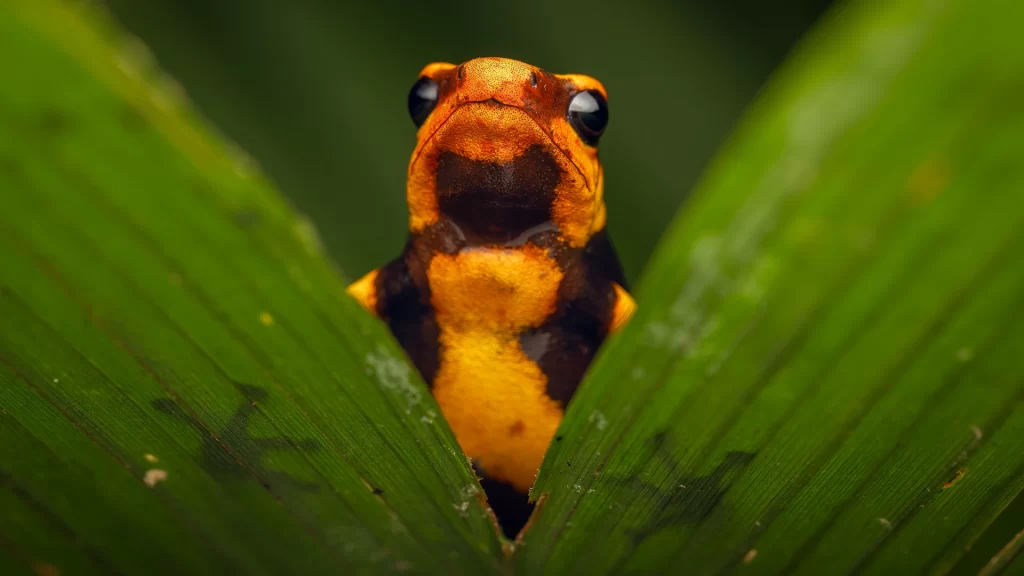
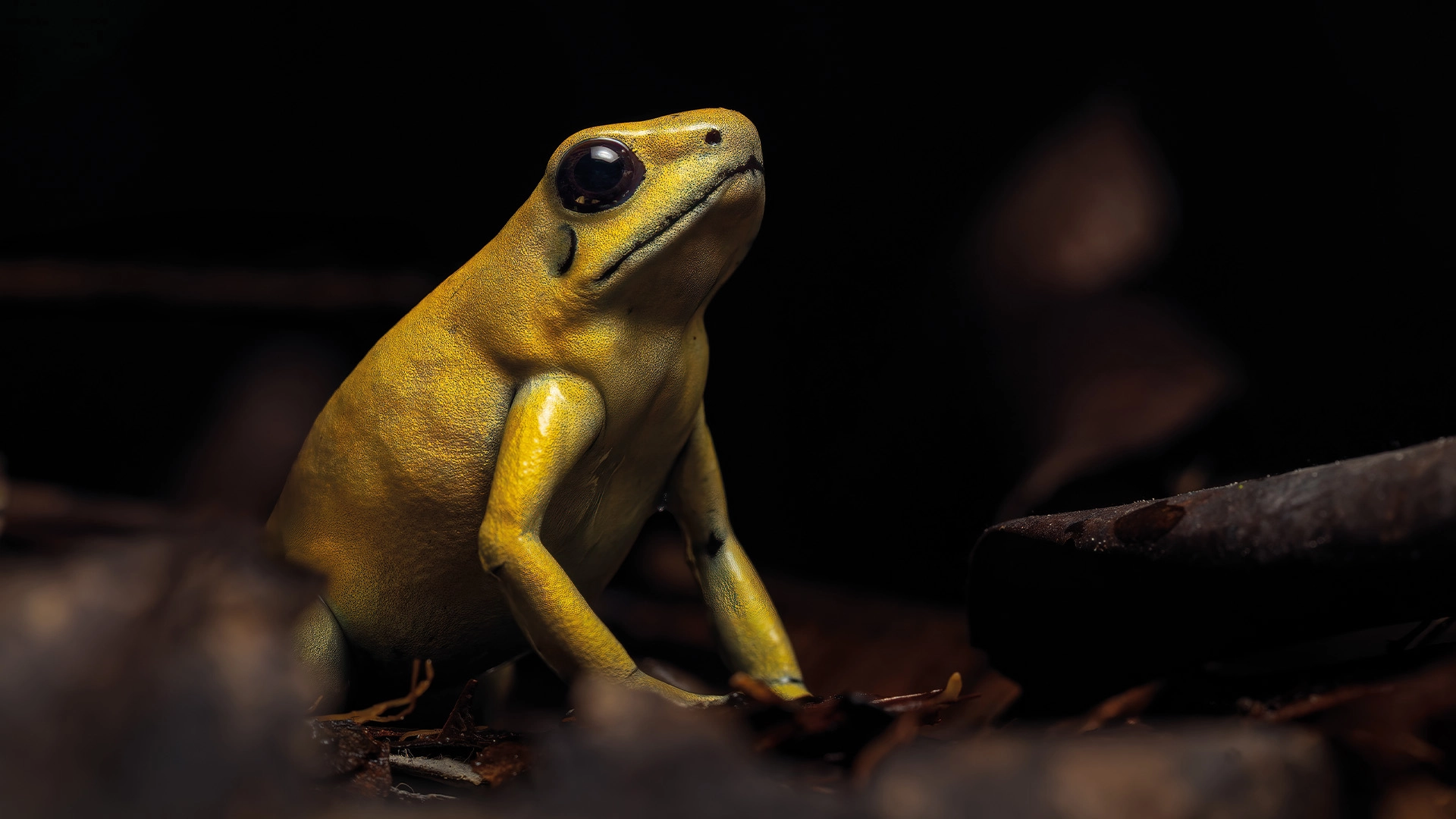
Phyllobates terribilis, the most poisonous vertebrate on Earth, photographed in Colombia’s Pacific rainforest. Its bright coloration serves as a warning to predators. Photo: Jhonattan Vanegas.
The Family Dendrobatidae: Toxic Jewels of Colombia
Colombia is the second most amphibian-diverse country in the world, and within this biological treasure, the family Dendrobatidae stands out, known for its vibrant colors and powerful toxicity. But these frogs are more than just visually striking: they are the result of millions of years of evolution in the tropical forests of the Americas.
This family is distributed from Central America, in countries like Nicaragua, all the way to the heart of South America, including the Amazon Basin of Bolivia, the Guianas, and southeastern Brazil. However, it is in Colombia’s Chocó Biogeographic Region where they reach some of their highest levels of diversity, specialization, and toxicity.
This pattern is no coincidence. The combination of extreme humidity, climatic stability, and geographic isolation has driven the evolution of some of the most extraordinary species on Earth.
These frogs have developed complex chemical defense mechanisms based on alkaloids, including the well-known batrachotoxin, one of the most lethal compounds found in nature. This toxin acts directly on sodium channels in nerve and muscle cells, causing a permanent activation that can be fatal even in extremely small doses.
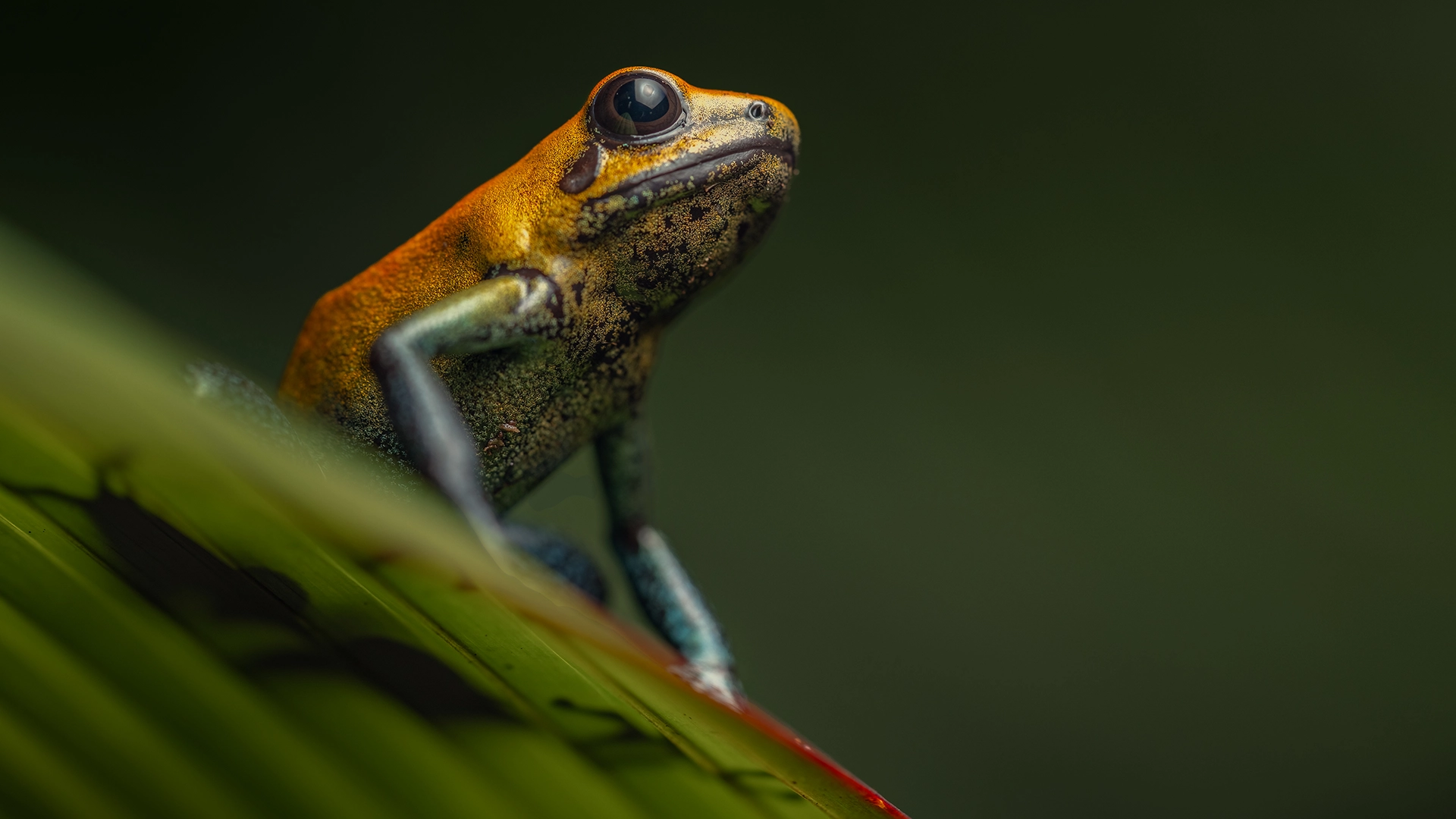
Phyllobates bicolor, the second most poisonous frog in the world, inhabits Colombia’s Pacific rainforest along the western Andes. Photo: Jhonattan Vanegas.
What makes this even more fascinating is that this ability did not appear by chance. Phylogenetic studies have shown that the family Dendrobatidae is part of a complex evolutionary lineage within Neotropical amphibians, closely related to groups such as the Hylodidae. Modern research has also revealed that:
- Toxicity has evolved multiple times within the group
- Not all species are equally toxic
- Only certain lineages (such as Phyllobates) have developed the most potent toxins
Defense, Evolution, and Survival
Far from being aggressive, these frogs use their venom as a purely defensive strategy. Their bright colors, yellows, oranges, electric greens, serve as a visual warning (aposematism), signaling to predators that they should not be touched. This combination of lethal chemistry and visual signaling is one of the most elegant examples of evolution in nature.
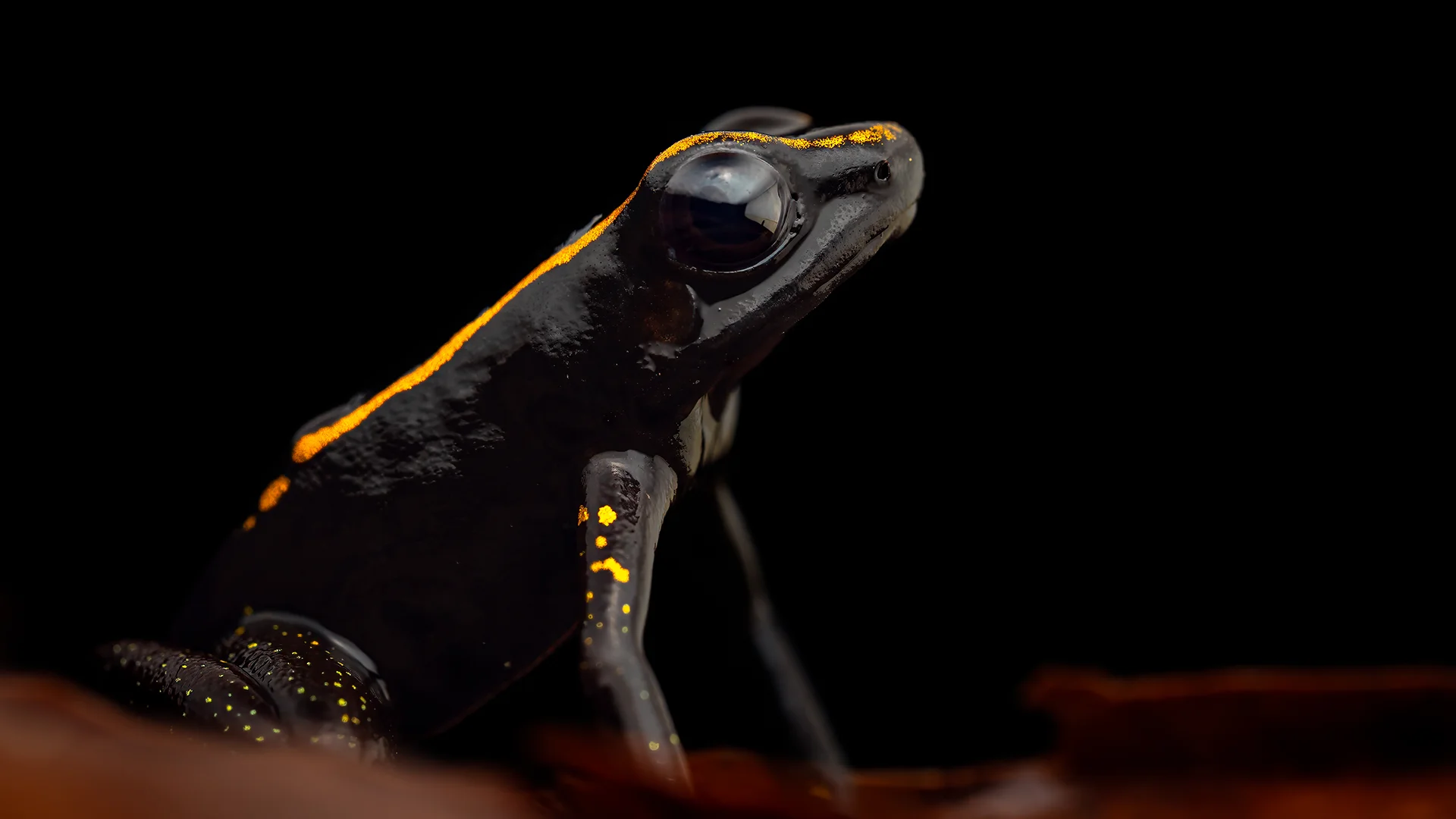
Phyllobates samperi, a recently described species endemic to Colombia, found in the humid lowland forests of the Pacific region. Photos: Jhonattan Vanegas.
How Do They Develop Their Venom?
Contrary to what many people believe, these frogs do not produce their venom from scratch… but it’s also not as simple as “eating ants and becoming toxic.” In reality, they obtain complex lipophilic alkaloids from their diet, primarily from ants, mites, and other arthropods. These compounds include molecules such as:
- Pumiliotoxins
- Histrionicotoxins
- Indolizidines
- Decahydroquinolines
However, in the case of the most toxic species of the genus Phyllobates, the story becomes even more fascinating.
Batrachotoxin, one of the most powerful toxins in the world, has not been directly found in their common prey, suggesting that these frogs may:
- Obtain specific chemical precursors from their diet
- Depend on highly specialized and still poorly studied arthropods
- Or even perform internal metabolic modifications to produce the final toxins
This process remains one of the great mysteries of evolutionary biology.
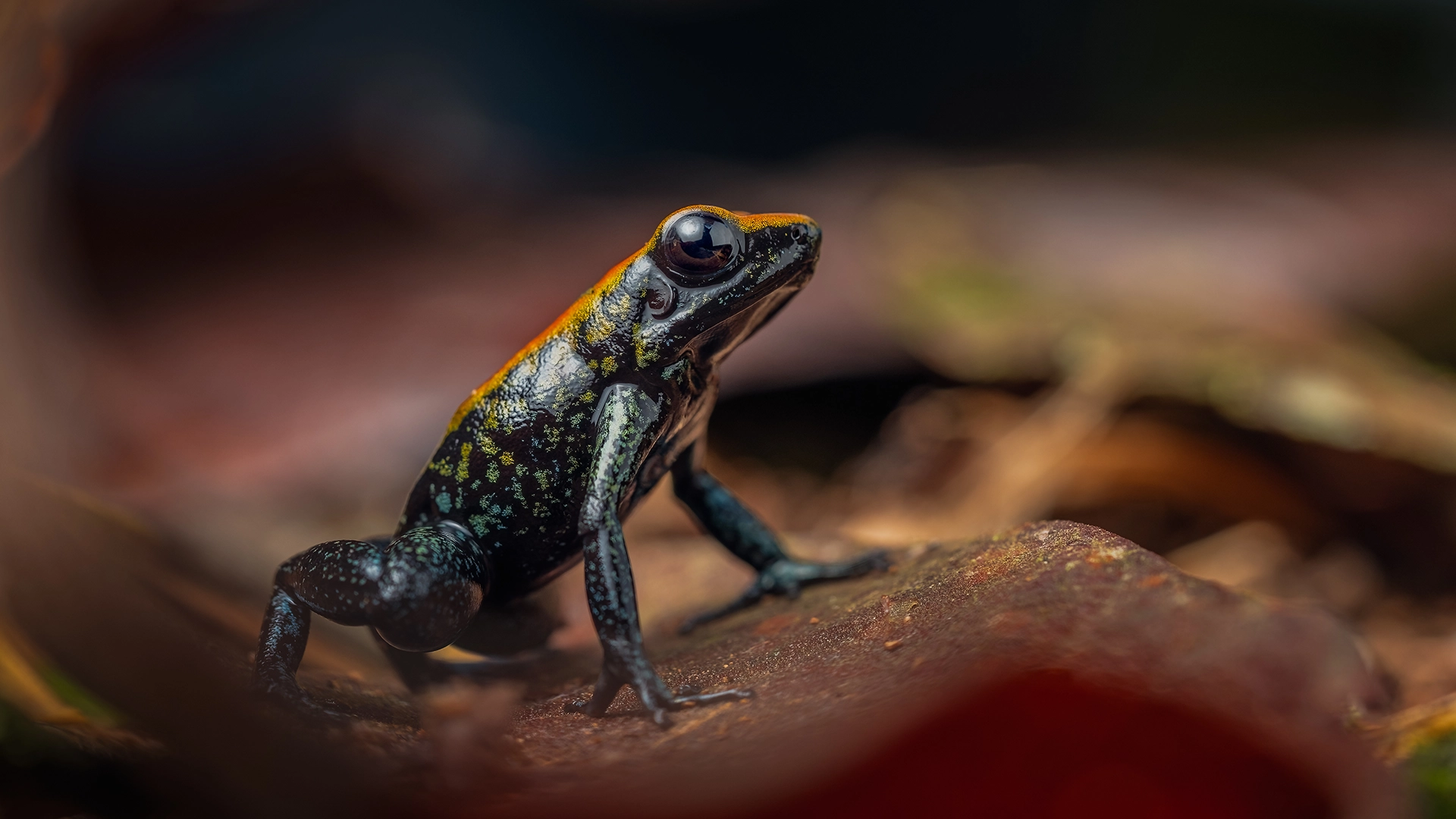
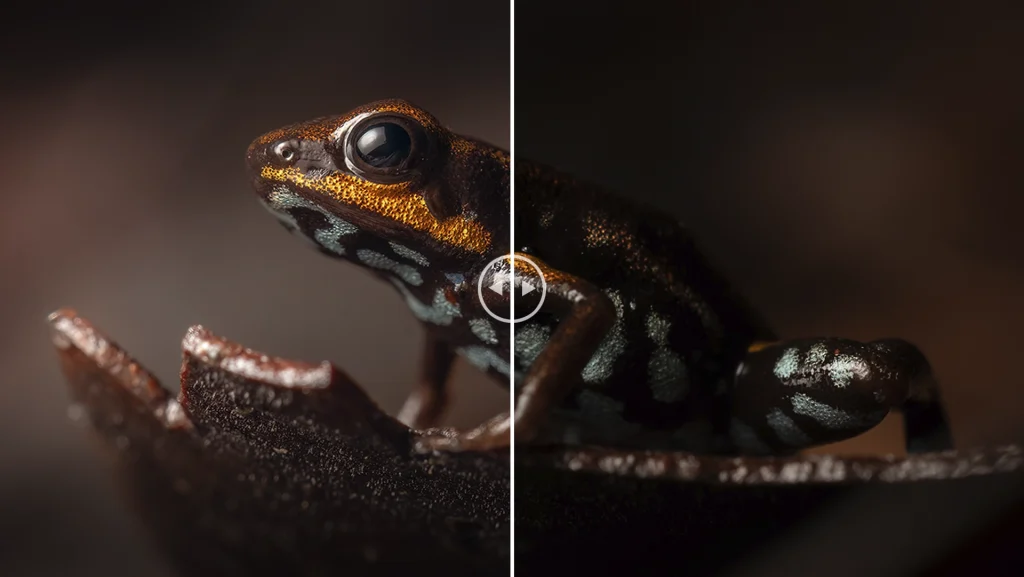
Phyllobates aurotaenia, recognizable by its bright dorsal stripes over a dark body, is widely distributed across Colombia’s Chocó biogeographic region. Photo: Jhonattan Vanegas.
From Diet to Skin: The Venom Pathway
Once ingested, these alkaloids pass through the digestive system and are transported via the bloodstream to the skin. There, something extraordinary happens. These frogs possess specialized skin glands, primarily serous glands, designed to store and release toxins. These glands function like microscopic reservoirs:
- Surrounded by myoepithelial cells that help expel the toxin
- Connected to the skin surface through ducts
- Able to release toxins when the animal is threatened
Unlike venomous animals that inject toxins (such as snakes), these frogs are toxic by contact:
A predator only needs to touch or ingest them to receive the dose.
How Does the Venom Work?
Batrachotoxin acts on sodium channels in nerve and muscle cells, preventing them from closing properly. The result is a permanent activation of the nervous system, which can cause: Paralysis – Cardiac failure. Even in extremely small doses.
What’s even more incredible is that these frogs do not poison themselves. They have evolved molecular resistance, with modifications in their own sodium channels that allow them to store lethal toxins without suffering any damage.
In other words, each frog is the result of an invisible ecological chain. A silent process happening every day in the rainforest… turning these small amphibians into some of the most sophisticated organisms on the planet.
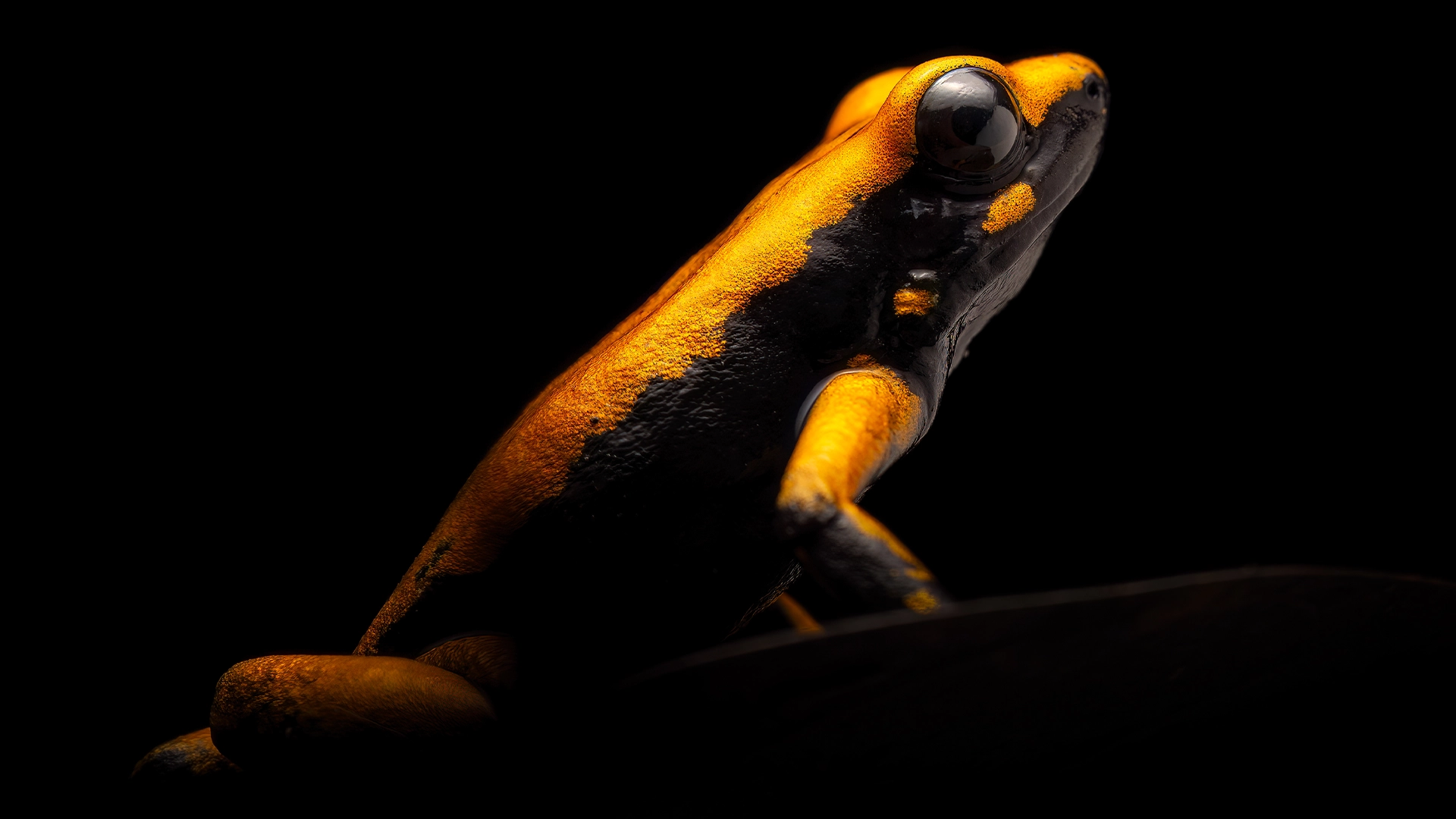
Phyllobates bezosi, a recently described species endemic to Colombia, known from a single locality in Valle del Cauca, highlighting its extremely restricted distribution. Photo: Jhonattan Vanegas.
The Genus Phyllobates: The True Queens of Venom
Within the family Dendrobatidae, the genus Phyllobates stands out for containing the most toxic species known to science. These frogs are distributed from Central America, particularly from Nicaragua, to the western regions of Colombia, with their greatest diversity concentrated in the Chocó Biogeographic Region.
Currently, the genus includes seven recognized species, of which five are found in Colombia: (Phyllobates terribilis, Phyllobates bicolor, Phyllobates aurotaenia, Phyllobates samperi y Phyllobates besosi).
The remaining two species, Phyllobates lugubris and Phyllobates vittatus, are distributed across Central America, particularly in Nicaragua, Costa Rica, and Panama, where they inhabit lowland tropical rainforests.
Species of Phyllobates in Colombia
Phyllobates terribilis
Considered the most poisonous vertebrate on the planet, its bright yellow coloration serves as a clear warning to any predator. It is an endemic species of Colombia, distributed along the Pacific coast, particularly in Cauca and southern Valle del Cauca, where it inhabits humid tropical forests.
This species occurs between 50 and 400 meters of elevation, in highly specific and fragmented habitats, making it especially vulnerable. It is currently classified as Endangered, due to habitat loss and its restricted distribution.
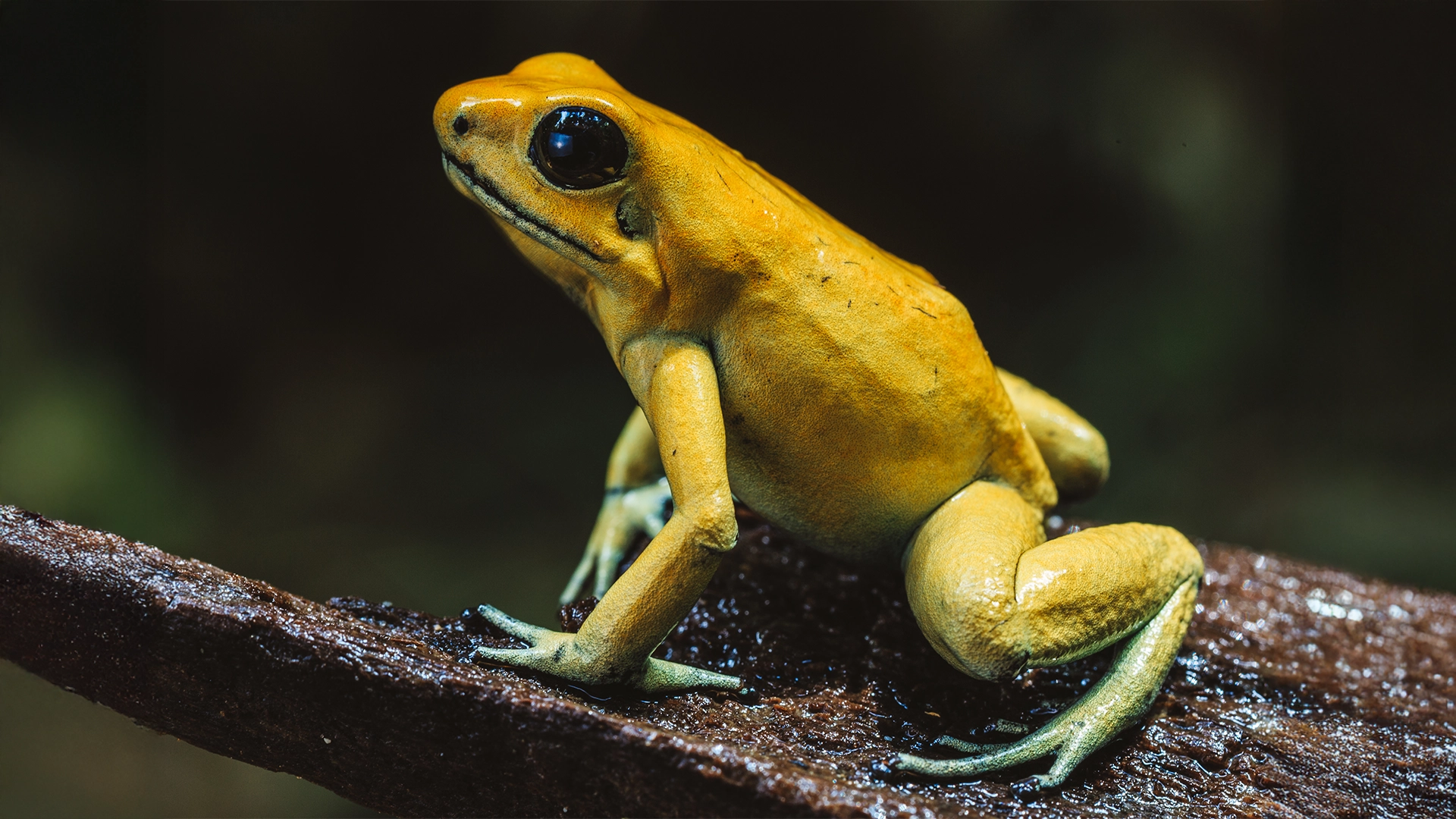
A silent presence in the rainforest. Watching, still… as if the forest itself was alive through it. Photos: Jhonattan Vanegas.
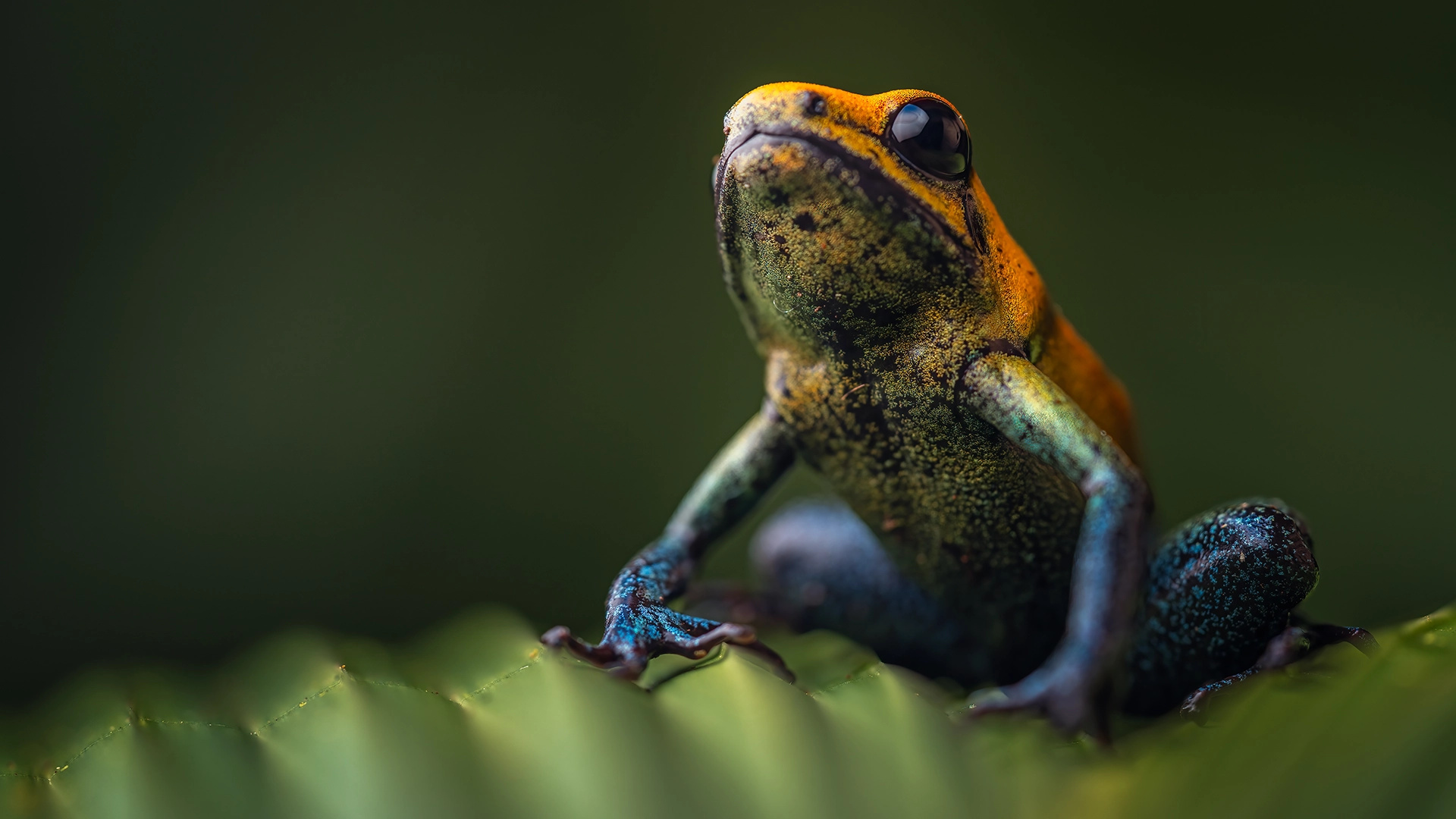
A quiet presence in the rainforest… bold, aware, and completely untouchable. Photos: Jhonattan Vanegas.
Phyllobates bicolor
Historically used by indigenous communities to poison hunting darts, this species is considered the second most poisonous frog in the world. It is distributed across Colombia’s Pacific region, particularly in Chocó, Risaralda, and Valle del Cauca, along the western slopes of the Western Andes.
It inhabits humid tropical forests between 600 and 1,280 meters of elevation, which ecologically differentiates it from P. terribilis. This species is currently classified as Endangered, reflecting the growing pressure on the Chocó ecosystems.
Phyllobates aurotaenia
Recognizable by its bright dorsal stripes over a dark background, this species is one of the most iconic for wildlife photographers. It is widely distributed across the Chocó biogeographic region, especially in the San Juan River basin.
It inhabits humid forests between 60 and 520 meters of elevation, showing a broader ecological range than other species in the genus. Unlike its more toxic relatives, it is classified as Least Concern, although its conservation still depends directly on the health of tropical forests.
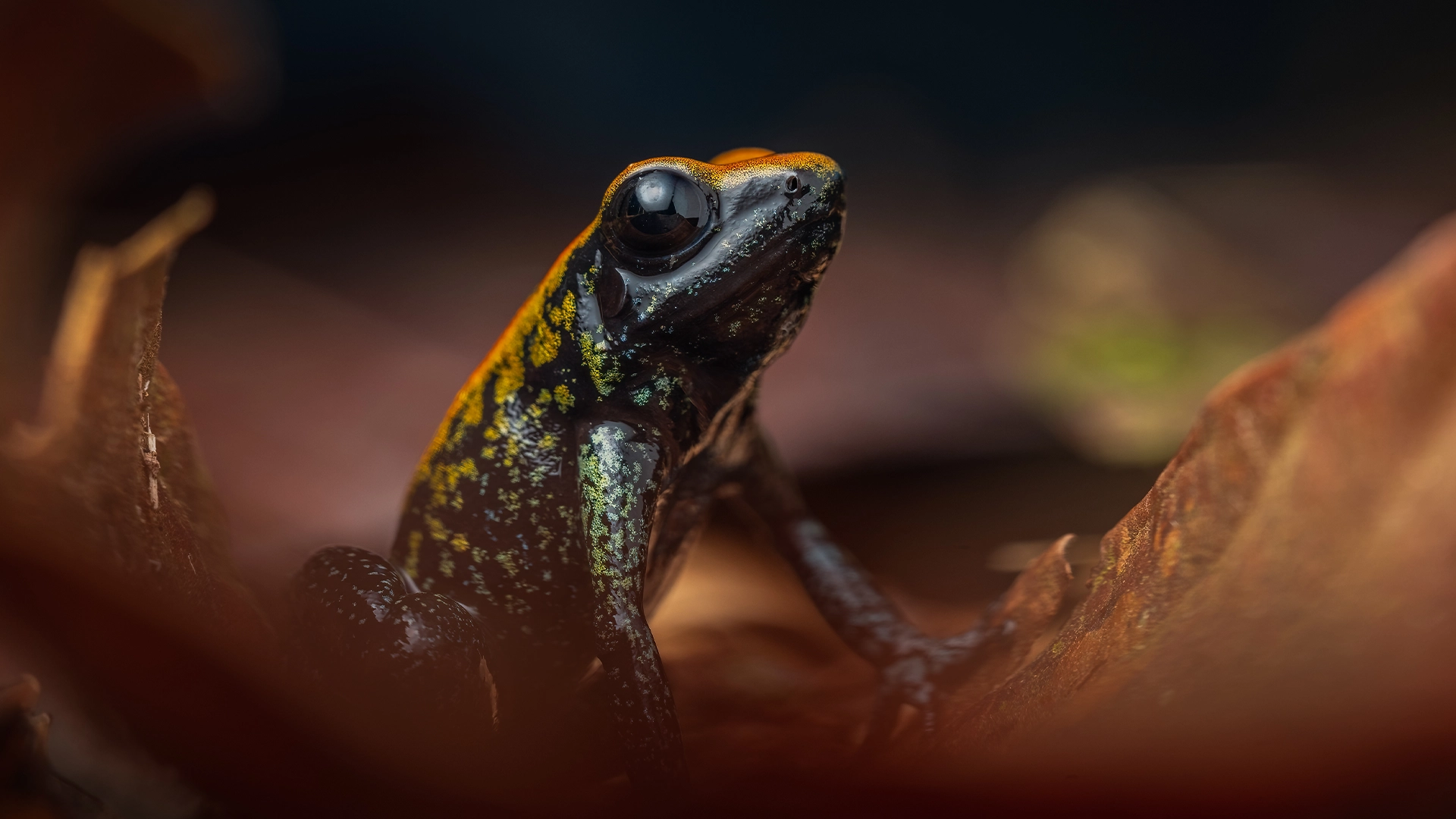
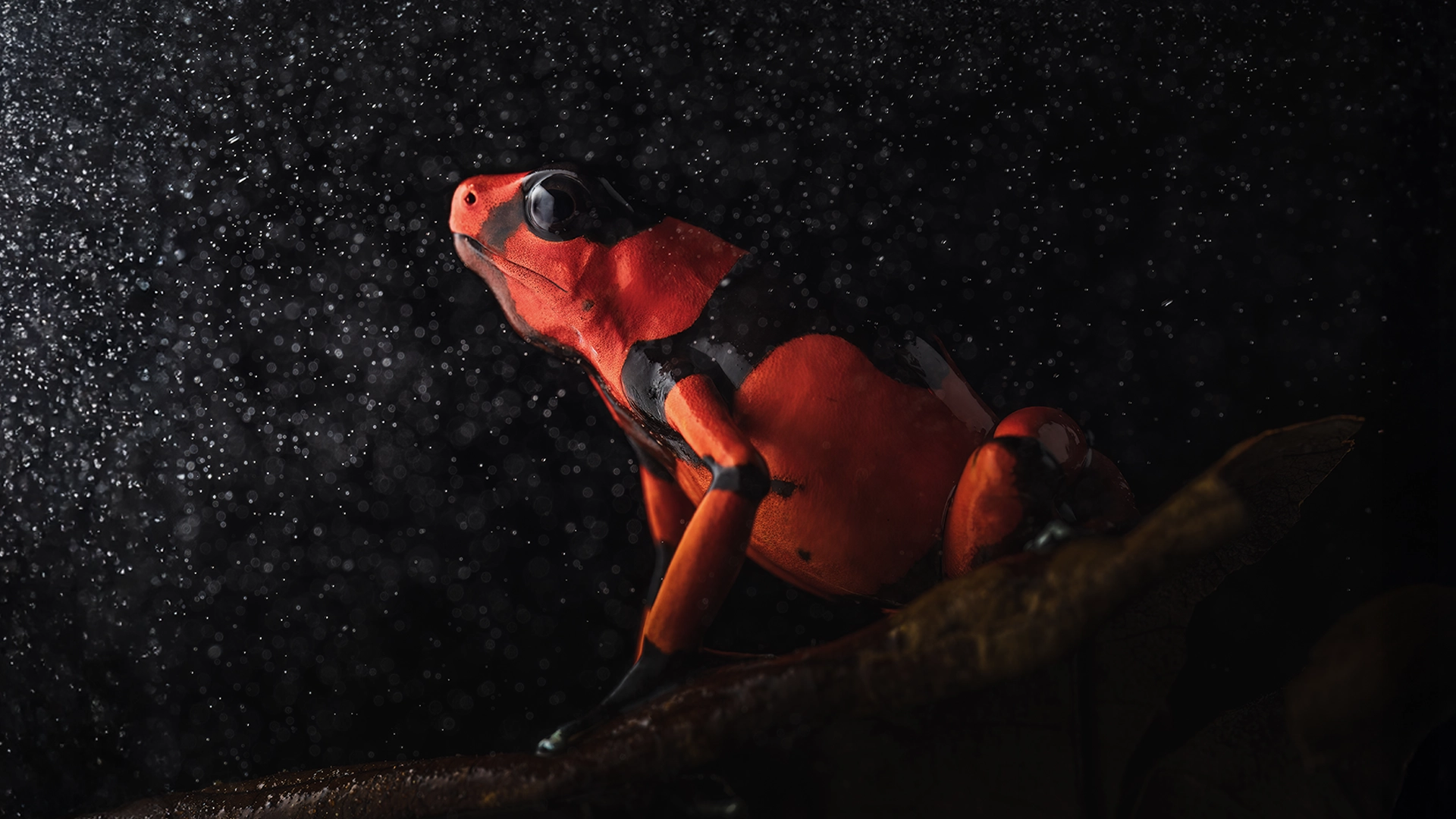
A subtle glow in the darkness… as if the forest had painted it with light. Photos: Jhonattan Vanegas.
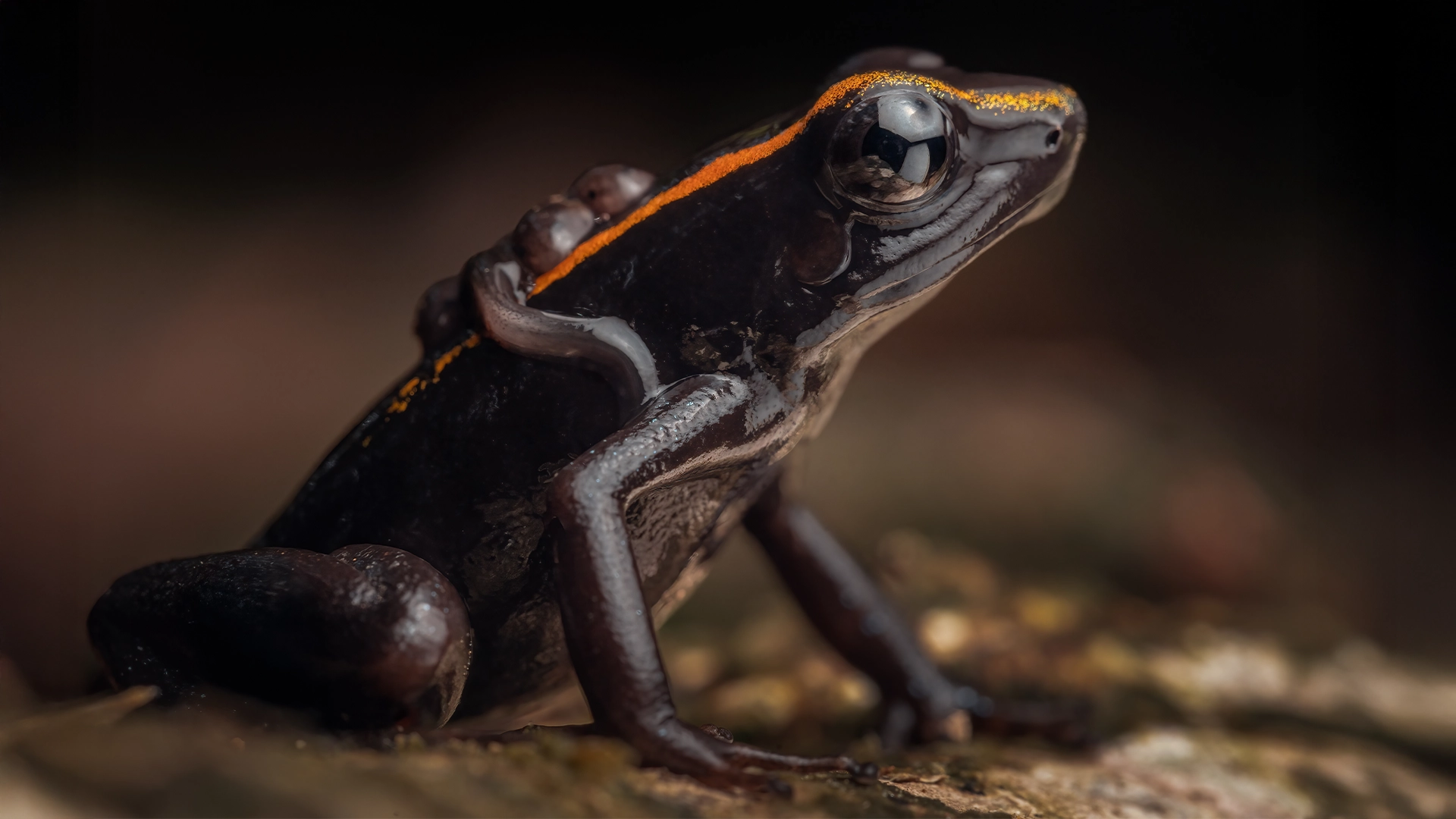
A presence almost unnoticed…
as if it had always been here, waiting to be discovered. Photos: Jhonattan Vanegas.
Phyllobates samperi
A recently described species that expands our understanding of the genus. It is endemic to Colombia, found in humid forests near Buenaventura, in Valle del Cauca, particularly in the San Juan and Dagua river basins.
It inhabits lowland areas (up to ~200 m elevation), living within the leaf litter of rainforest ecosystems. Phylogenetically, it is closely related to Phyllobates terribilis, making it key to understanding the evolution of toxicity within the genus.
Phyllobates bezosi
Another recently identified species, highlighting that there is still much to discover. So far, it is only known from a specific locality in Valle del Cauca, in the Garrapatas River basin.
It inhabits lowland humid forests, suggesting an extremely restricted distribution. Its close evolutionary relationship with P. terribilis and P. samperi reinforces the idea that the Colombian Pacific is the epicenter of poison frog evolution.
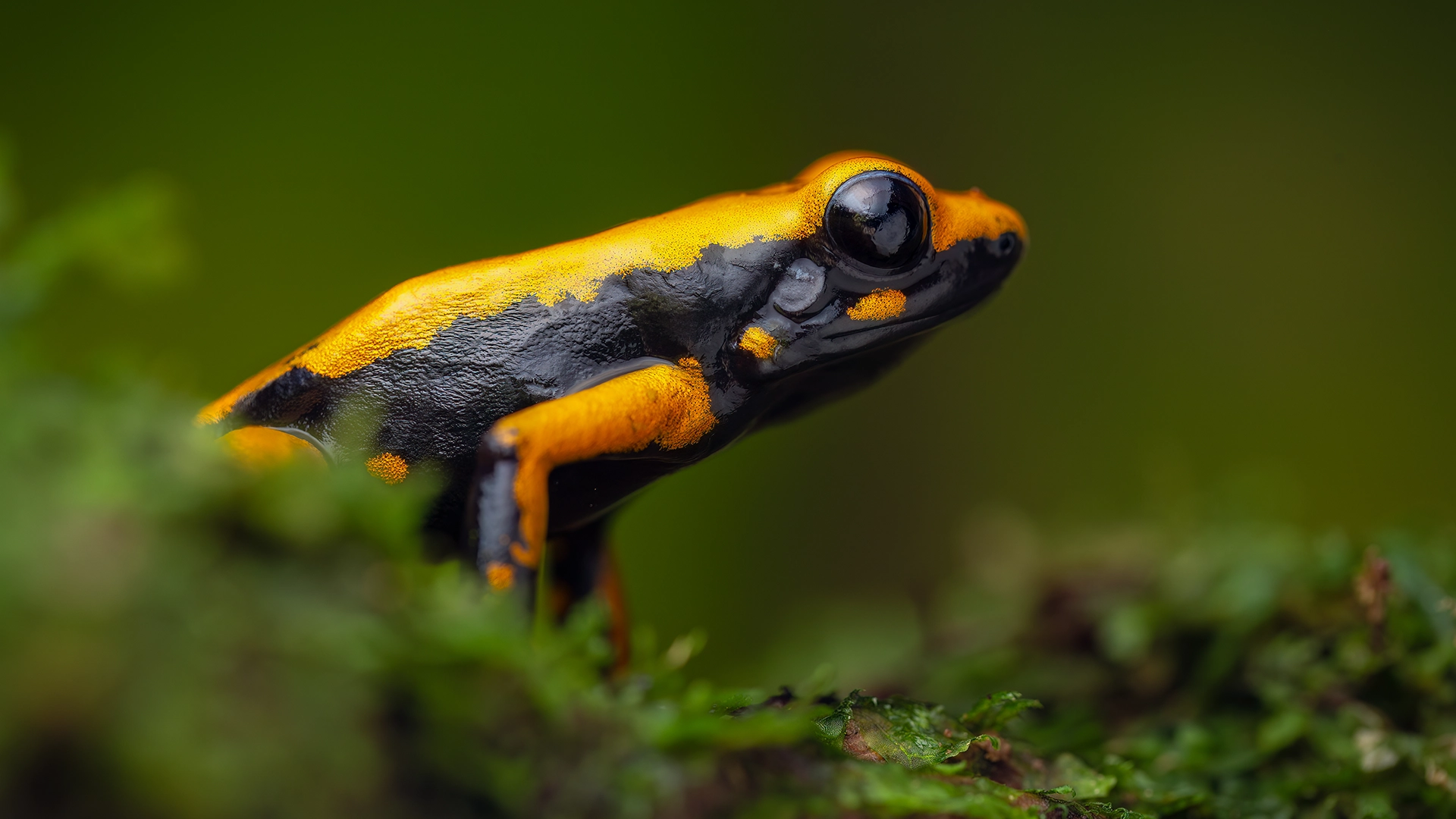
A rare glimpse into the unknown… a species that reminds us how much of the forest is still waiting to be found. Photos: Jhonattan Vanegas.
What is most striking is not just their venom. It’s that all these species live within a relatively small region of the planet. A humid, green, and seemingly silent corner… where evolution has shaped some of the most sophisticated life forms we know. And where, with the right guidance, it is still possible to find them in the wild.
What would it feel like to see one of these frogs in the wild?
To walk through the rainforest, surrounded by the sounds of life, searching for a flash of color… and suddenly finding yourself face to face with one of the most poisonous creatures on Earth. This is not something you watch on a screen. This is something you experience.
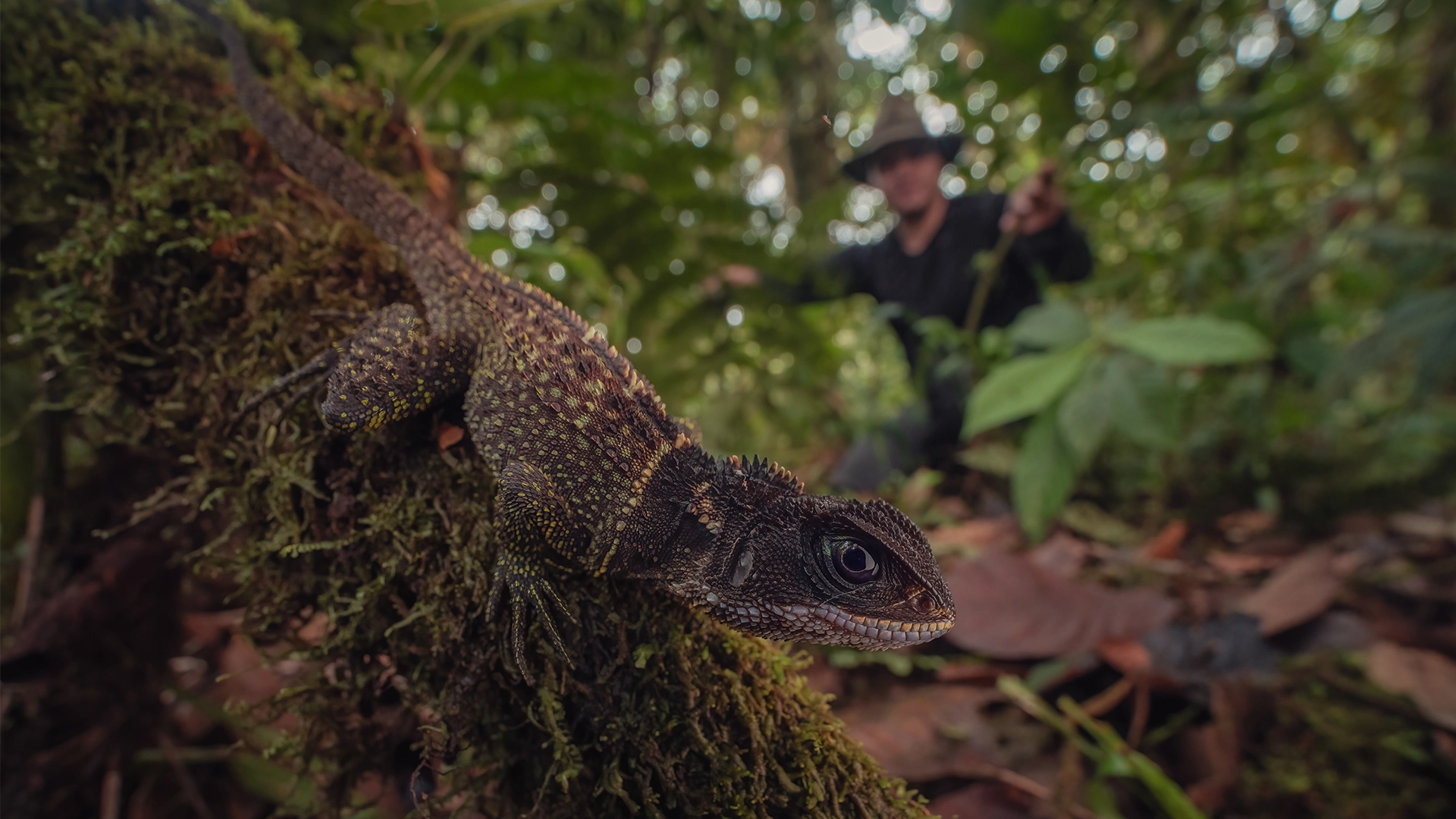
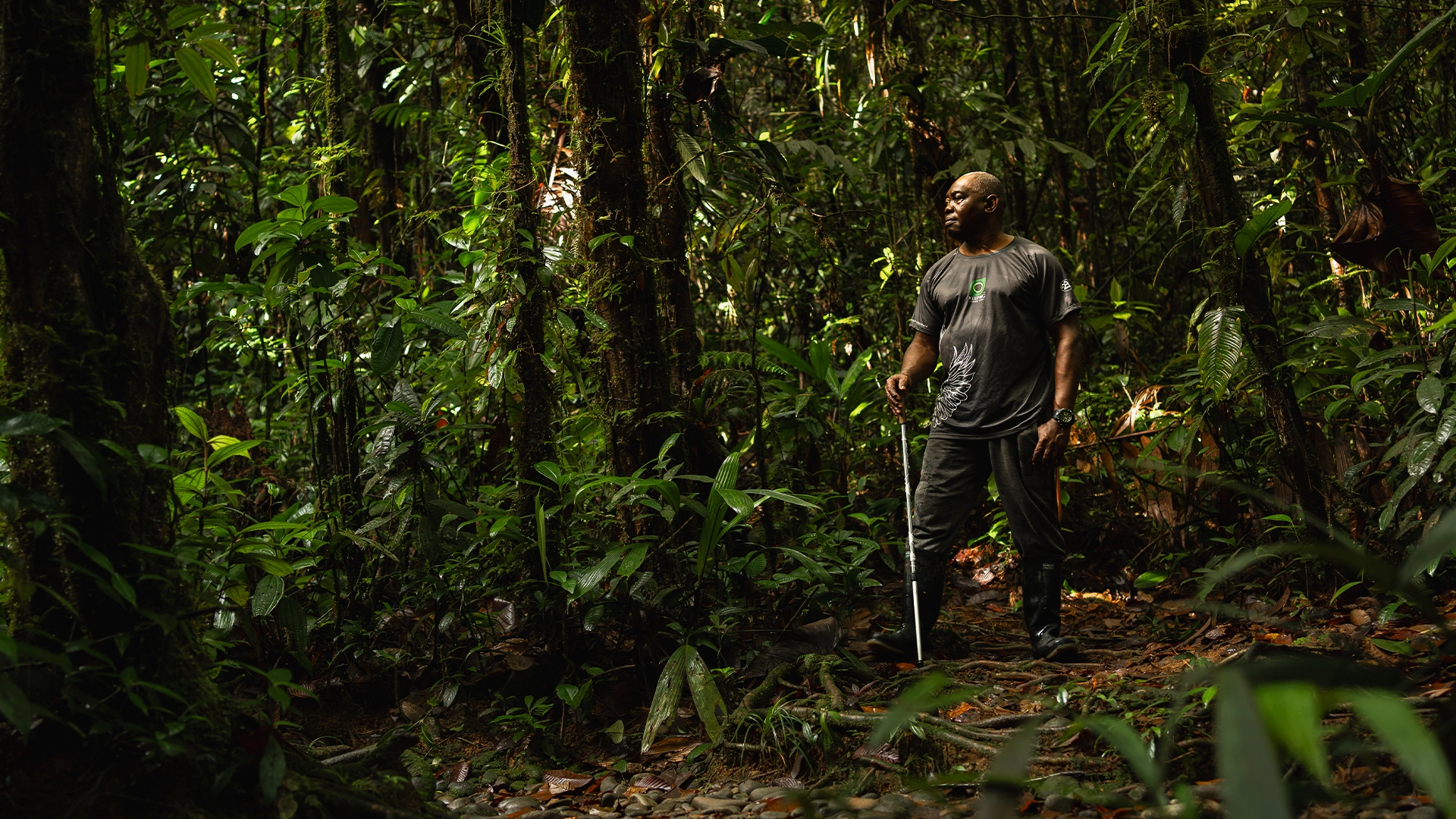
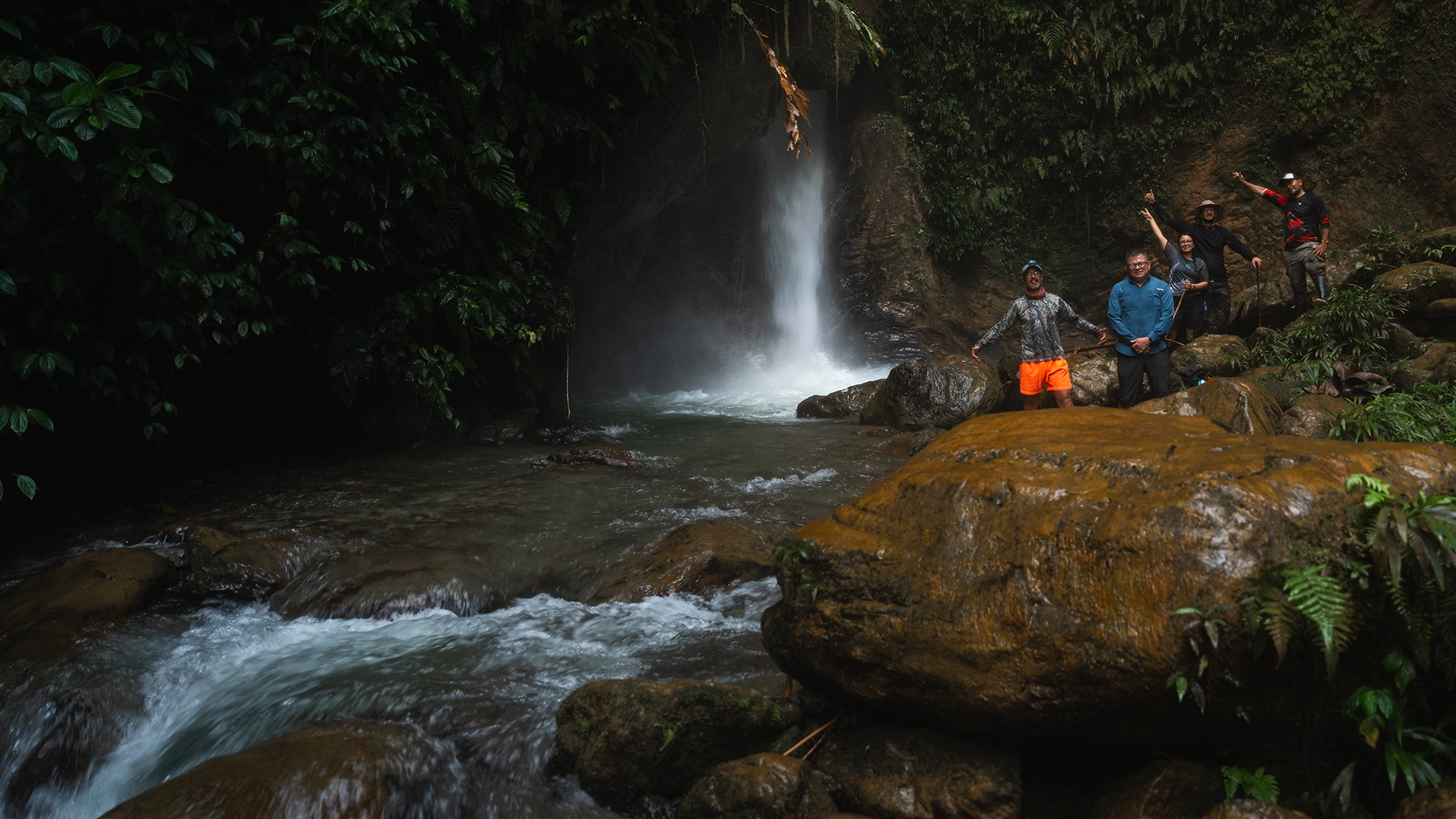
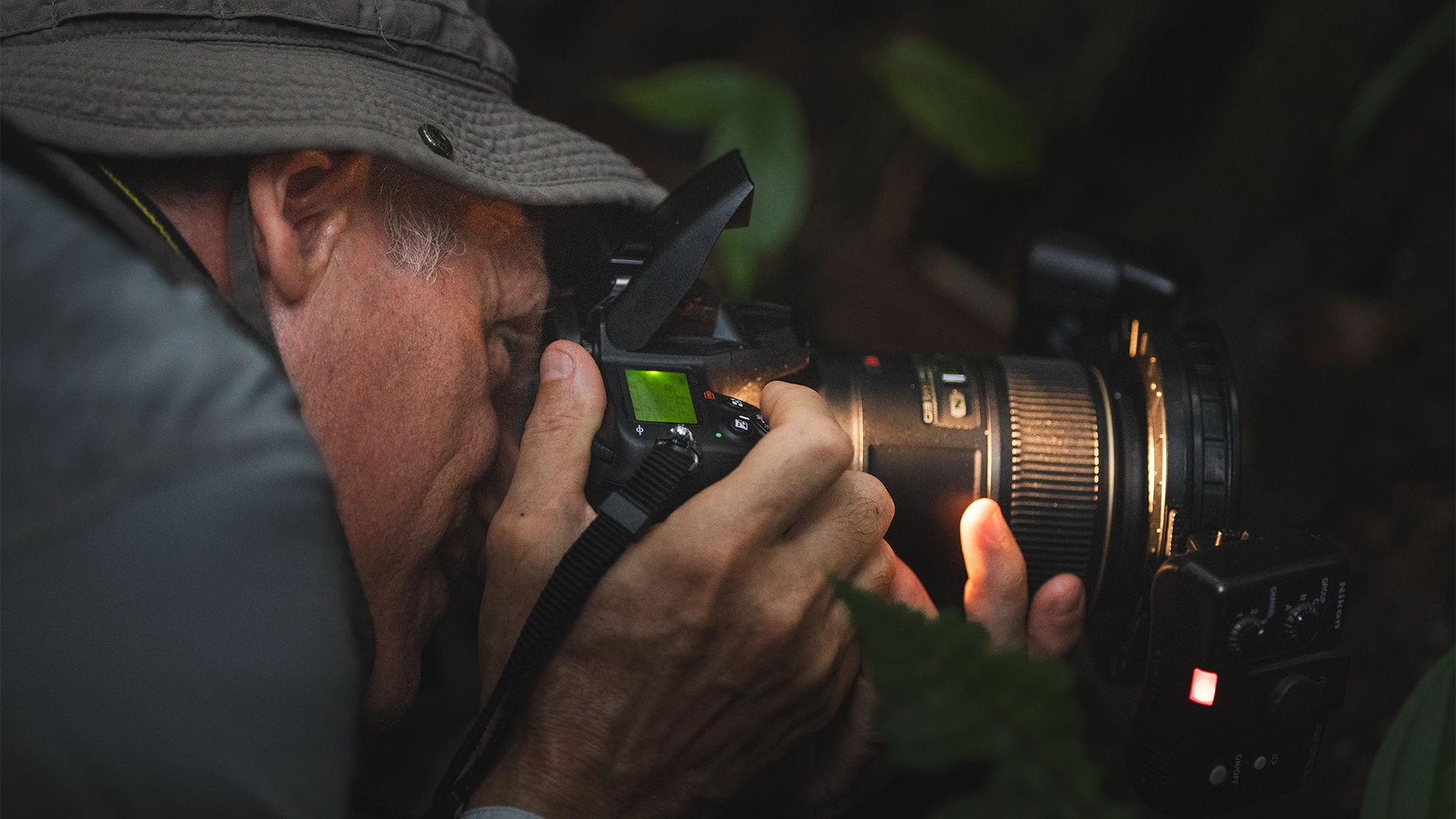
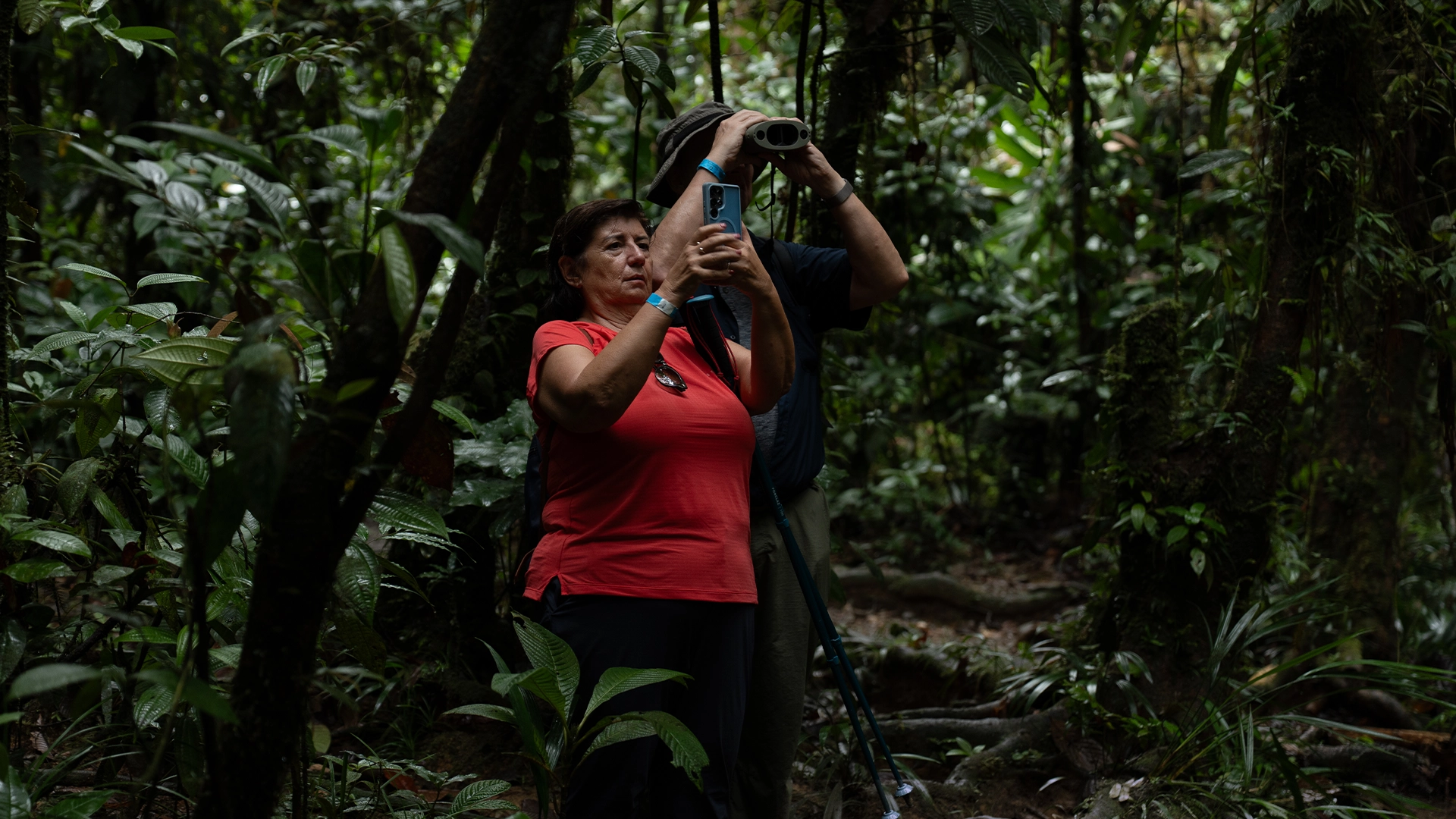
Captured during our poison frog tours in Colombia’s Pacific rainforest, where every moment in the wild becomes a story. Photos: Jhonattan Vanegas.
What would it feel like to see one of these frogs in the wild?
To walk through the rainforest, surrounded by the sounds of life, searching for a flash of color… and suddenly finding yourself face to face with one of the most poisonous creatures on Earth. This is not something you watch on a screen. This is something you experience.
Here, you won’t just observe wildlife. You will step into one of the most biodiverse ecosystems on Earth, guided by people who understand the forest, who respect it, and who know where to find these hidden jewels.
The same dream that once started in a classroom… can now take you deep into the rainforest. Colombia is not just a destination. It’s an encounter with the wild. And the frogs are waiting.