Exploring the Colombian Pacific with the New Sony 100mm f/2.8 GM OSS
In wildlife photography, especially when working with small creatures and in extreme environments, your gear is not just a tool: it becomes an extension of your sensitivity, a bridge between what you see and what you feel. A good lens has the power to translate emotions, thoughts, or glances into images that tell stories in just an instant.
A lens not only expands what you see, it also expands what you can narrate. And when it comes to telling stories about those life forms that live beneath a leaf, on a damp log, or in the darkness of the night, you need a lens that truly allows you to create images that faithfully reflect your own vision of the world.
During a recent expedition to the Colombian Pacific, one of the rainiest, most biodiverse, and challenging regions on the planet, I brought with me the Sony FE 100mm f/2.8 Macro G Master OSS. I wanted to test it in extreme conditions and with challenging species such as venomous frogs, to see what the real improvements, the key features, and the reasons are behind why this lens is redefining macro photography.
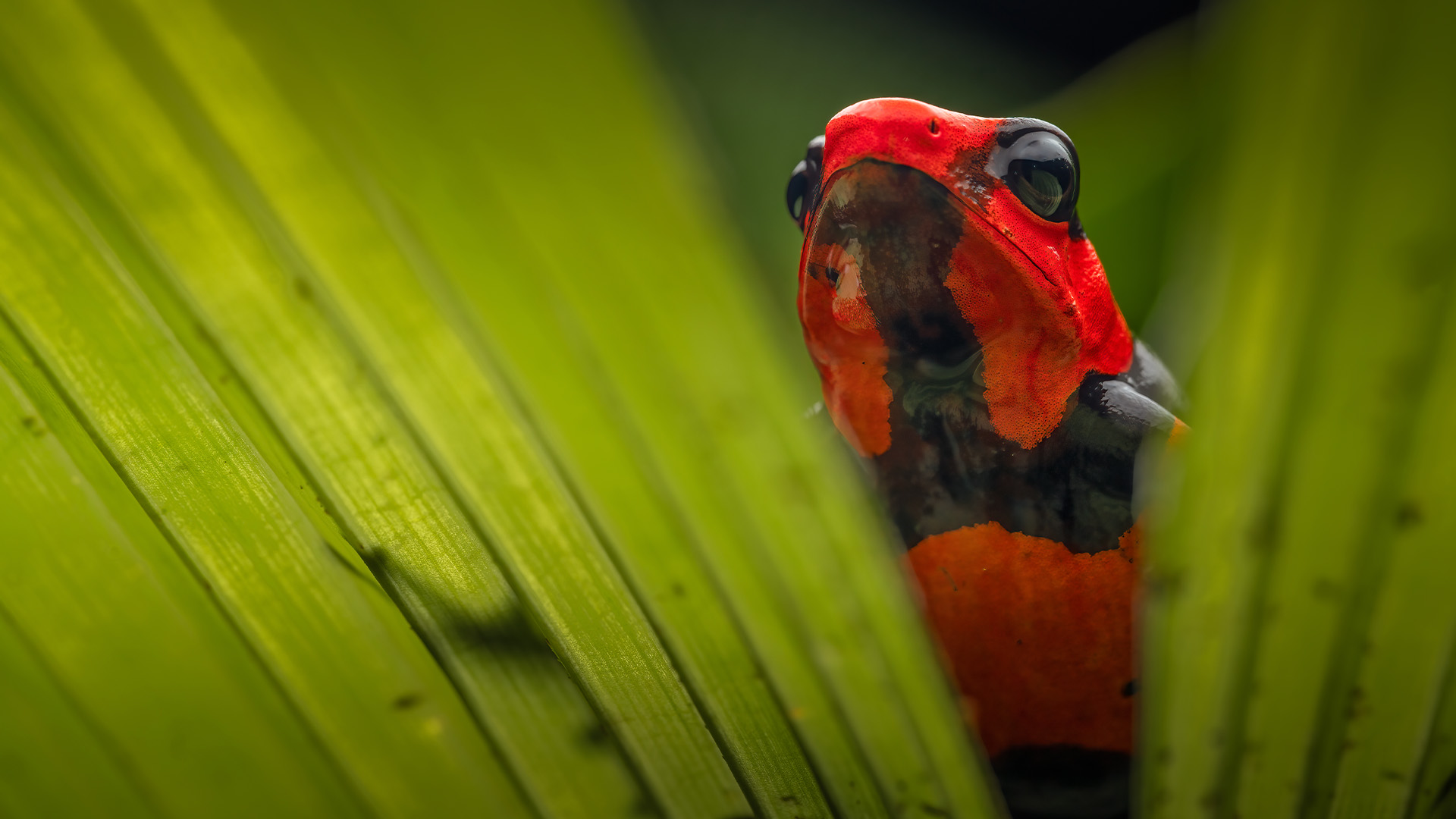
The intense red and black coloration of Lehmann’s Poison Frog creates a high-contrast scene that challenges exposure and color accuracy in the field. Photographing species with such vibrant tones in humid, low-light environments requires precise control of dynamic range, accurate color reproduction, and reliable focusing to avoid oversaturation or loss of detail. Photo: Jhonattan Vanegas.
The Journey: The Lens Under Pressure
Sony has taken the G Master category to another level with this lens. The sealing of the Sony FE 100mm f/2.8 Macro G Master OSS works even under constant light rain. Every joint is carefully protected, allowing me to work without fear, even when sweat, fog, and humidity seemed to blend with the lens and the camera.
During this expedition, we traveled through different regions of the Colombian Pacific and strategic points in the Andes. Hikes of up to four hours over slippery terrain, persistent rainfall, river crossings, humidity above 90%, temperatures ranging between 30°C and 10°C, and altitudes fluctuating between 300 and 2000 meters above sea level, all these variables tested not only physical endurance but also the reliability of the equipment.
We photographed in ecosystems where the light changes constantly and every creature (amphibians, reptiles, or insects) can disappear behind a leaf, a drop, or a shadow. I was tracking dart frogs, and in scenarios like these, every second counts, the gear cannot fail.
Here, reaction time is minimal and precision is everything: when the animal appears, you only have a few seconds to capture a scene that will probably never happen again.
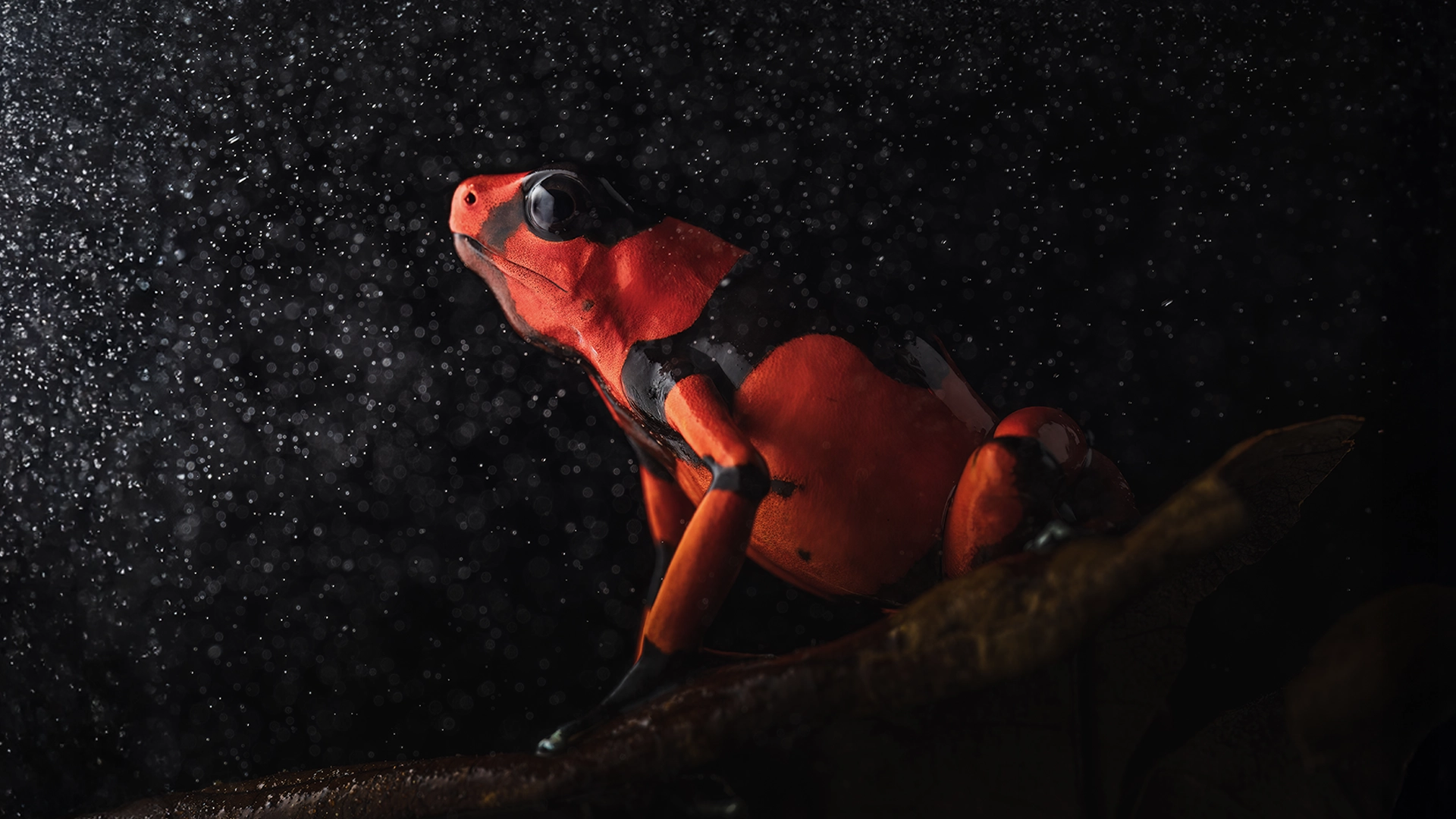
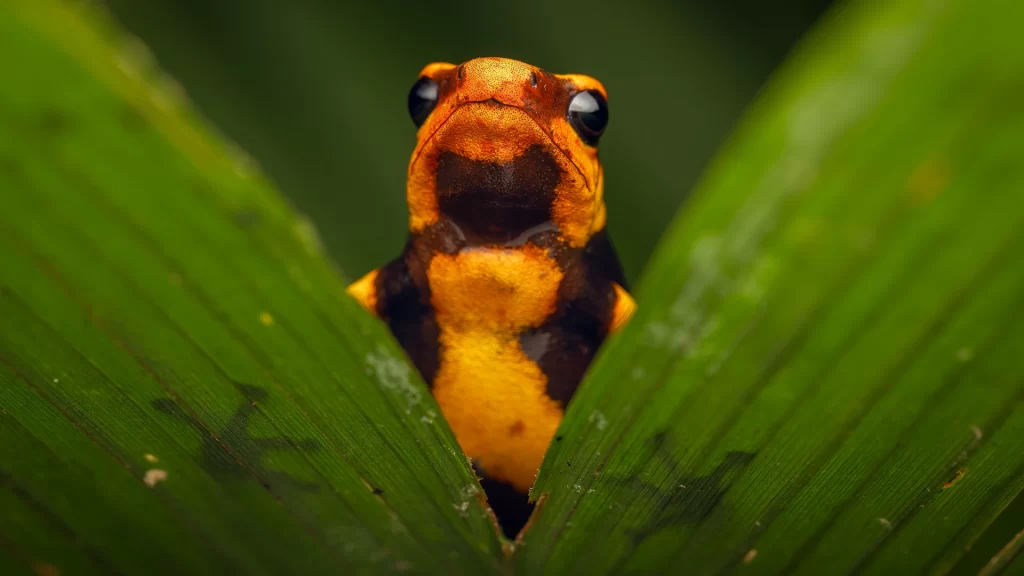
Shooting under rain is challenging: droplets lower contrast, affect focus, and make bright colors like those of Oophaga lehmanni harder to expose correctly. Photo: Jhonattan Vanegas.
Performance: What Really Makes the Difference
After using the Sony FE 100mm f/2.8 Macro G Master OSS on expeditions through the Colombian Pacific and the Andes, I can say that this lens is not only sharp: it solves things that other macro lenses simply cannot.
Here I’ll share the improvements that, in my experience, truly made the difference when working with this lens. From its true magnification without accessories to its ultra-precise focusing in complex lighting conditions, these are the features that, for me, set this lens apart from the rest.
Real Magnification: 1.0x to 1.4x Without Accessories
This is probably its biggest breakthrough. While most macro lenses reach a standard 1:1 magnification, this lens pushes past the limit without the need for tubes, close-up filters, or additional attachments.
In the field, this translates into: less weight, fewer accessories, and more agility to capture details without sacrificing quality or time.
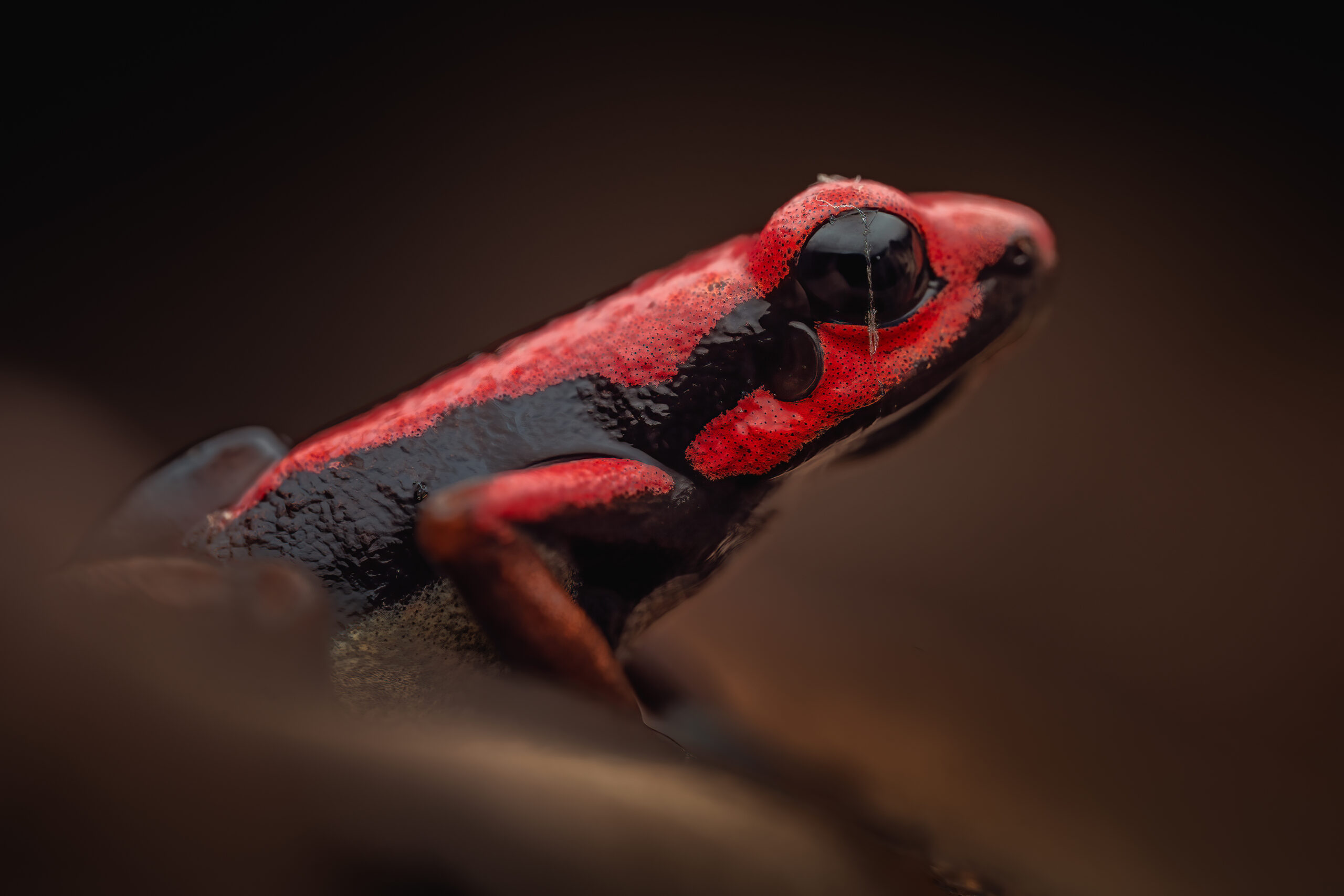
Close-up of a male Andinobates bombetes measuring just 17 mm in total length. Thanks to the 1.4× magnification, it’s possible to capture fine details, like the silk thread left behind by a spider. Photos: Jhonattan Vanegas.
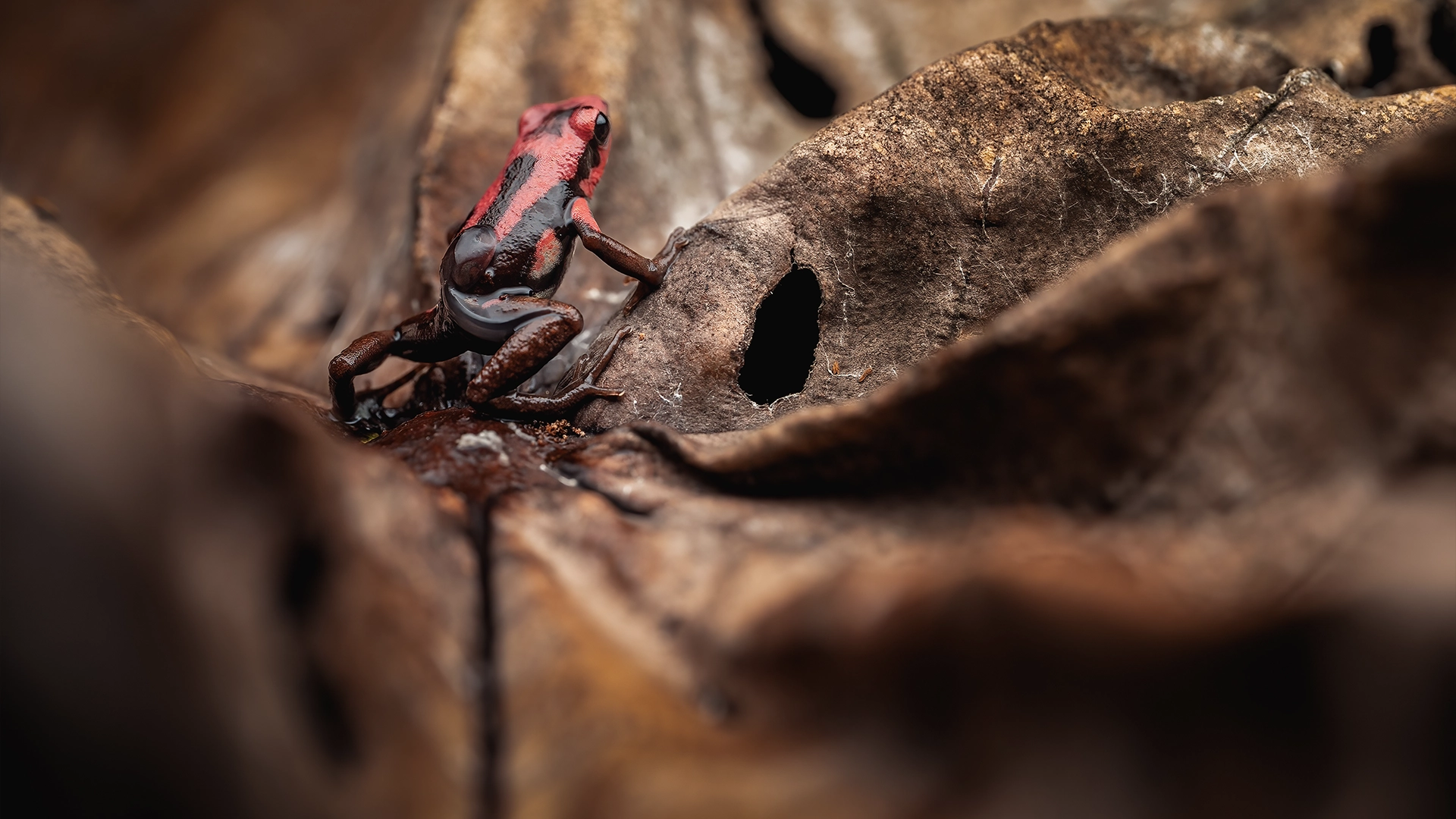
Despite the frog’s constant movement through the leaf litter, the lens’ autofocus system locked focus with precision. Photos: Jhonattan Vanegas.
Ultra-Precise Autofocus
Thanks to its four XD linear motors, the autofocus is incredibly fast, silent, and stable, even at minimum focusing distances. This level of precision becomes indispensable when working with small animals, where any movement or vibration can easily cause you to lose focus.
Specialized Stabilization for Macro
Sony retrained its Optical SteadyShot (OSS) system to handle the micro-vibrations specific to macro shooting in real field conditions. This allows you to (1) Shoot handheld without losing sharpness, (2) Adapt to difficult terrains where a tripod is not an option, and (3) Maintain precision even in uncomfortable positions, where every second counts.
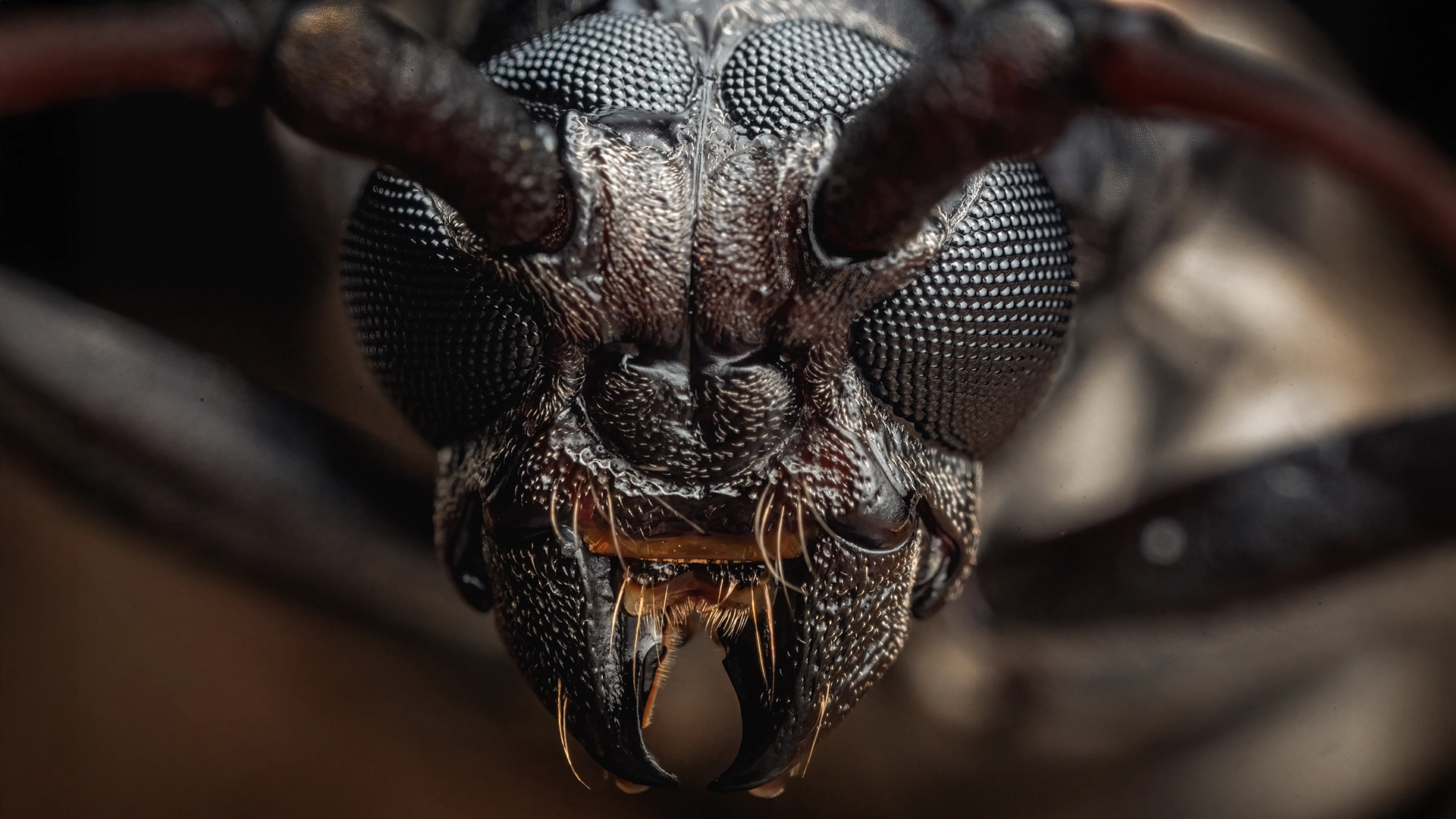
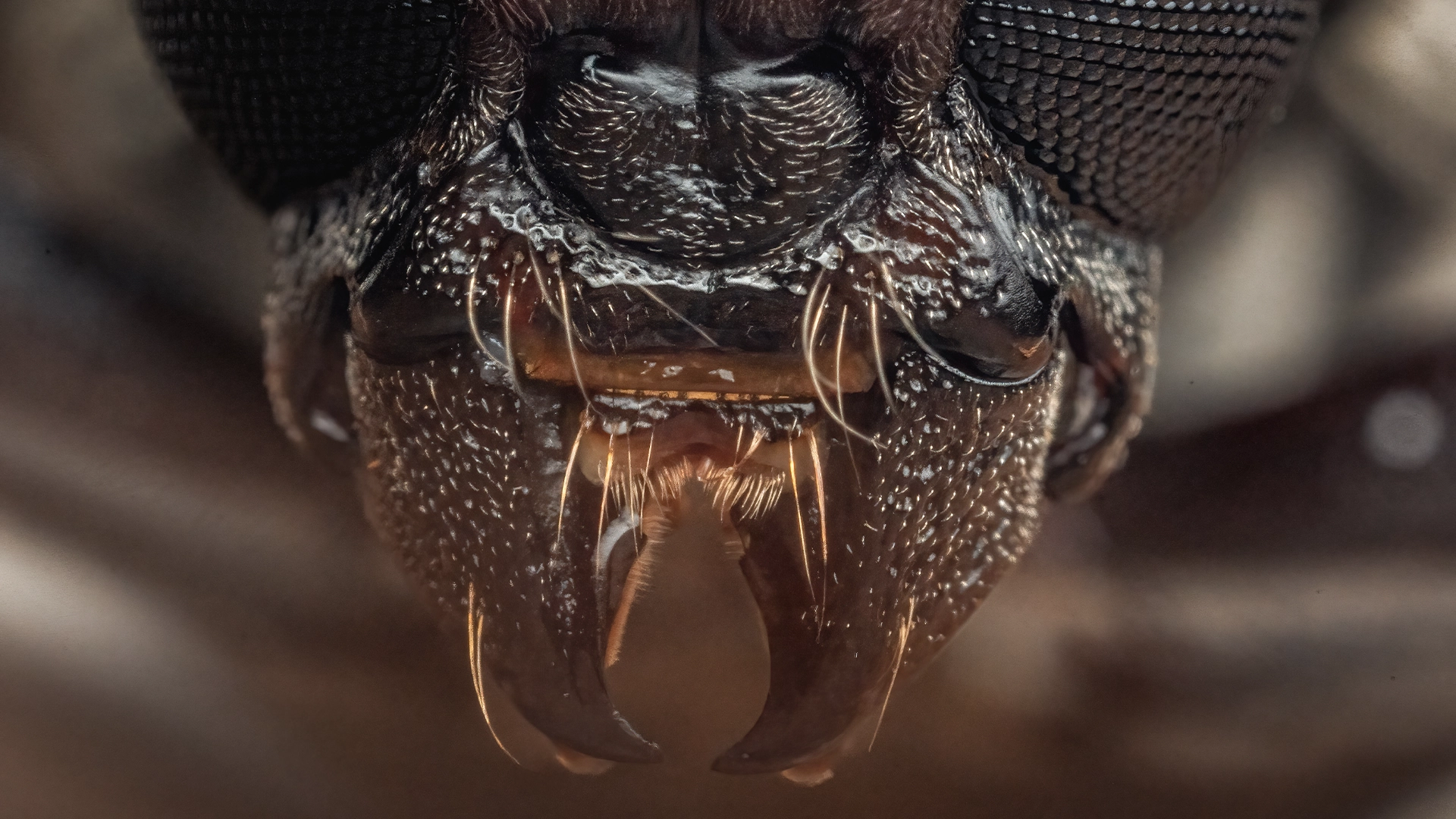
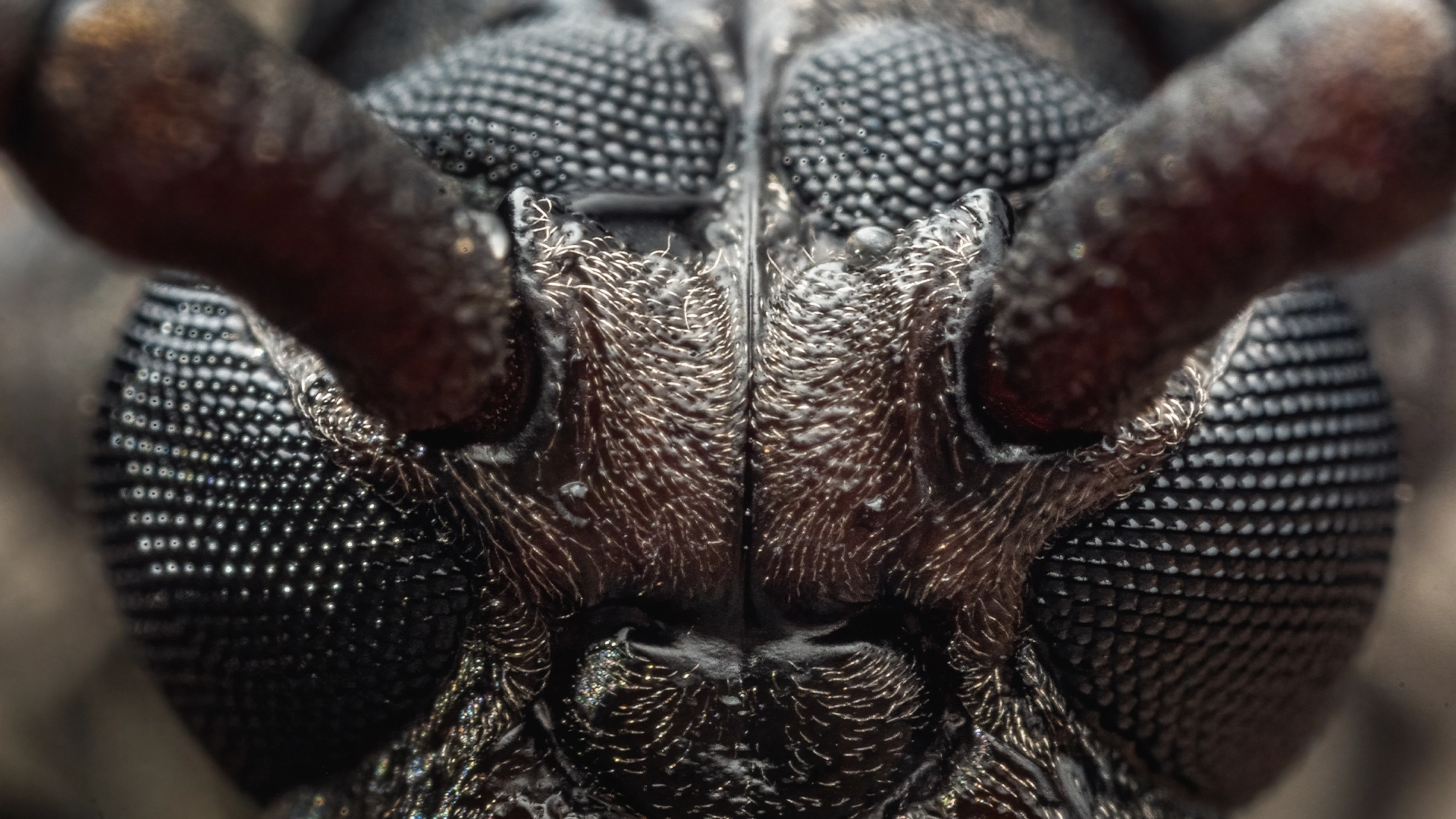
This extreme close-up was taken handheld using the lens at its maximum 1.4× magnification combined with a 2.0× teleconverter. The OSS stabilization system allowed me to capture fine detail without a tripod, even in the dense, humid rainforest. Photos: Jhonattan Vanegas.
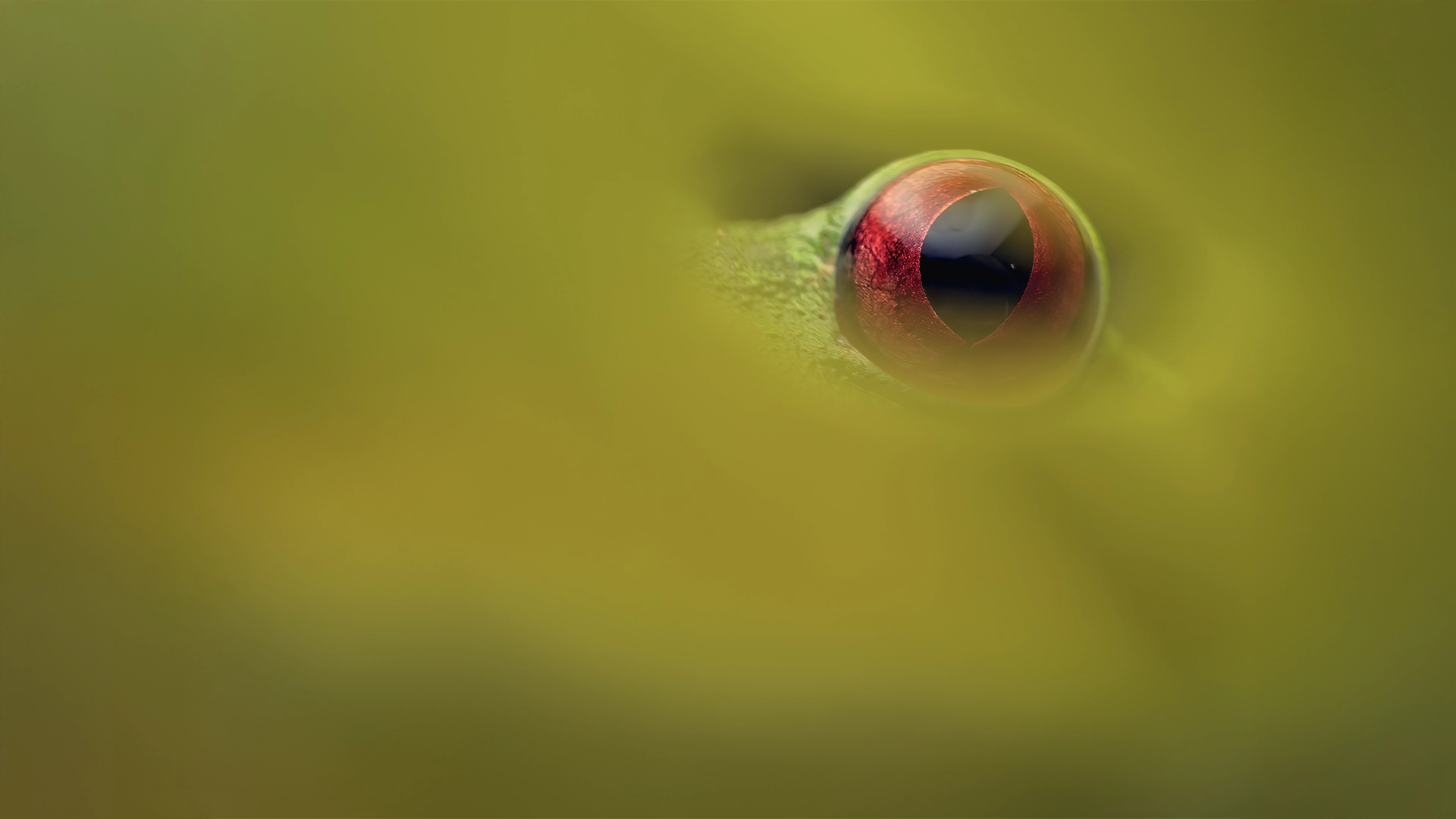
A close-up of the iconic red eye of Agalychnis spurrelli, captured through dense foliage. The creamy bokeh of the Sony 100mm f/2.8 GM OSS isolates the subject beautifully, transforming a chaotic background into a soft, immersive canvas. Photos: Jhonattan Vanegas.
G Master Bokeh: Smooth, Circular, Immersive
Thanks to its 11-blade diaphragm and G Master optical design, the background blur is clean, enveloping, and distraction-free. This helps isolate the subject in chaotic environments, such as forest leaf litter or tangled branches, enabling much more expressive macro portraits.
Built to Withstand Field Demands
Tested across the Colombian Pacific and the Andes, this lens endured constant rain, fog, humidity above 90%, and abrupt temperature changes. Being weather-sealed makes it a reliable tool. The lens ergonomics are precise and functional, including a customizable focus button, a distance limiter to save time, and a de-clickable aperture ring.
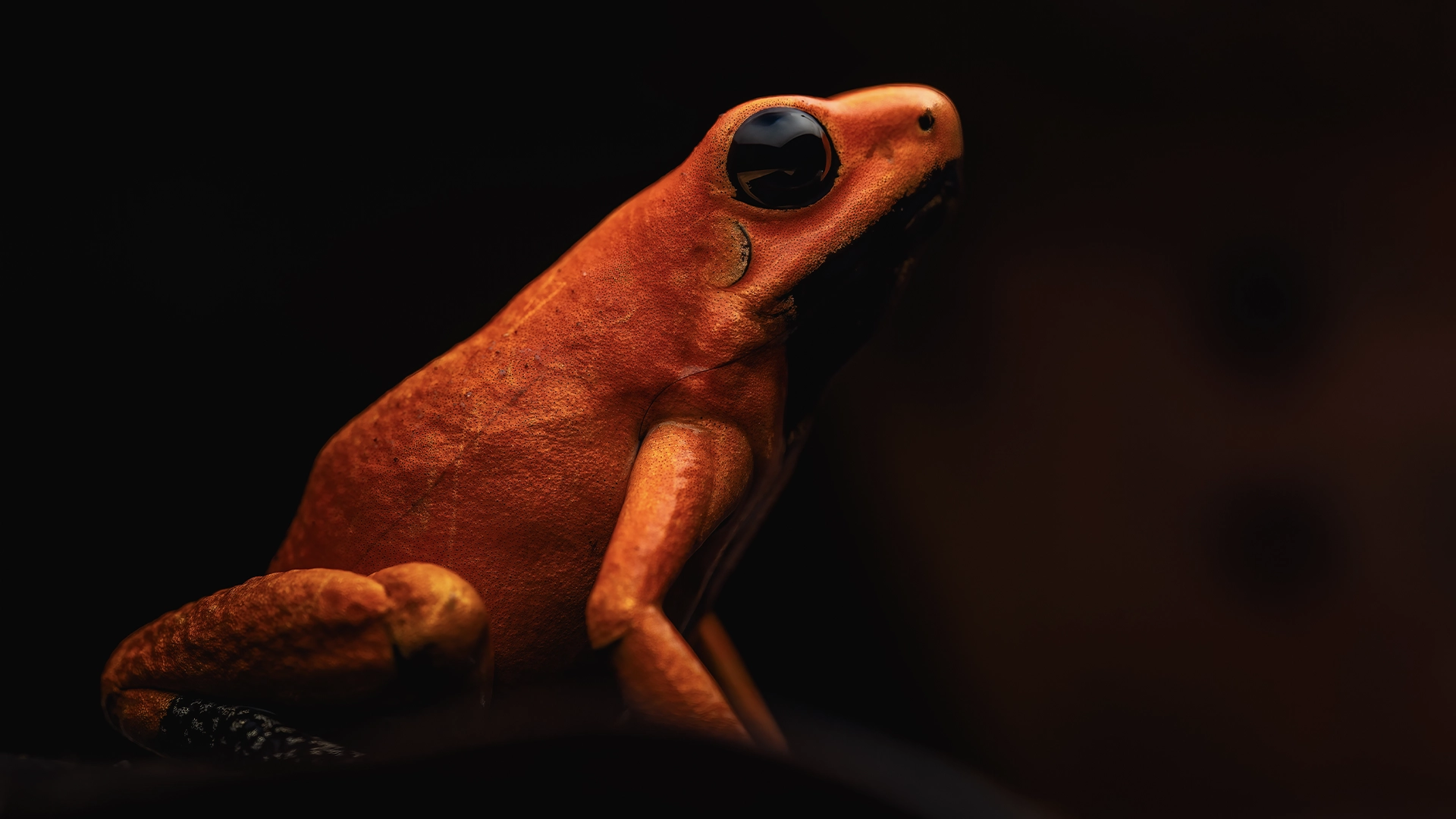
Phyllobates terribilis, a species found deep within the Colombian Pacific. This photo is a testament to the lens’s reliability under extreme humidity and rapid temperature changes. Photos: Jhonattan Vanegas.
Macro in the Field: Where Everything Is Put to the Test
A spec sheet can tell you a lot, but it does not prepare you for the humidity of the cloud forest, for the sudden jump of a frog, or for a branch crossing your frame just when your focus was perfect.
In the field, every second counts, and every mistake can cost you a moment that will never happen again. Here I’m sharing what truly worked for me and what makes this lens stand out when you’re alone with your camera in the middle of the rainforest.
Sharpness from f/2.8: When Every Texture Matters
The first thing I noticed was the lens’s ability to resolve real micro-detail even at maximum aperture. This direct sharpness allows you to work without relying on heavy post-production, something crucial when you’re shooting hundreds of photos a day in the field.Smooth, Precise Manual Focus
The focus ring is another strong point: it has the perfect travel distance and an ideal amount of resistance for working with precision, even in uncomfortable positions or with wet gloves. This allowed me to adjust focus exactly where I needed it, especially with subjects that don’t tolerate sudden movements, such as certain insects and reptiles.Custom Button: Instant Focus Magnification
In my workflow, I configured the lens’s customizable button to activate the focus magnifier. This feature, when you’re in manual mode, is a lifesaver: it enlarges a portion of the viewfinder so you can confirm that focus is exactly where you need it.

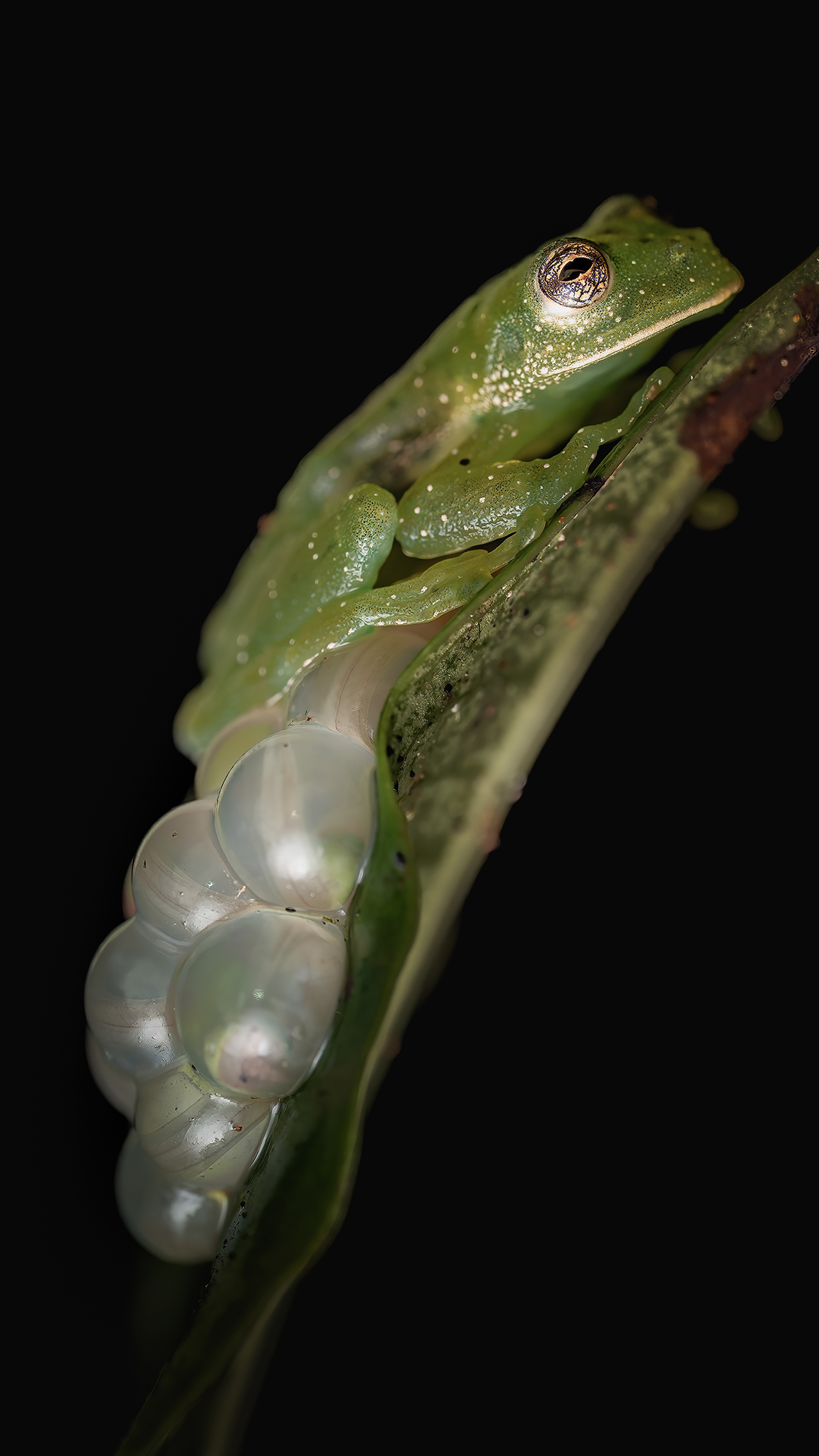
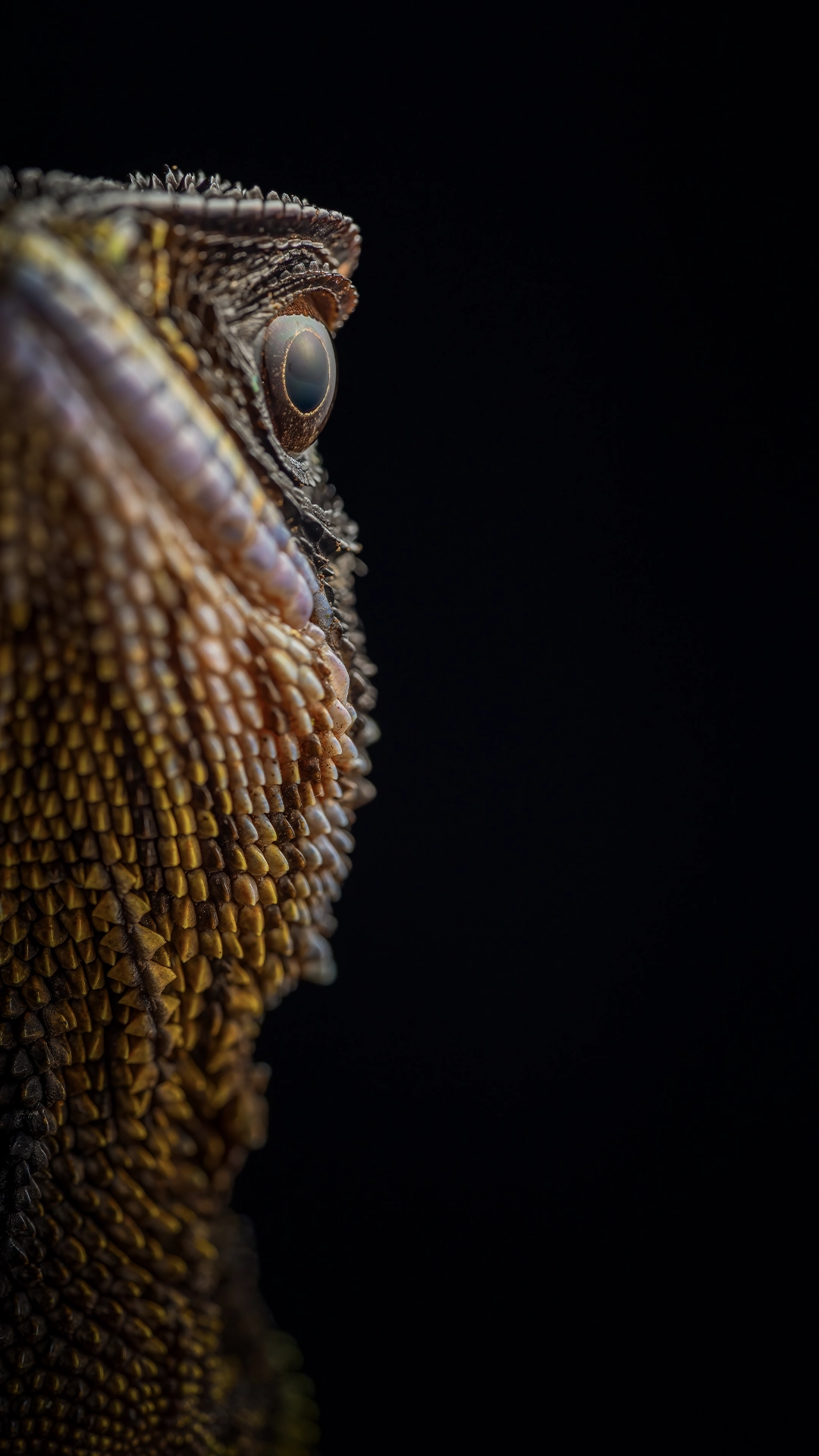
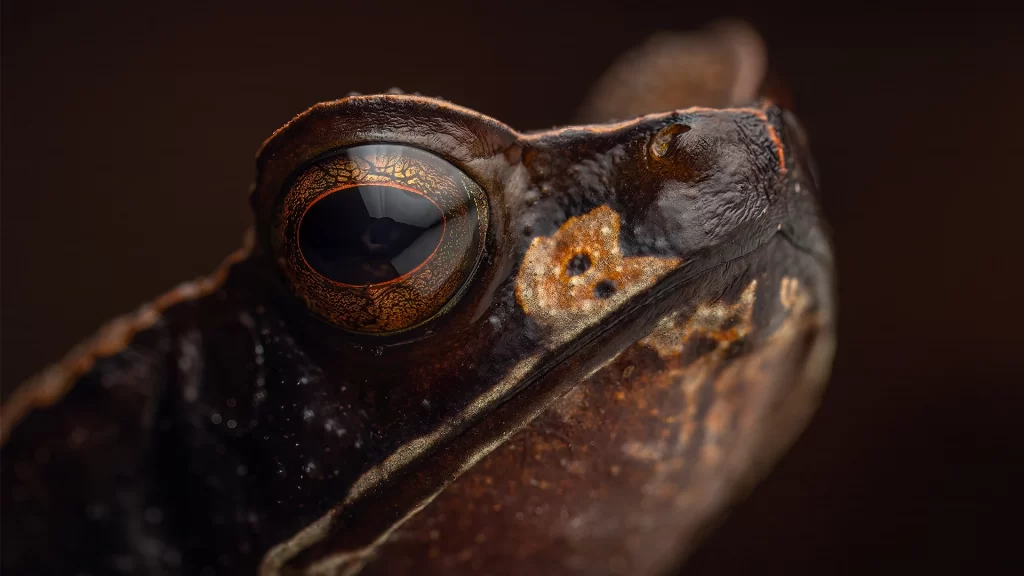
Close-ups revealing skin details and scale texture without the need for additional accessories. These images showcase the lens’s sharpness in real-world conditions. Photos: Jhonattan Vanegas.
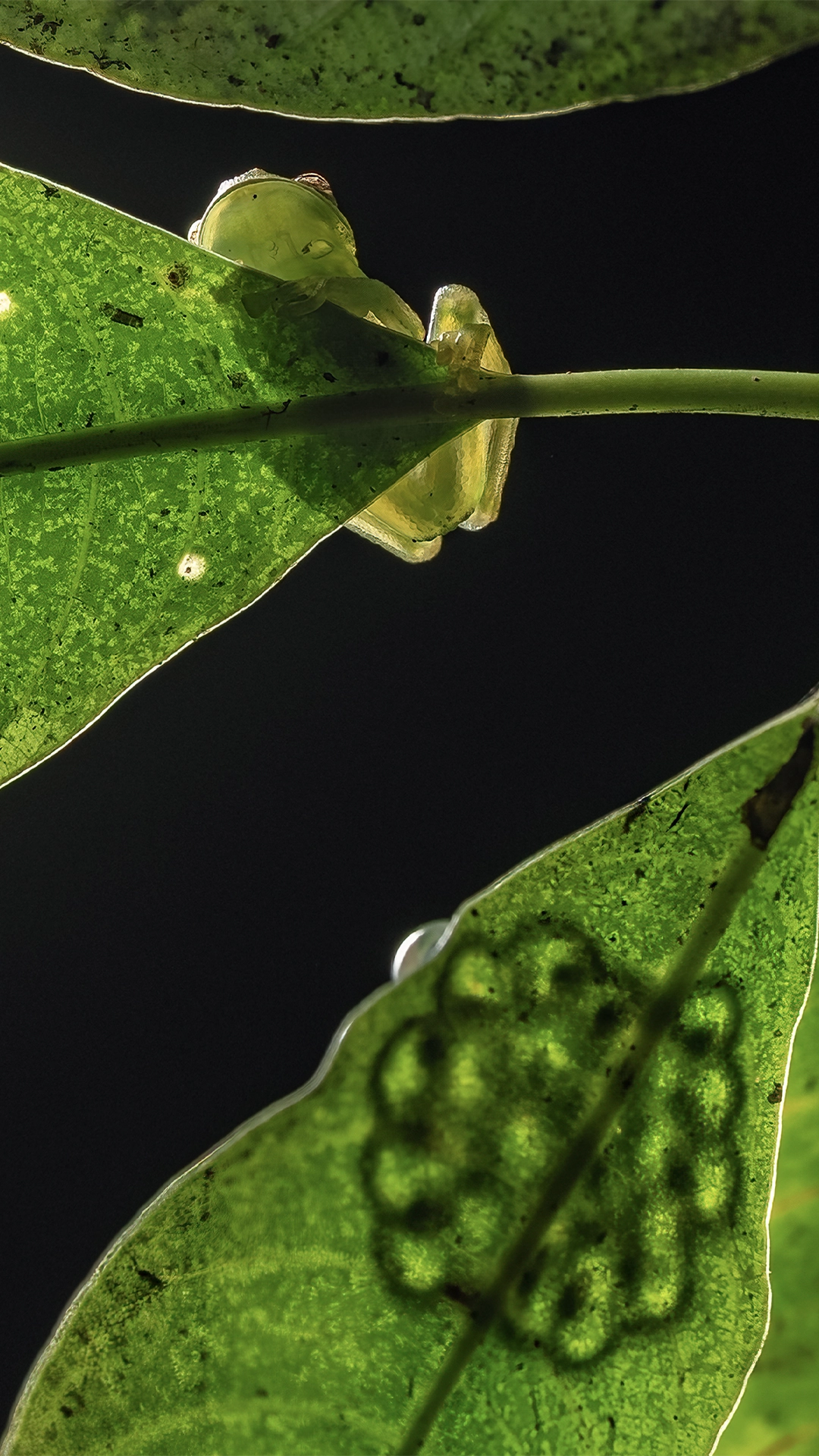
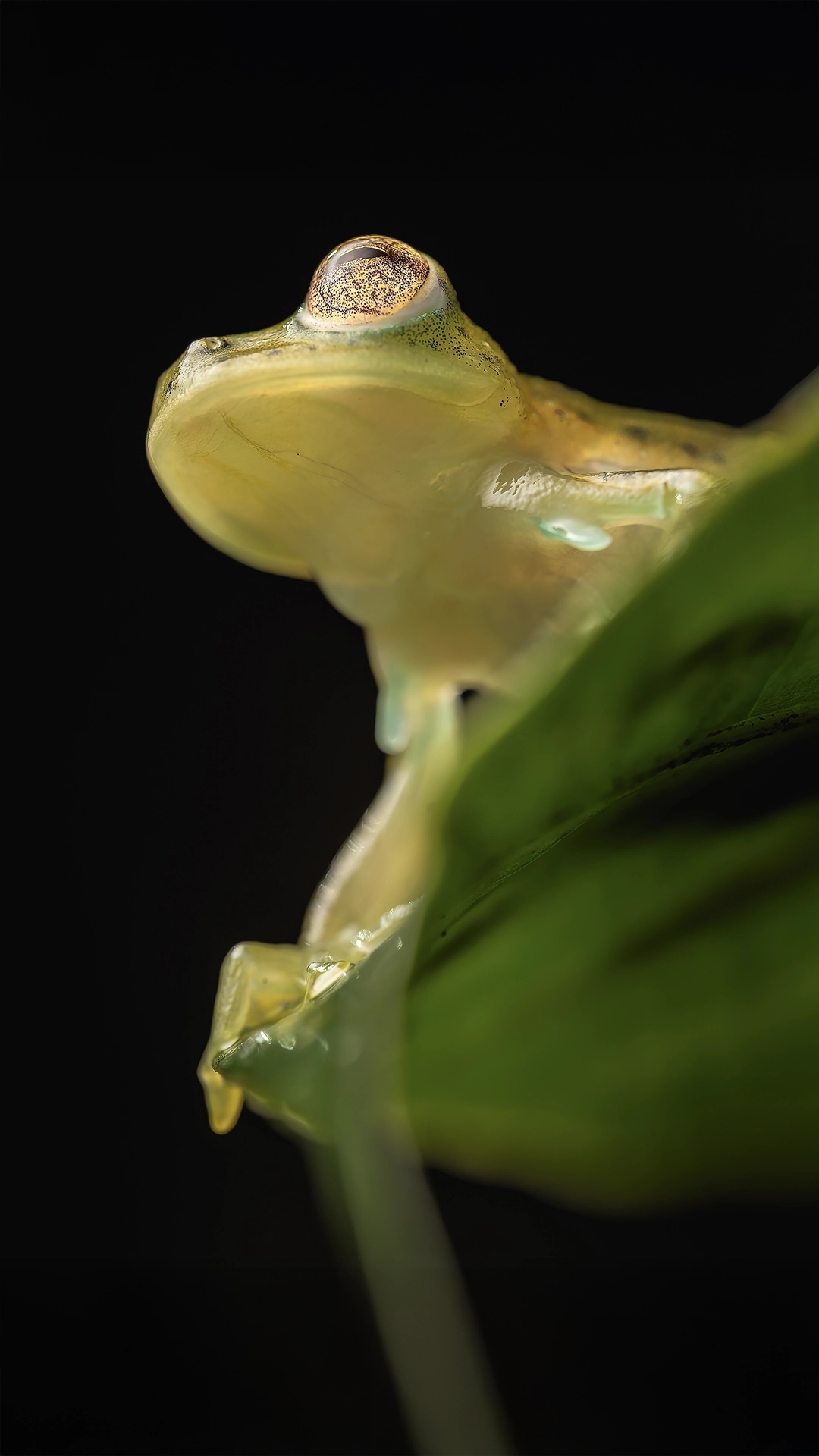
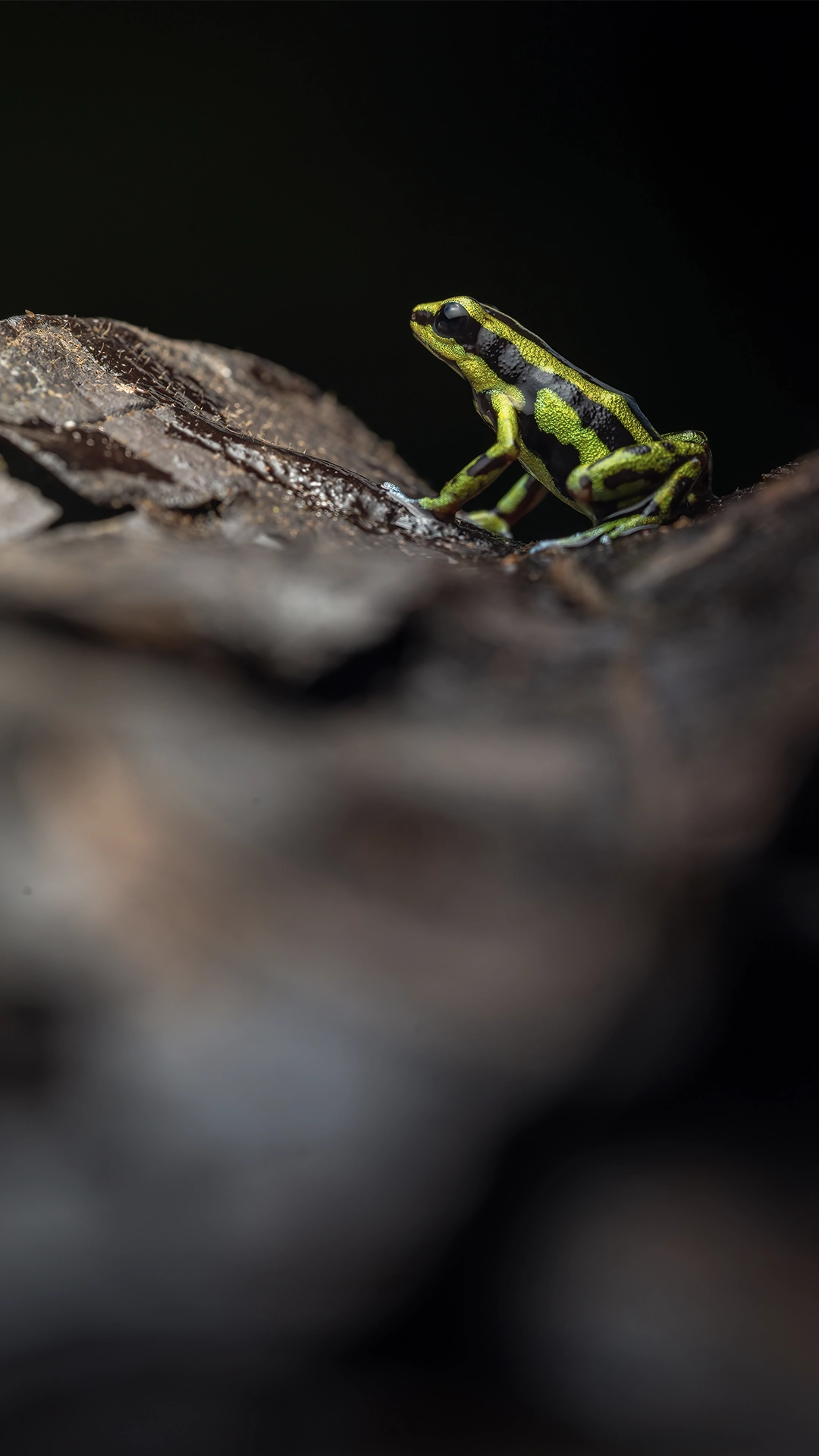
Portrait of two glass frog species and a poison frog. The fidelity in yellow and green tones illustrates the lens’s color accuracy without color casts. Photos: Jhonattan Vanegas.
Color Science That Honors Nature
One of the aspects I care about most in my photography is color accuracy, and this lens performed flawlessly. The intense colors of the dart frogs were reproduced with precision and without color casts. This translates into more reliable files and shorter editing times.Minimal Distortion, More Faithful Stories
When working with small subjects, even slight distortion can completely alter the perception of the animal or its environment. In my experience, this lens preserves lines, proportions, and the true shape of subjects, even at the edges of the frame.Stable Autofocus: It Doesn’t Lose Lock
Many macro lenses tend to “hunt” for focus, especially in scenes with low contrast or moving subjects. That didn’t happen with this lens. The focus simply locks on, no erratic movement. This makes it highly reliable when working with animals where you only get one chance to capture the image.
Greater Magnification: Compatibility with Teleconverters
One of the most powerful surprises of this lens is its native compatibility with Sony’s 1.4x and 2.0x teleconverters.
This means that, without losing autofocus or stabilization, you can push the magnification level to new extremes. And when you’re in the field, with no option to change lenses, this versatility can define an image.
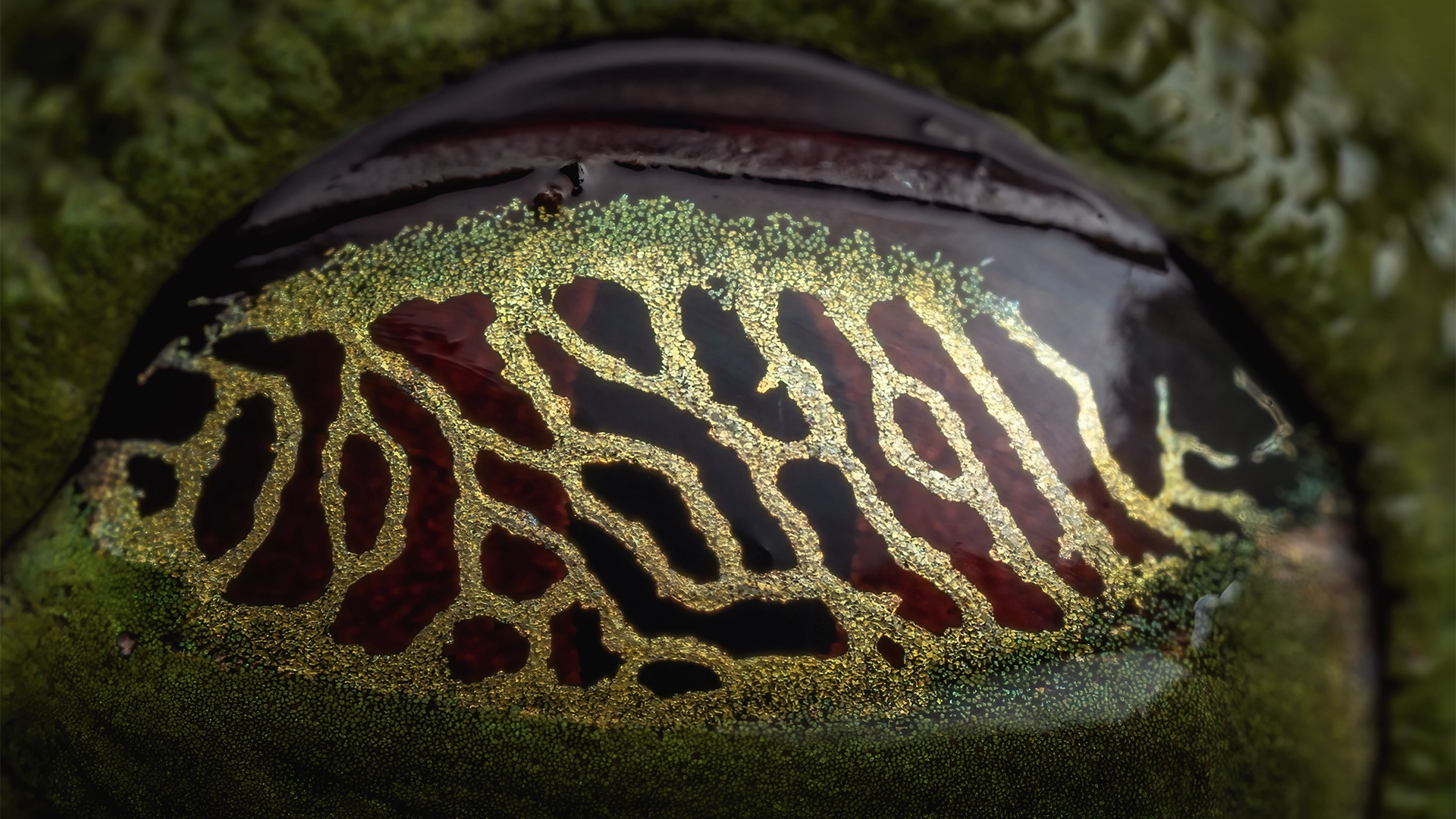
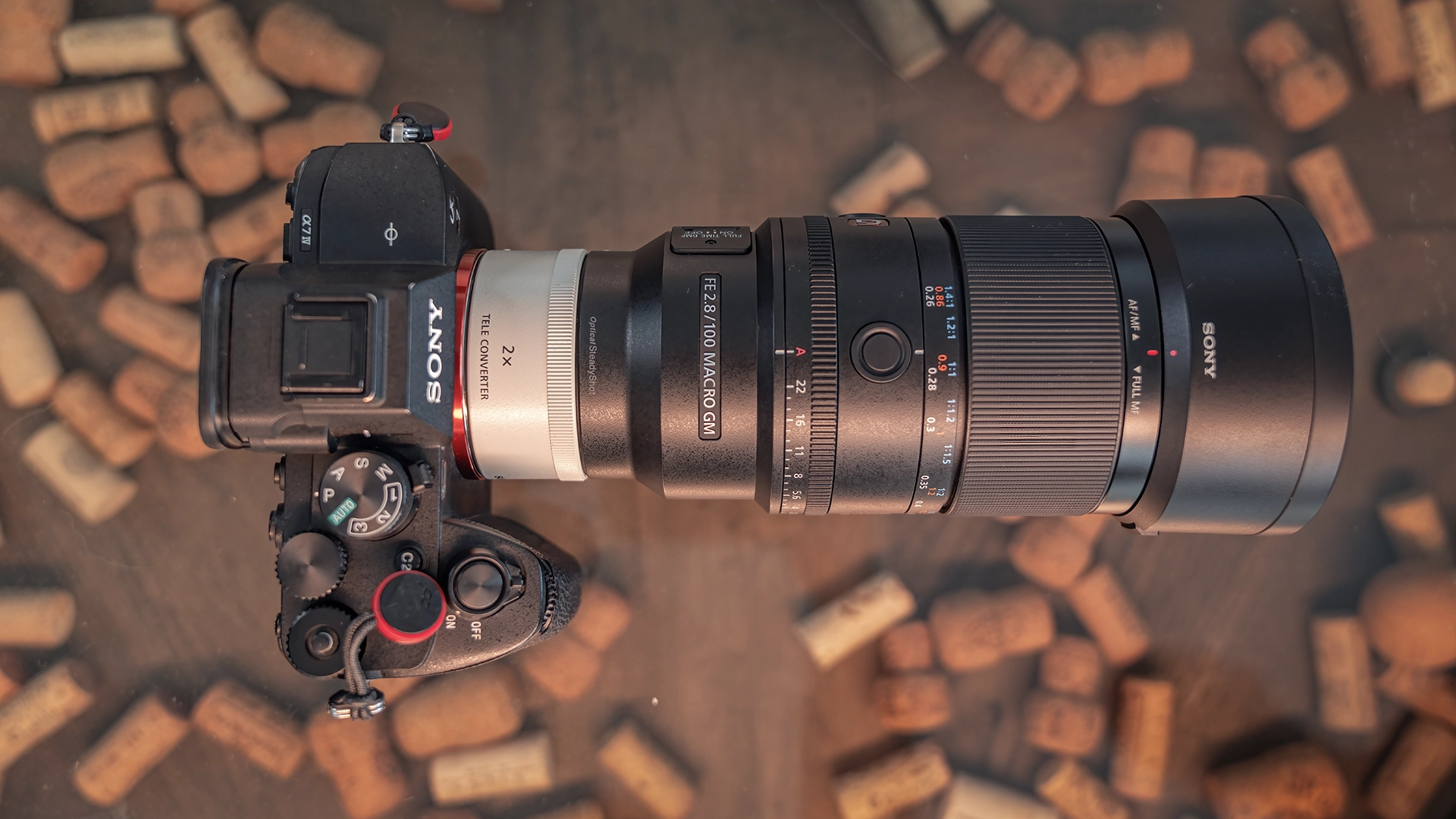
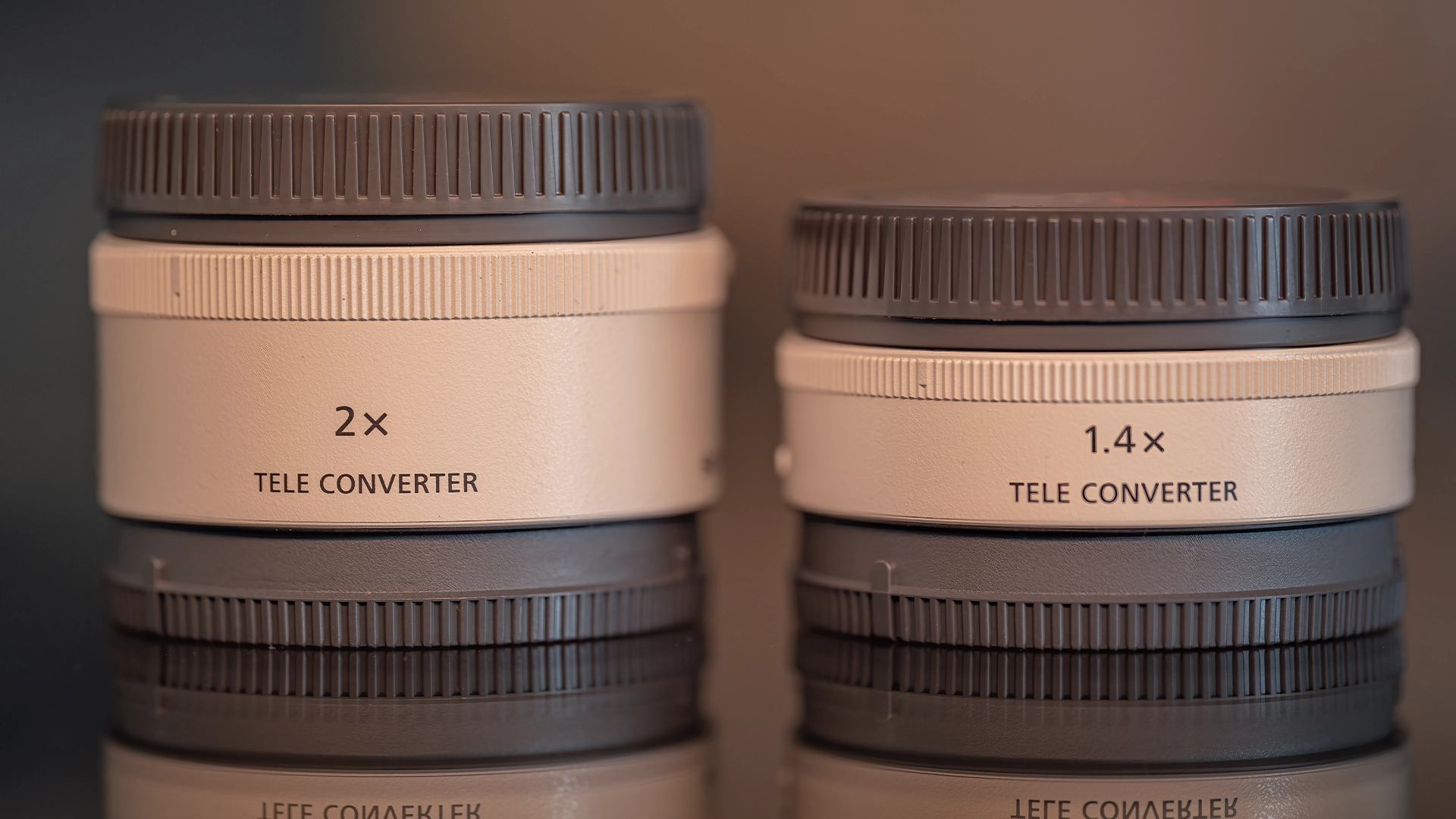
Using the 2.0x teleconverter on the Sony 100mm GM significantly boosts magnification while maintaining reliable autofocus and stabilization, essential when photographing small, fast-moving wildlife in the field. Photo: Jhonattan Vanegas.
- 1.4x: The Sweet Spot for Microfauna. With the 1.4x teleconverter, the Sony 100mm f/2.8 GM OSS reaches a magnification close to 2:1 (1.96x native), enough to capture impossible details. Most importantly: autofocus remains fast and reliable, even in low-light conditions.
- 2.0x: A Tripod-Free Magnifying Glass. This was the real challenge. I used the lens with the Sony 2.0x teleconverter, completely handheld. The stabilization (OSS) did its job, allowing me to capture sharp, detailed shots with no additional support.
This combo allowed me to get even closer, achieving an image with a magnification ratio above 2.5x, something I previously only managed with tubes or extreme lenses, and which I now have in a portable solution.
Sony Alpha System: More Than Compatibility
A powerful tool becomes extraordinary when it belongs to a system that understands how you see the world. This lens was designed to integrate seamlessly with Sony Alpha bodies, creating an intuitive, fast, and precise experience. In difficult conditions—rain, darkness, elusive species—every second counts. And this system responds.
Eye AF in Nature: Surgical Precision
In my workflow, this feature has been especially useful with amphibians and reptiles that have prominent, expressive eyes. When working with wide apertures (f/2.8 or f/4), where depth of field is minimal, focusing precisely on the eye is vital so the image conveys connection and doesn’t get lost within millimeters of softness.
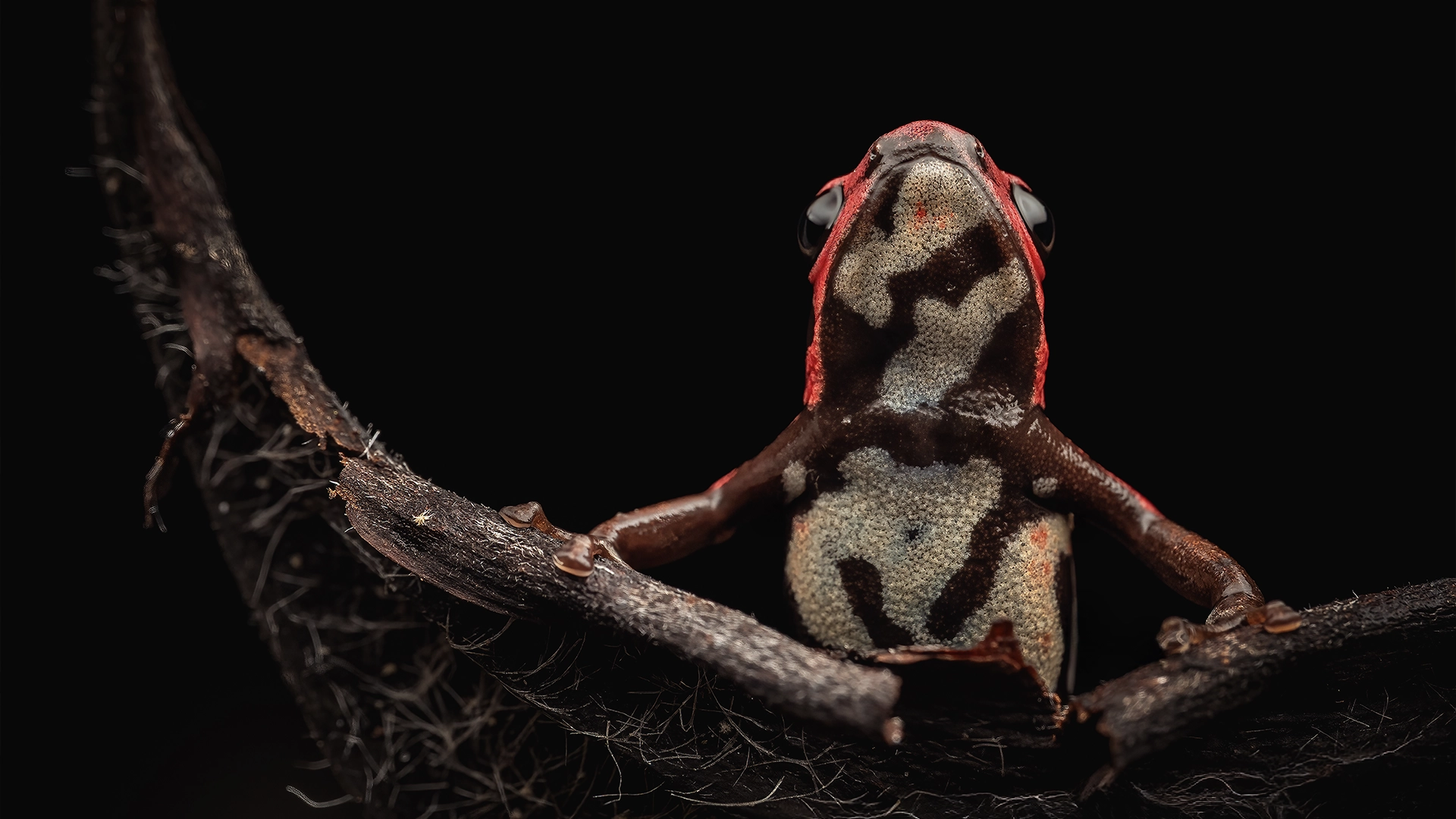
A direct gaze from an Andinobates bombetes, captured using Eye AF, a feature that locks onto the eye even in small subjects with complex patterns that typically confuse traditional autofocus. Photos: Jhonattan Vanegas.
Focus Assist (MF Assist) and Focus Peaking
When working with tiny subjects in low-light conditions, manual focus remains an essential precision tool. Activating MF Assist (via the customizable button) allowed me to automatically magnify the focused area and confirm each shot without losing time.

Low-light portrait captured using manual focus assist, achieving precise sharpness on the desired point without repeated attempts. Photos: Jhonattan Vanegas.
Clickless Aperture Ring
Ideal for those who alternate between photo and video. The ring allows you to adjust the aperture smoothly and silently, with no clicks, perfect for recording animal behavior without noise that could scare the subject away.
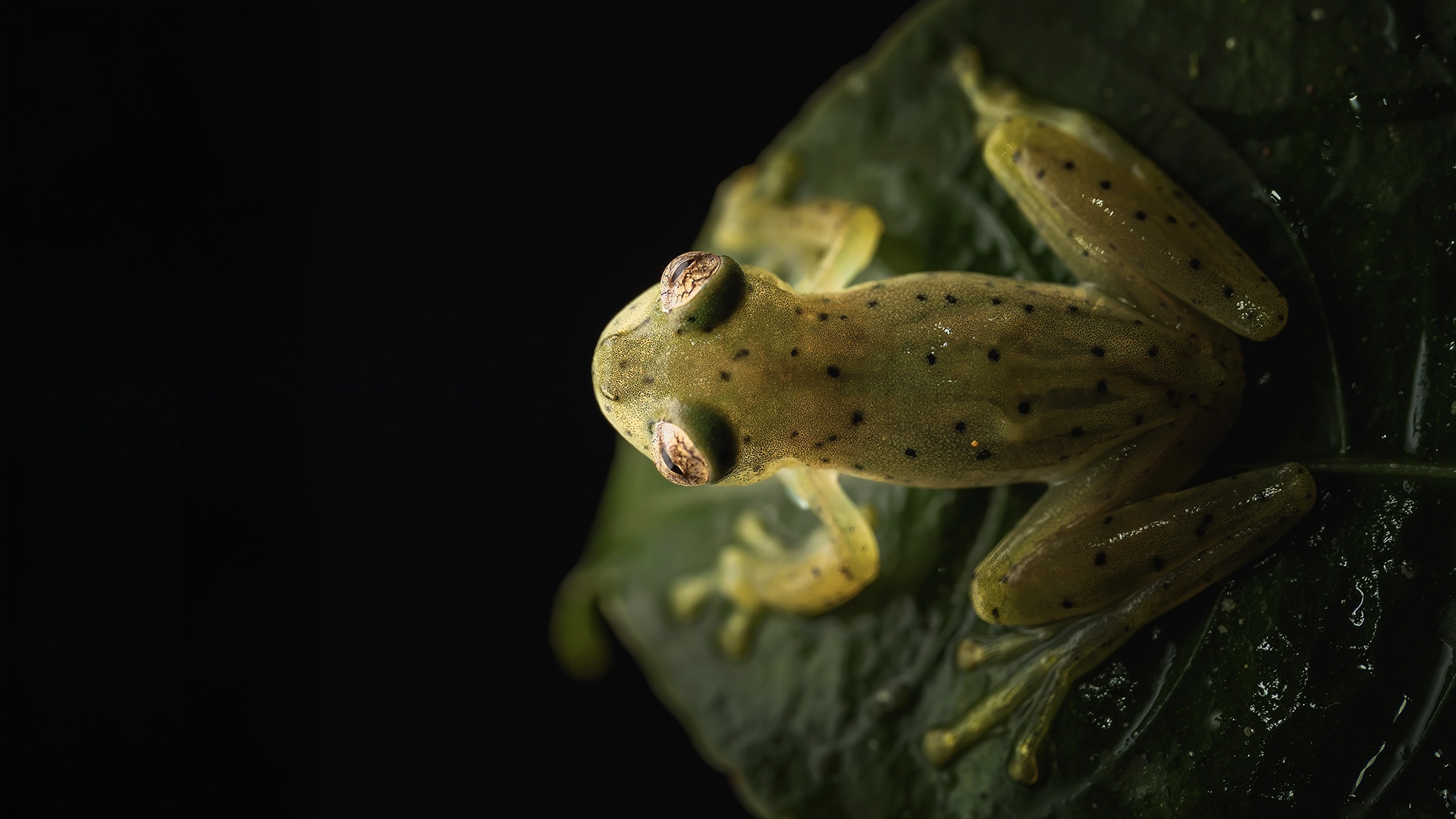
Composition of a resting frog; the clickless aperture ring allowed exposure changes silently, without disturbing the animal’s behavior. Photos: Jhonattan Vanegas.
90mm vs 100mm: What Really Changes?
For years, the Sony FE 90mm f/2.8 Macro G OSS was the macro lens par excellence for those of us who work in the field. Lightweight, reliable, sharp, and with effective optical stabilization, it is still an excellent tool for those beginning in macro photography or looking for a versatile lens for portrait or video as well. I’ve captured countless stories with it.
But when the Sony FE 100mm f/2.8 Macro G Master OSS arrived, it wasn’t just a numbers update: it was a technological leap designed for those of us who live macro photography from real-world demands, and that difference is noticeable.
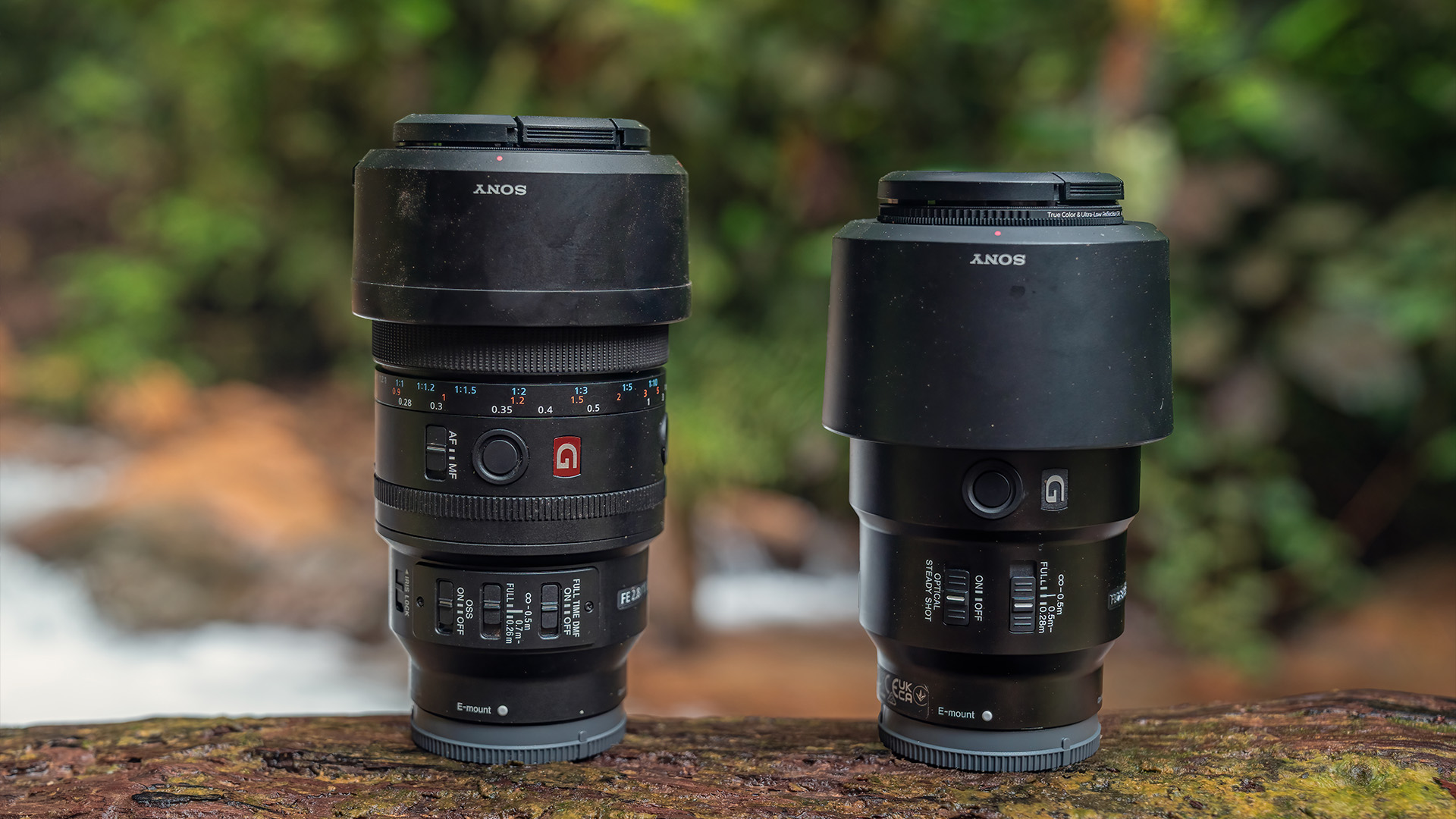
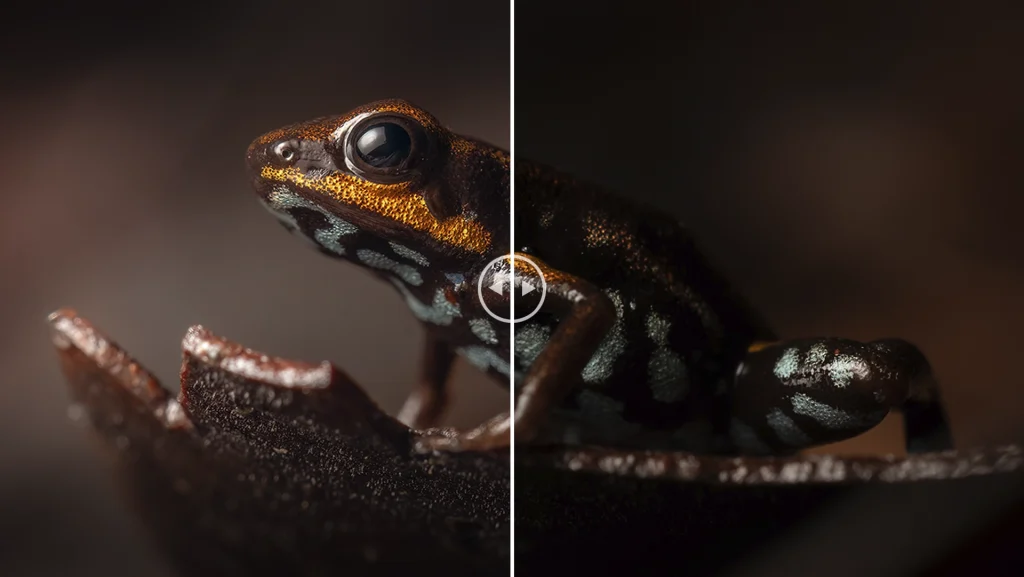
Side by side, the Sony FE 90mm f/2.8 Macro G OSS and the Sony FE 100mm f/2.8 Macro G Master OSS show the evolution of Sony’s macro lineup: from a reliable field classic to a lens engineered for extreme detail, higher magnification, and demanding wildlife work. Photo: Jhonattan Vanegas.
Comparison Between the Two Lenses
Both lenses have proven to be reference points in macro photography, especially for those of us who work with biodiversity. In this section, you’ll find a detailed comparison between the classic Sony 90mm f/2.8 Macro G OSS and the new Sony 100mm f/2.8 Macro G Master OSS.
It’s not about which one is “better” in absolute terms, but about understanding the improvements, innovations, and practical advantages the 100mm offers for those of us who want to go beyond 1:1 in extreme nature photography.
> Number of diaphragm blades / shape
- 90mm: 9 blades, circular
- 100mm: 11 blades, circular (G Master signature for better bokeh)
> Minimum focusing distance
- 90mm: 0.28 m (≈ 28 cm)
- 100mm: ~0.26–0.28 m (similar close-range, but with greater magnification capability)
> Maximum magnification / Macro ratio without accessories
- 90mm: 1.0× (true-to-life, 1:1 real size)
- 100mm: 1.4× (macro “beyond life-size”) — a key advantage.
> Compatibility with FE 1.4× / 2.0× teleconverters
- 90mm: Not officially optimized; standard 1.0× ratio; teleconverter compensation is difficult.
- 100mm: Officially compatible; allows even greater magnification (extreme macro) without losing autofocus or optical quality.
> Dimensions (diameter × length)
- 90mm: Ø 79 mm × 130.5 mm
- 100mm: Ø 81.4 mm × 147.9 mm
> Weight
- 90mm: 602 g
- 100mm: 646 g
> Filter diameter (front)
- 90mm: 62 mm
- 100mm: 67 mm
> Image stabilization (OSS)
- 90mm: Yes, integrated Optical SteadyShot.
- 100mm: Yes, optimized stabilization for macro/nature, with better performance in demanding environments.
> Optical quality / detail / bokeh
- 90mm: Excellent for 1:1 macro, good detail, smooth bokeh; ideal for beginners or moderate macro work.
- 100mm: Greater detail, microtextures, richer colors, creamier bokeh, and cleaner subject-background separation; ideal for demanding macro, tiny fauna, textures, and invisible details.
So, Does the 90mm Become Obsolete?
Not at all. The 90mm remains a great option for its weight, price, and proven performance. But if you work with amphibians, reptiles, insects, moss, lichens, and you make field macro photography a professional discipline, the 100mm G Master offers clear advantages: more magnification, better focusing, and more creative control.
It’s not about which one is better, it’s about which one fits your vision and your needs. In my case, the 100mm has become the lens I always want mounted when I go out to photograph the invisible.


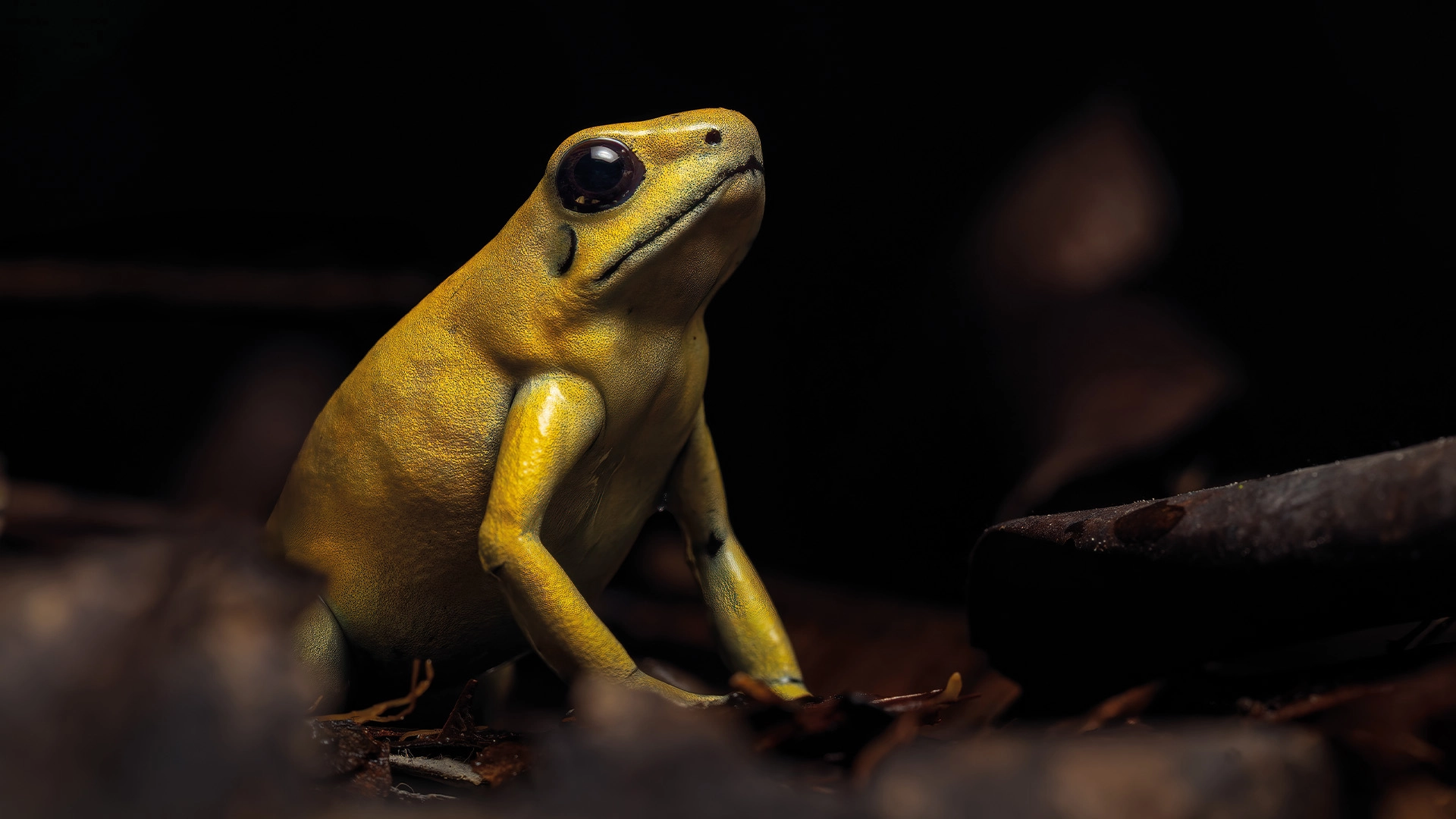
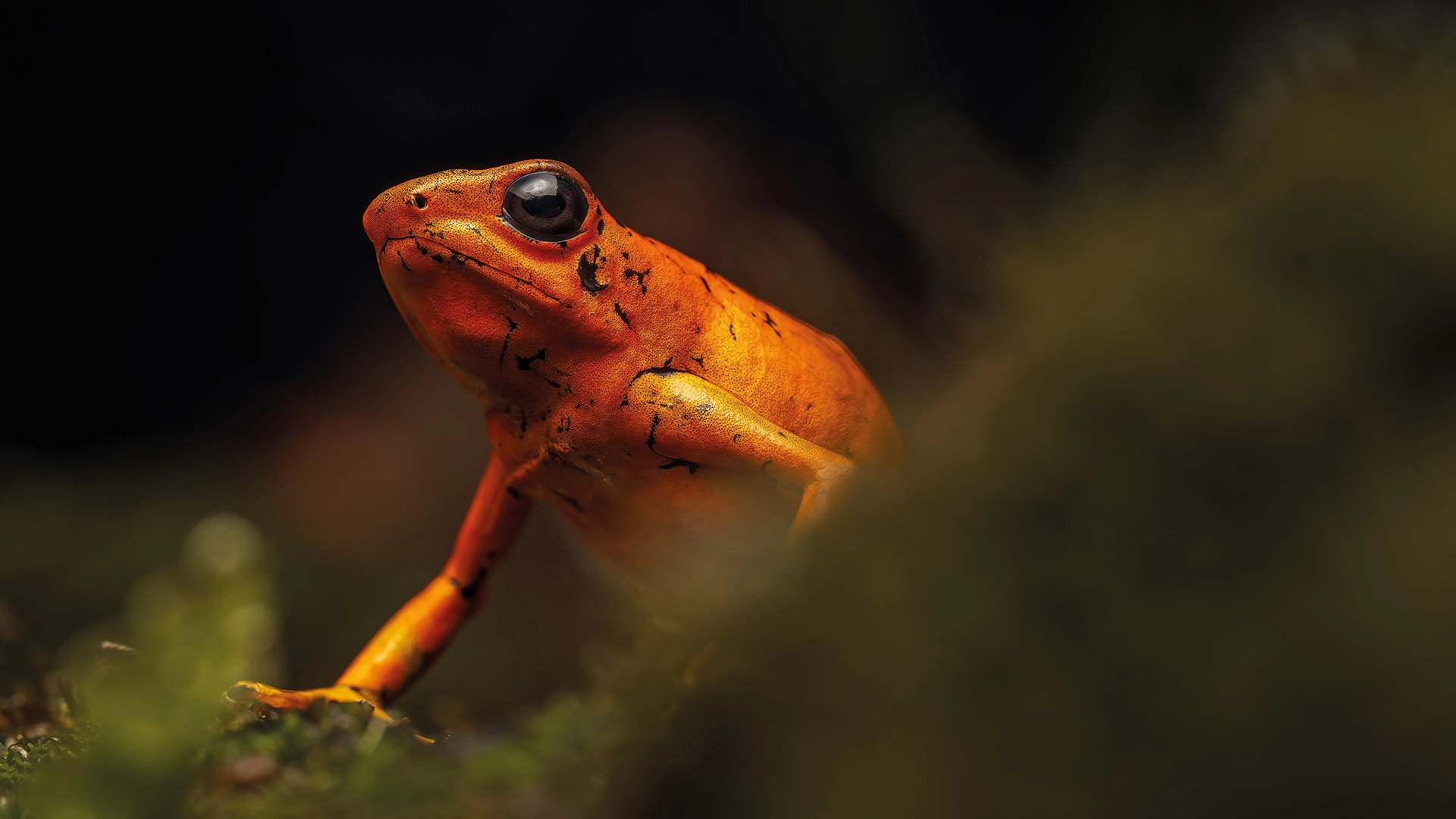
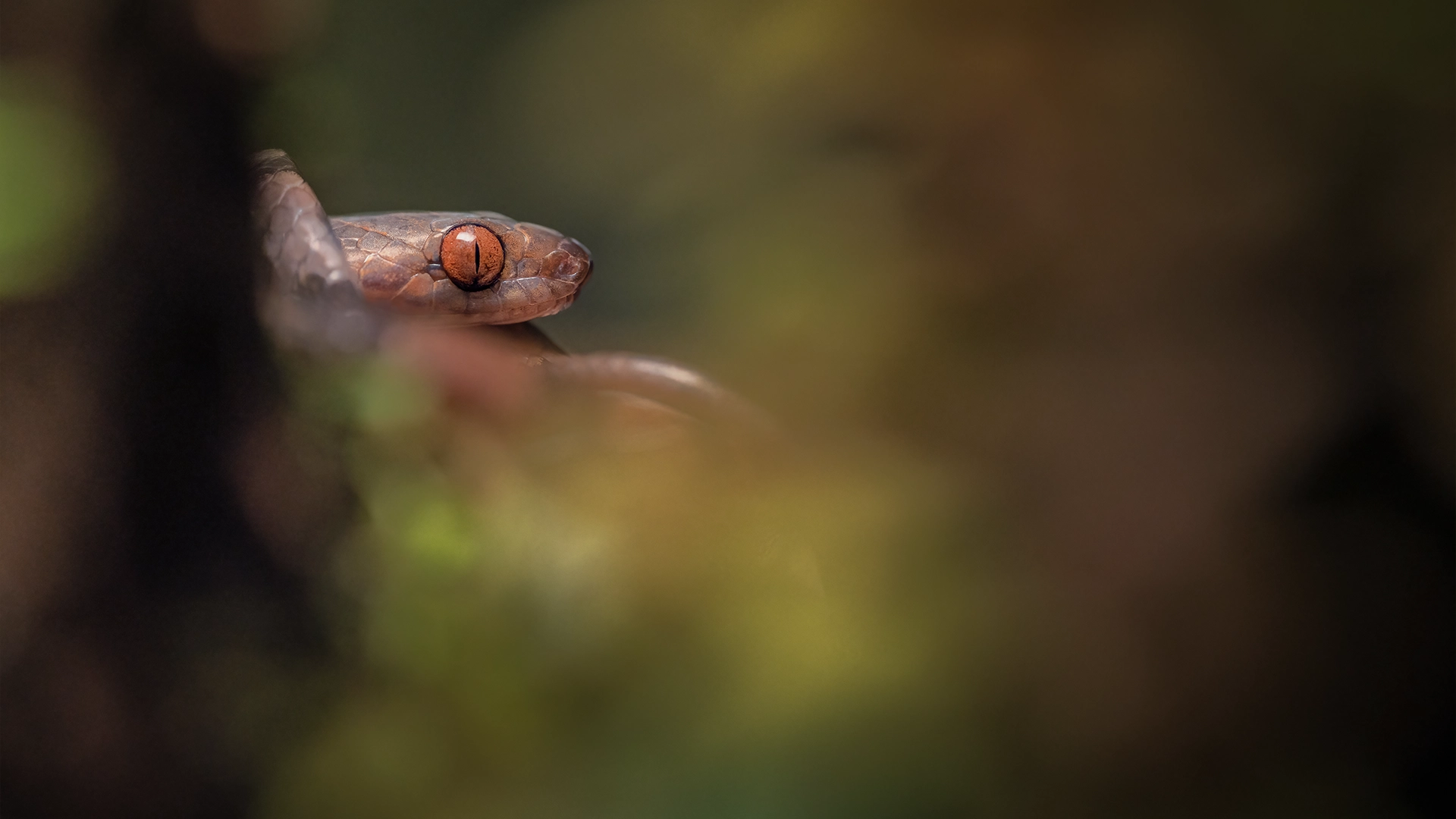
These images were captured with the Sony 90mm macro, a lens that has accompanied me for years and still delivers stunning results. They’re a reminder that tools evolve, but great optics remain relevant when used with intention. Photo: Jhonattan Vanegas.
A Lens You Can Trust in the Wild
Each lens gives you a chance to tell life from a different perspective. But very few lenses allow you to do it with the precision, sensitivity, and confidence you need when working with the most delicate aspects of the natural world.
The Sony FE 100mm f/2.8 Macro G Master OSS is more than just a tool: it is an honest and powerful extension of your way of seeing. In the hands of a photographer who loves detail and respects the rhythms of wildlife, this lens is not the protagonist… but it is the best ally.

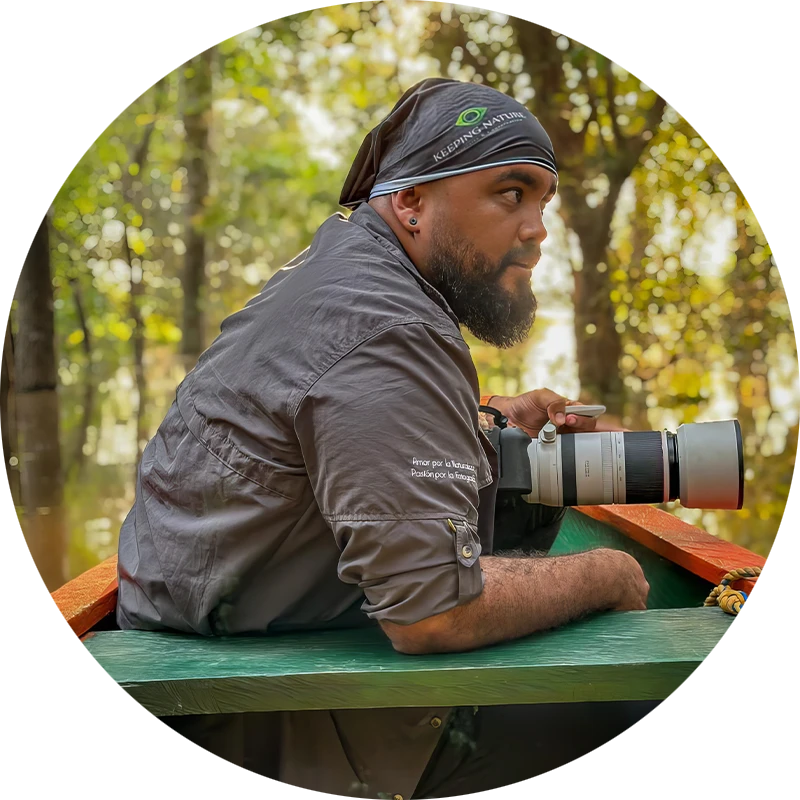
In the heart of the Colombian rainforest, I prepare my gear before photographing a tiny poison frog hidden among the leaves. Fieldwork like this demands equipment that performs flawlessly under pressure, and the Sony 100mm f/2.8 GM has become that trusted ally. Photo: Federico Espinosa.